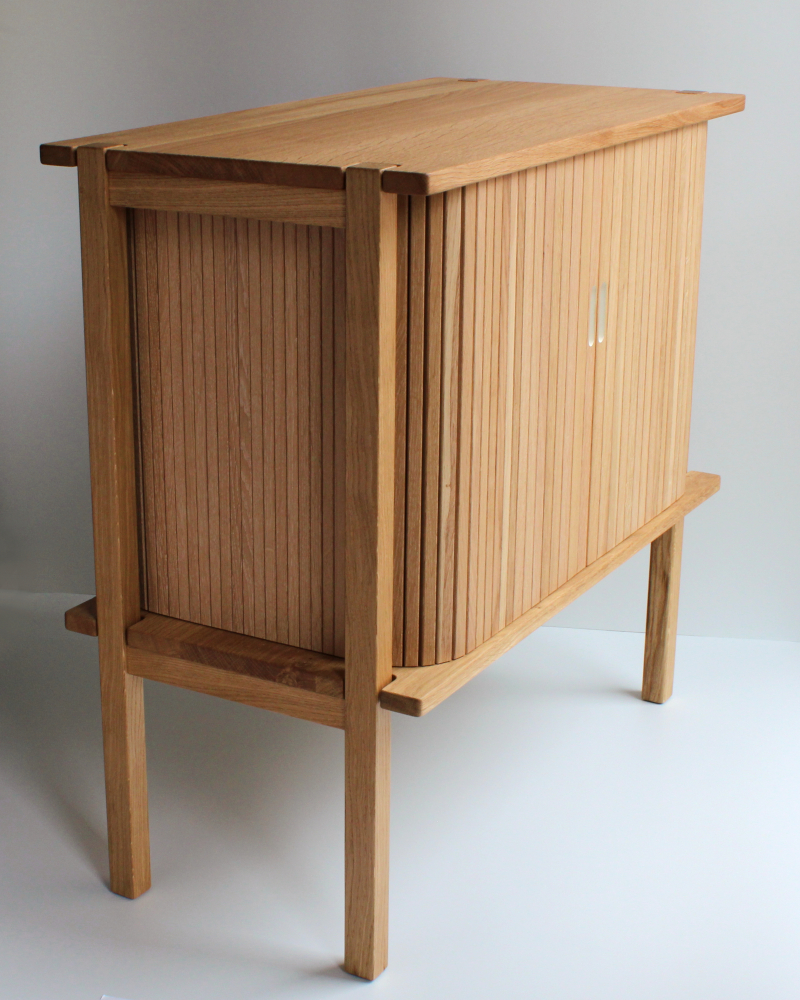
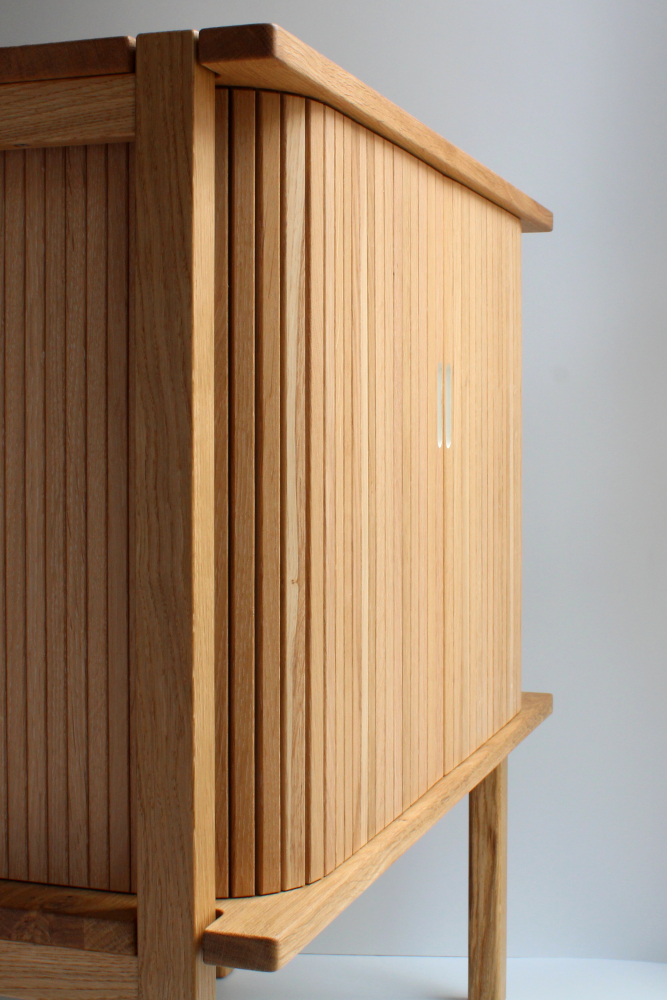
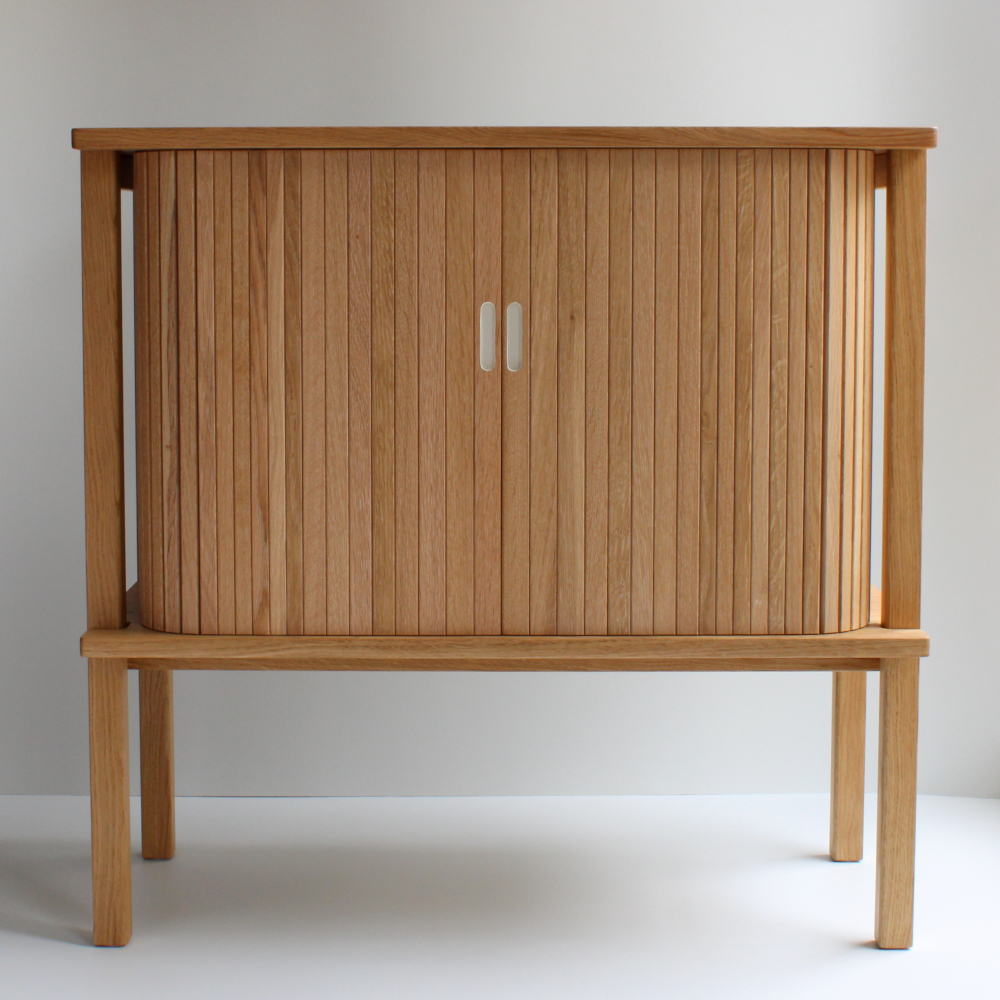
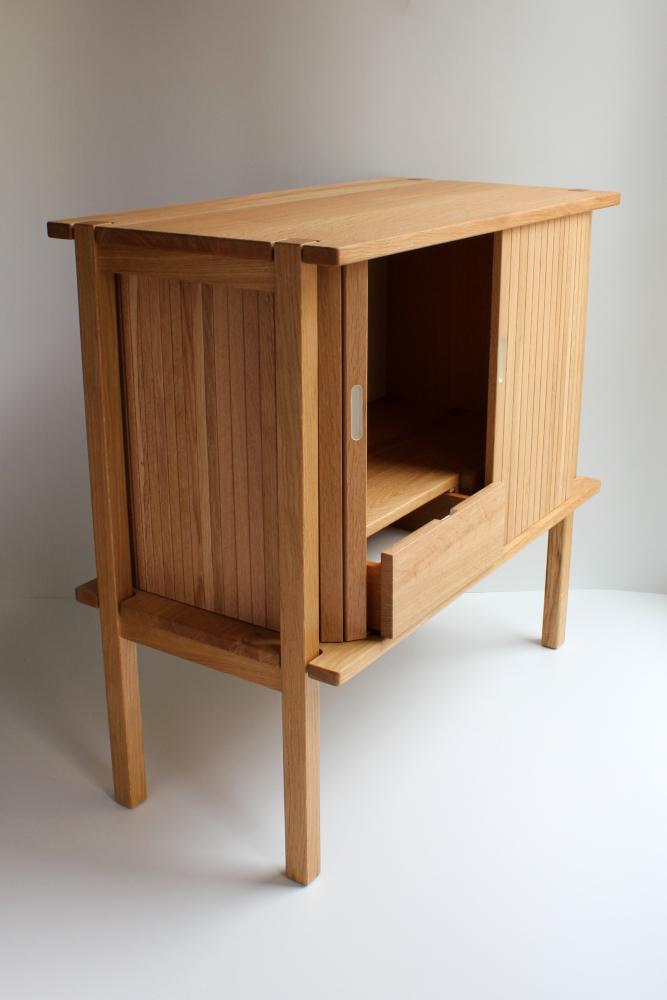
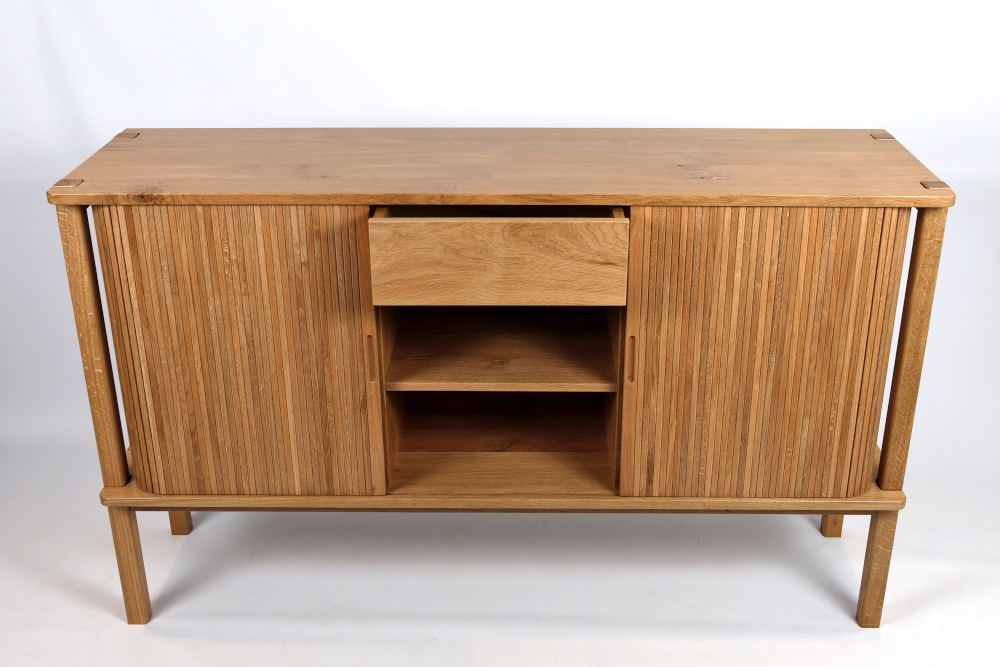
The tambour door cabinet was designed and developed in June/July 2023. As a furniture designer and maker it is important to keep developing your skills and I have always been fascinated by tambour doors and how they work. I developed and built the cabinet in order to understand the craft and learn how to build a tambour door. I wanted to showcase the tactile beauty of this technique of making doors and let them wrap all around the cabinet. They are quite long and are visible even when the cabinet is open, as compared to traditional tambour doors that are hidden away when open.
The cabinet will be exhibited during the Amsterdam Glue festival in September 2023.
The tambour door cabinet is on sale, price on enquiry.
L x B x H – 75cm x 39cm x 74cm
I also welcome recommissions and rebuilds based on your need or style.
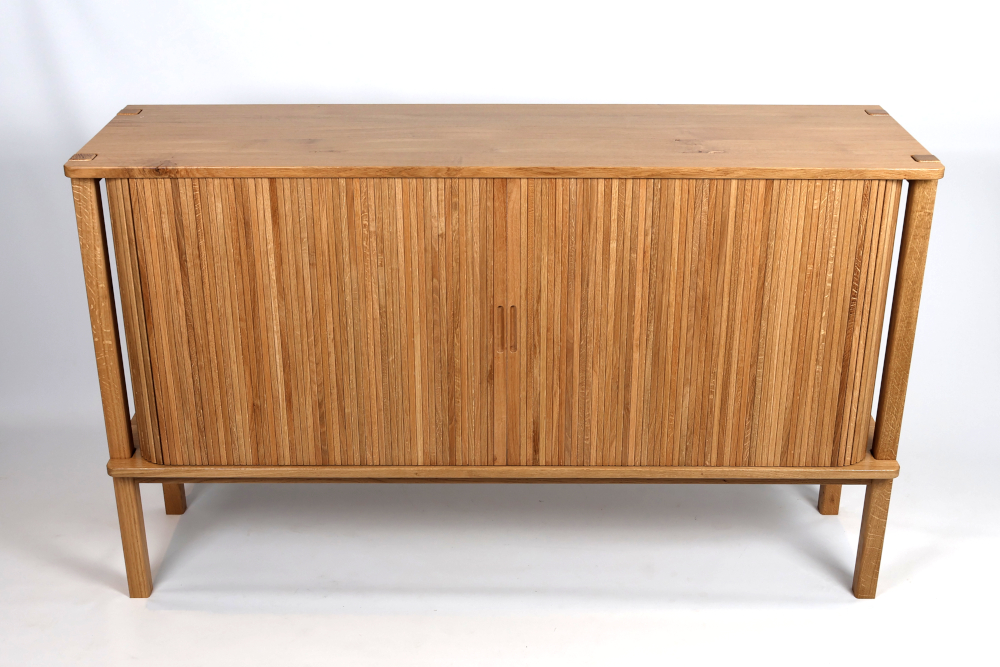
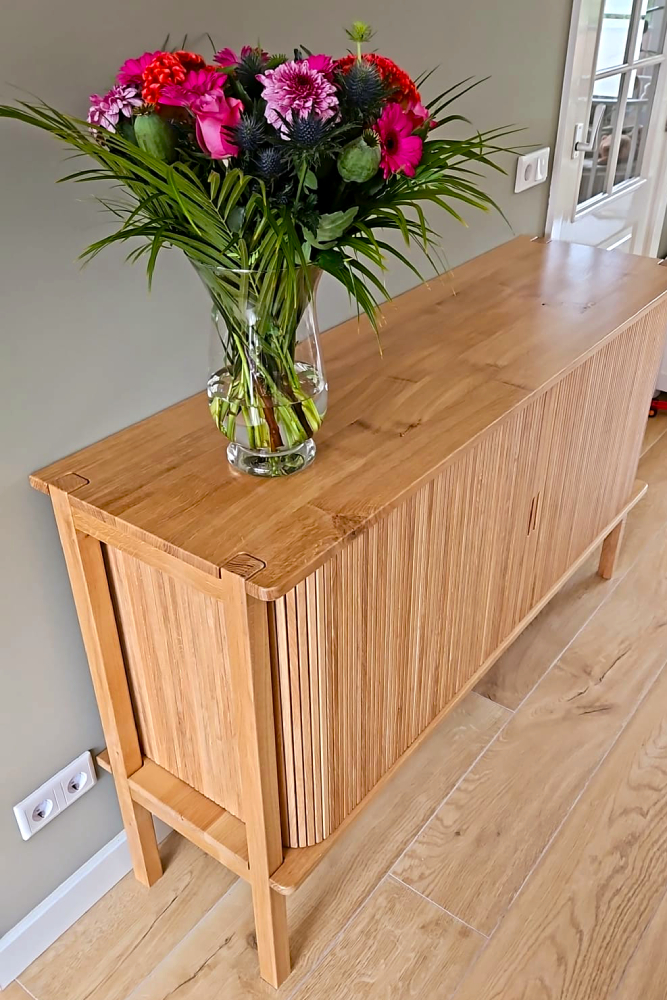
See a variation of the original design, the tambour dressoir, below.

Tambour doors
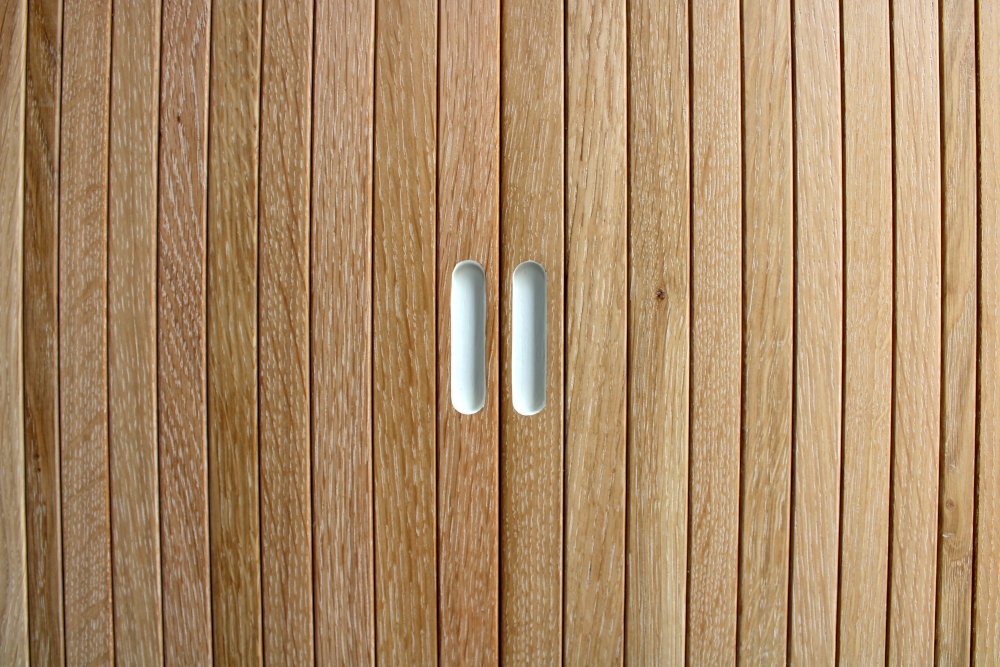
Tambour doors are flexible sliding doors that run in two grooves in the top and bottom of the cabinet. They are made out of multiple slats, that are held together by gluing a canvas fabric onto the back of them. The radius of the track is determined by the thickness and width of the individual slats. In order to add motion and interest to the doors, I have designed them to have slats of varying thickness in a rhythm of the Fibonacci sequence; from thickest to thinnest – 3,5,8,13….
What makes tambour doors special is the process of making them. They are made up of many small slats that are time consuming to make, and use a lot of lumber. Not only are they a space saving way of implementing doors in a cabinet, they also add a wonderful visual, tactile and auditory element to a piece of furniture. If made well, the sliding sensation is smooth and almost magical. A lovely way to interact with a piece of furniture.
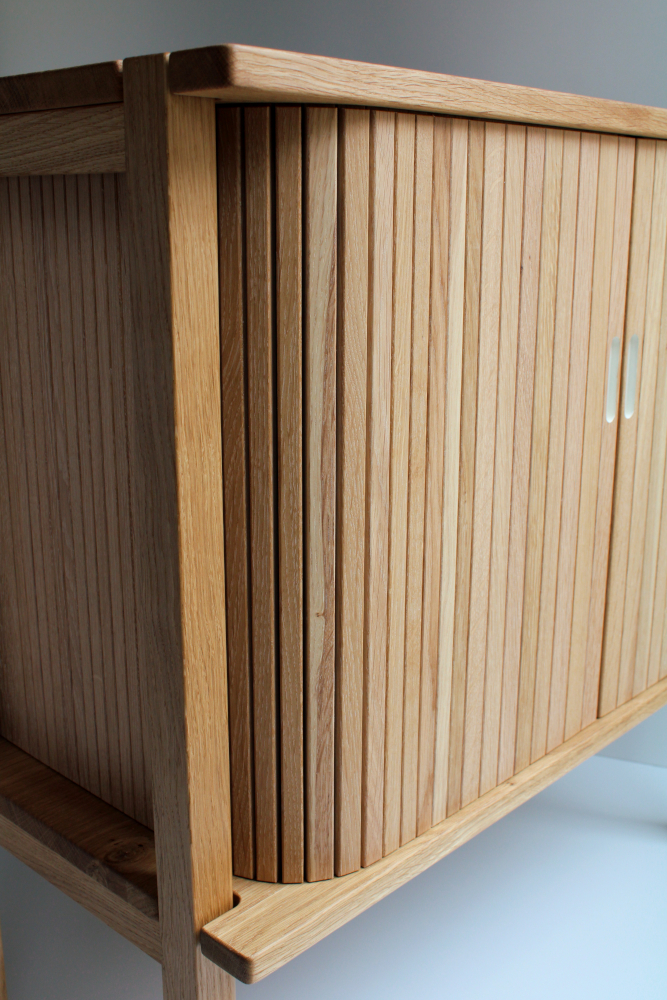

The piece is conceptualised as a cabinet floating on a leg frame. The open design showcases the doors as they wrap around the cabinet, leaving them visible even when the cabinet is open. The design language of the cabinet is all about the interactions between square and round forms.
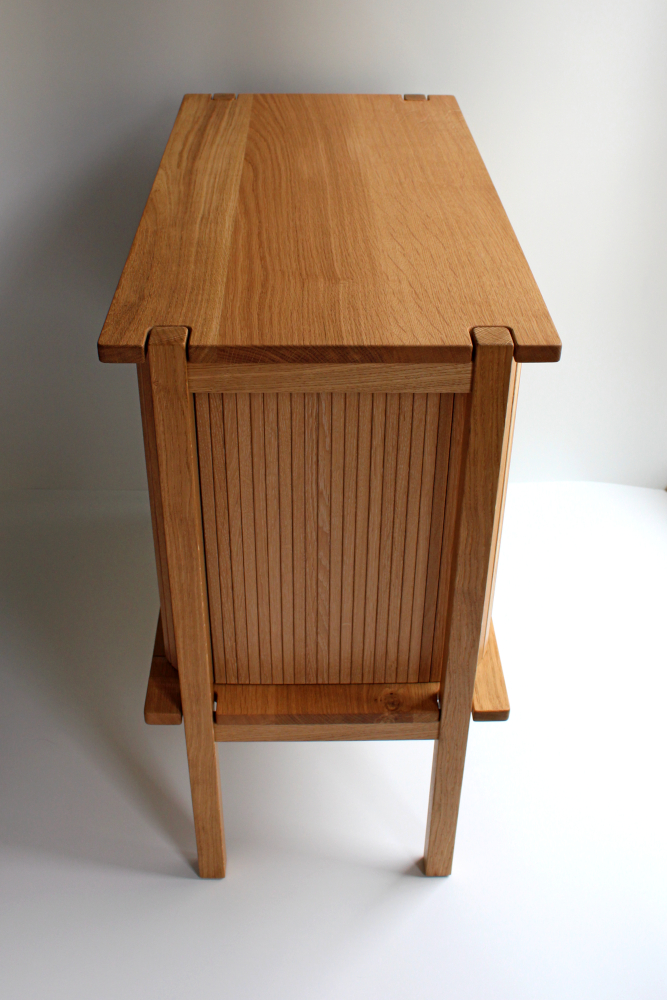
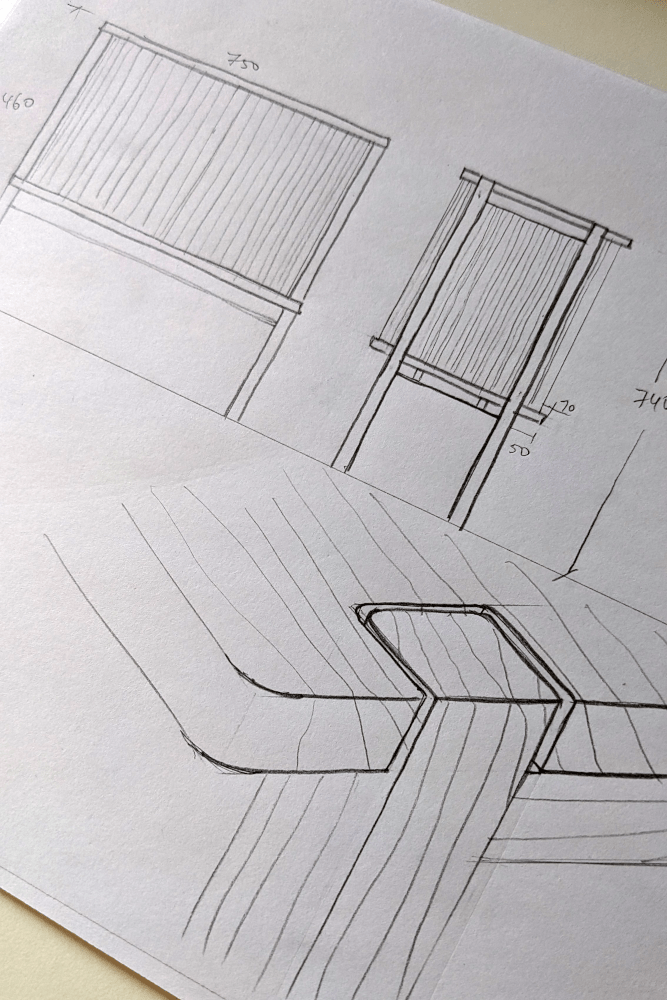
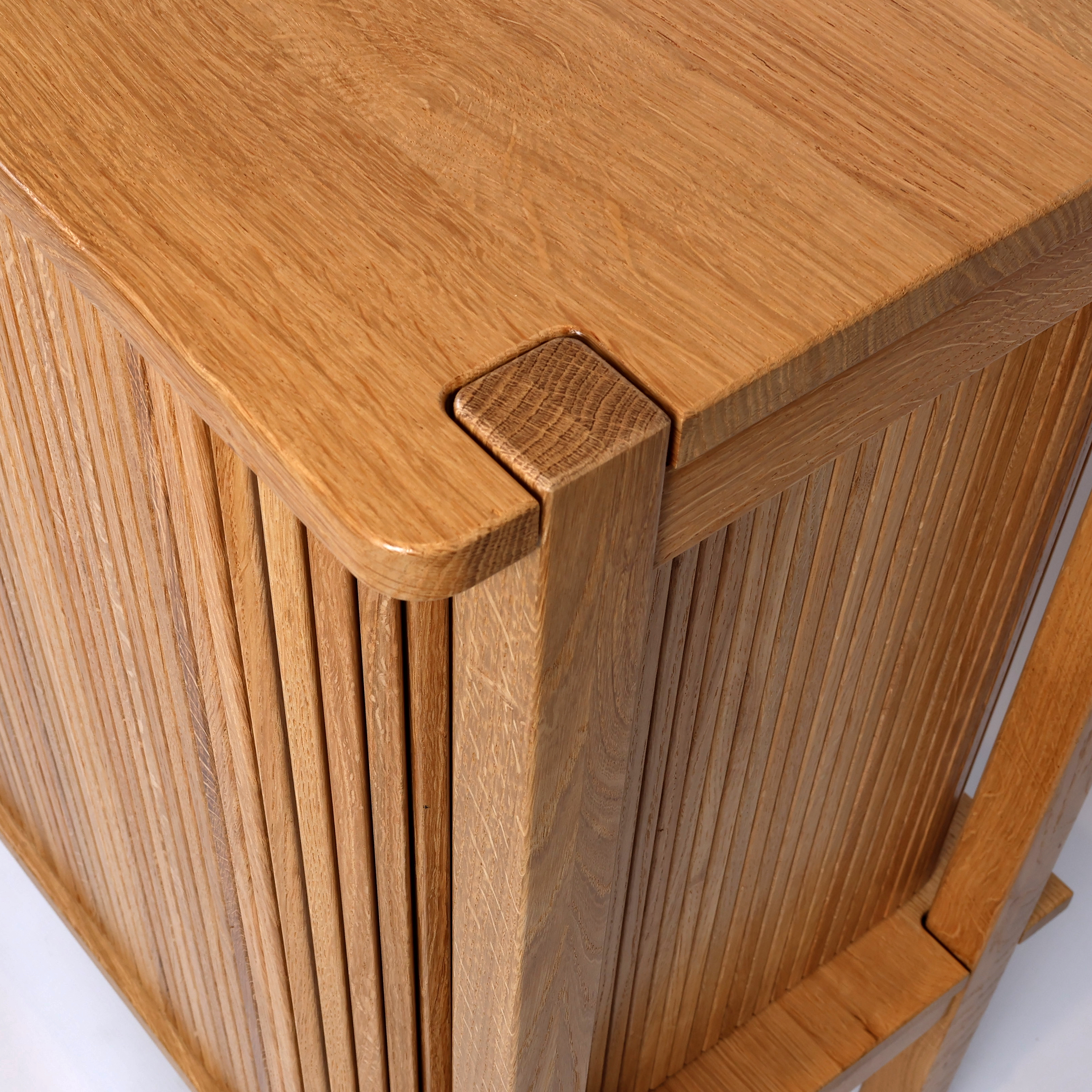
The leg frame pops through the top of the cabinet in a beautifully designed and executed detail that showcases the contrast between Oak endgrain and long grain.
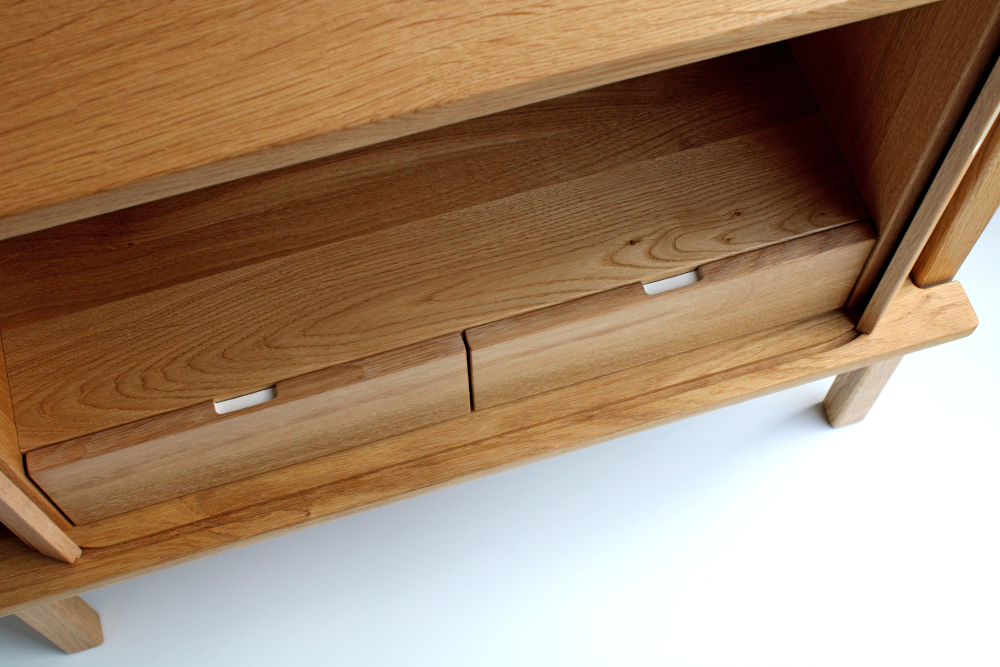
On the inside, the cabinet has two drawers with a grainmatched front, and a shelf above. White is used as the contrast colour to a natural oak finish. The entire cabinet is solid wood, and routed handles that have been painted white have been added as details in the door and drawer fronts. The cabinet itself is joint using sliding dovetails to allow for wood movement and prevent warping.

From design to final product
Multiple steps were involved in the process of this cabinet from idea to sketch to drawing to final product. To see the entire process, please visit my blogpost about the same.

Tambour dressoir
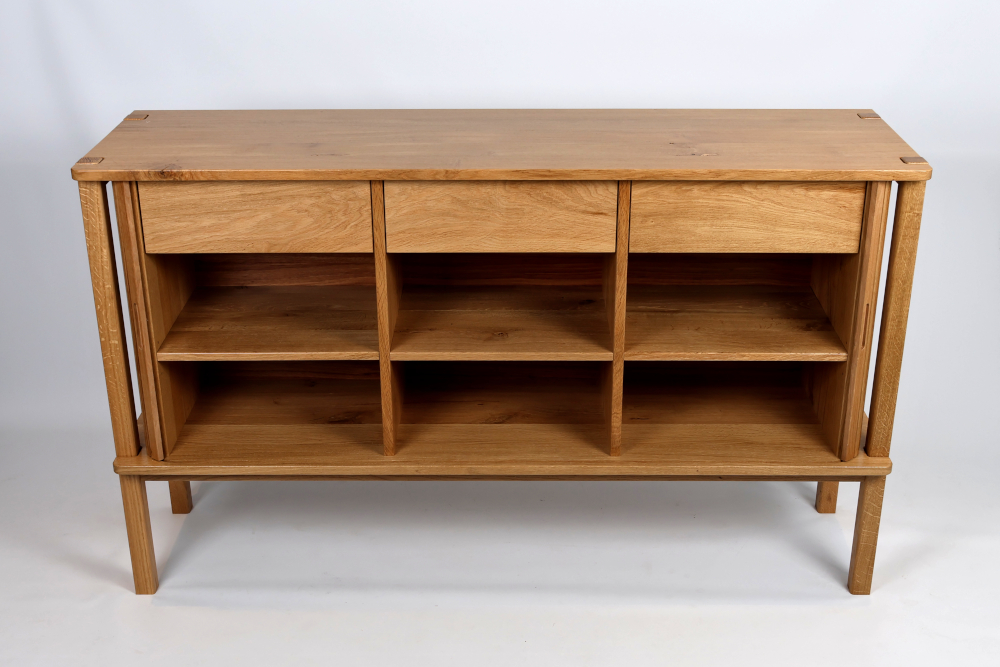
The tambour dressoir is a variation of the original design based on the client’s needs. While keeping the original details and proportions, the inside of the cabinet was modified adding 3 drawers and more shelves. The cabinet is also longer to fit space of the maker better that it is to fill.
This was the first time I licensed a design to another maker for personal use. While I retain the design rights for this piece, I do not take any credit for the fabrication of this piece. I am glad it turned out so beautifully, and am thankful for the pictures.
 Vanessa Horig
very very Fien how high are the cabinet base out legs
LikeLike
What a beautiful design, the square frame and curved door work really well for me. I really like that the tambour door is visible from the sides as well as the front.
I’ve been looking at television cabinets with a tambour door to hide the tv when not in use. I think your design could work very well – is this something that you have already done?
LikeLike
Hi Paul, thank you for the kind words, Im glad you like the design.
I have not yet made a tambour cabinet for a TV, but I believe it would work really well. I think it was often used in that way when tambour doors were very popular, around mid-century.
If it’s something I could help you with, do send me an email and let’s talk further.
LikeLike