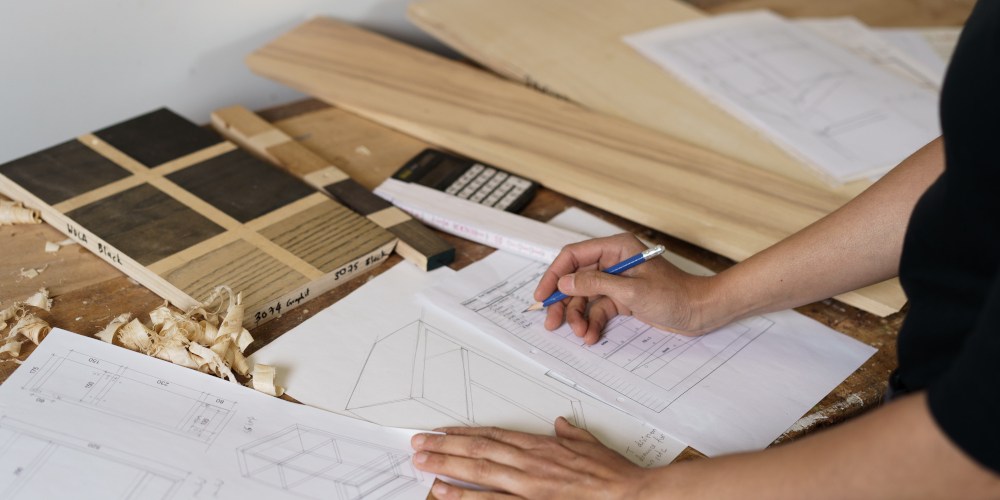
How does custom furniture work?

What is custom furniture?

The design & making cost

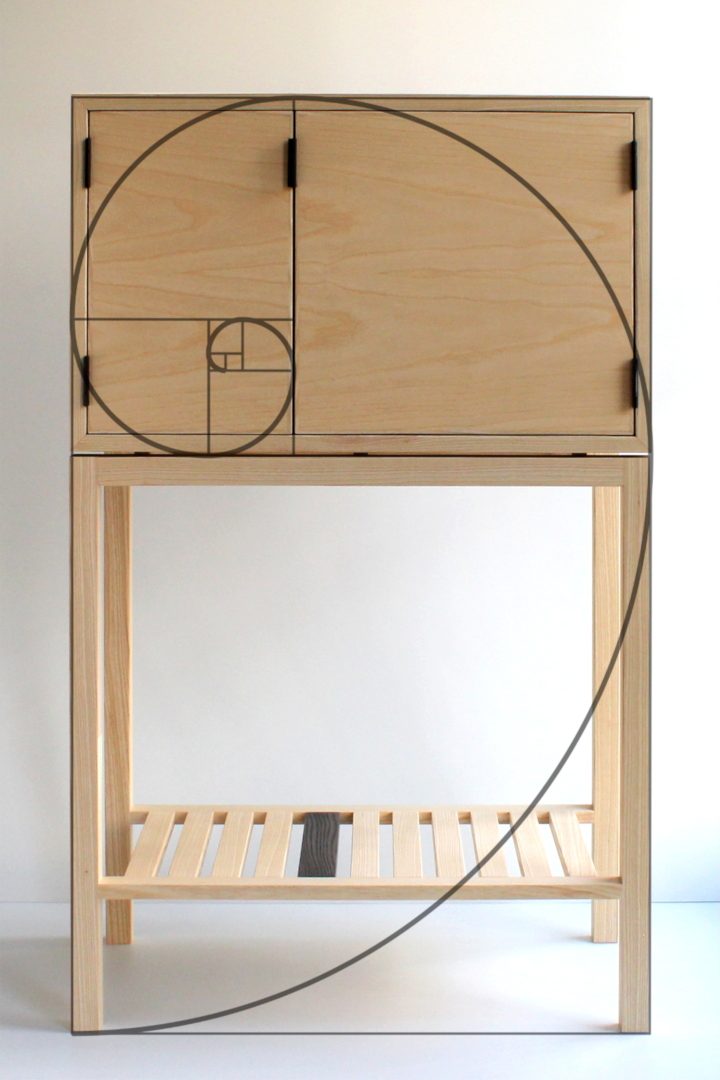
How to use Principles of Design In Furniture

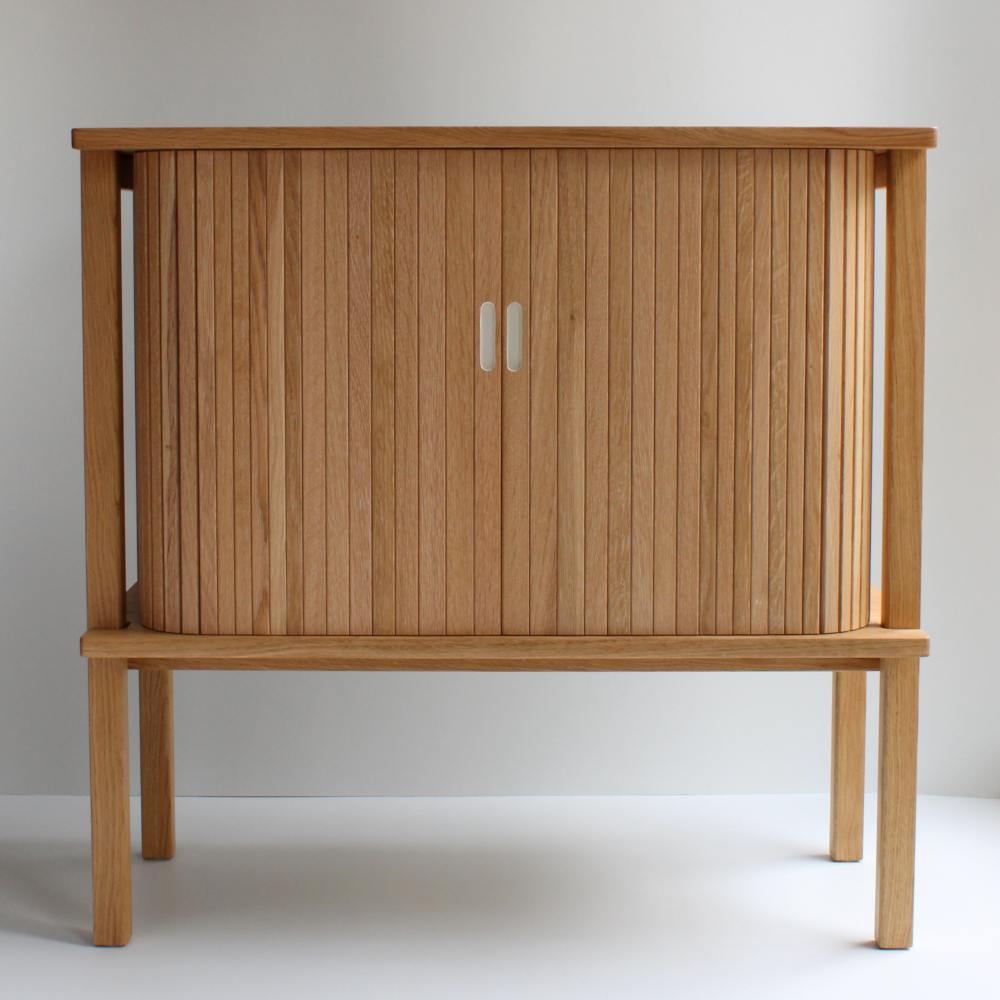
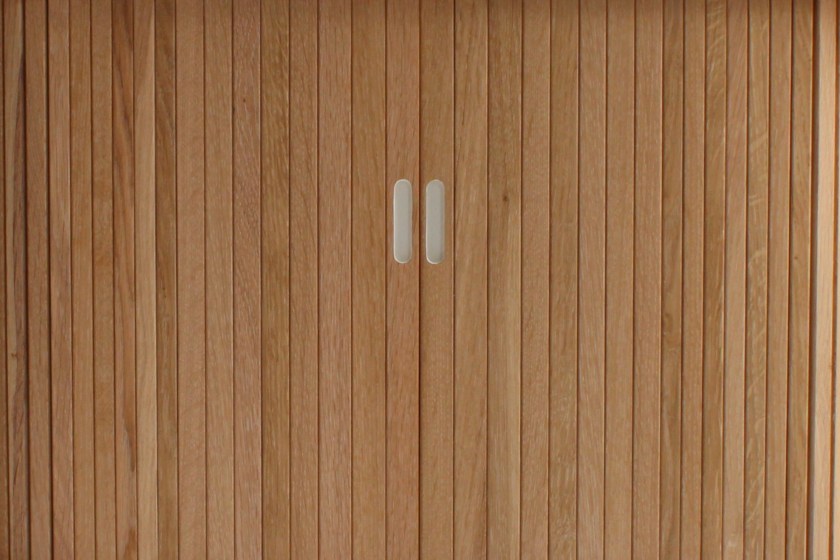
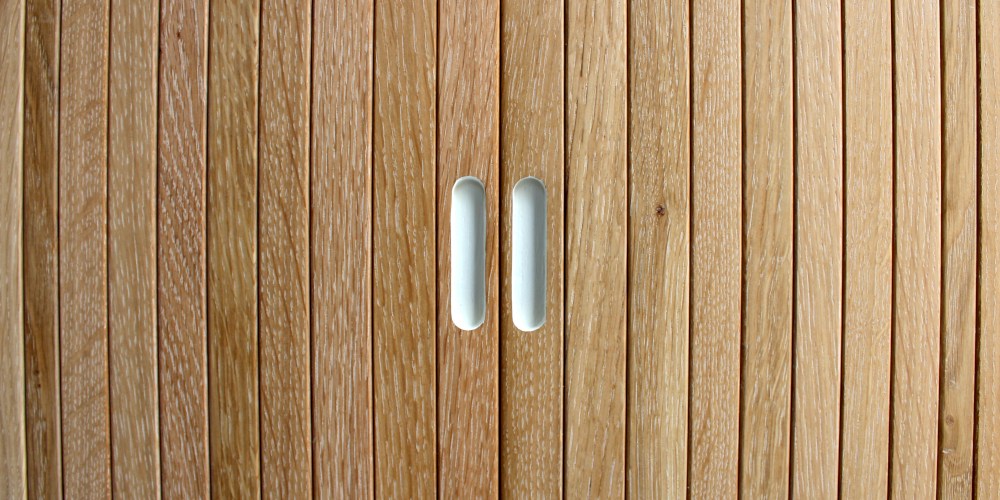
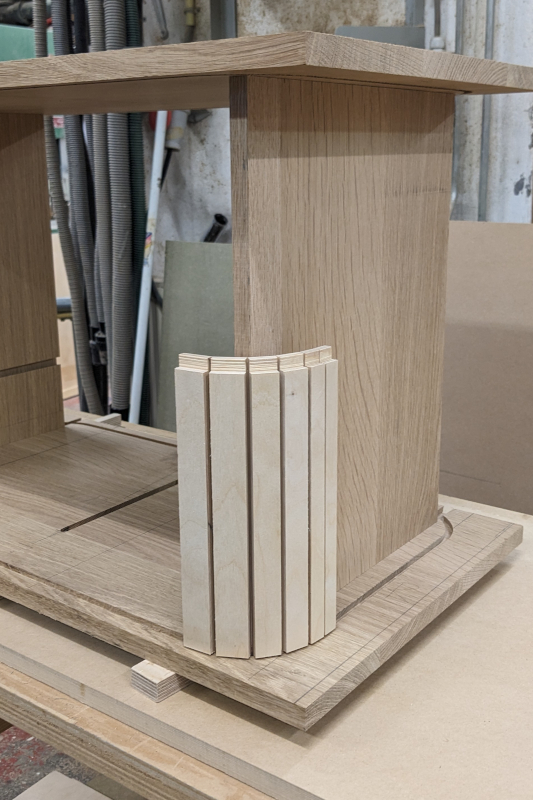
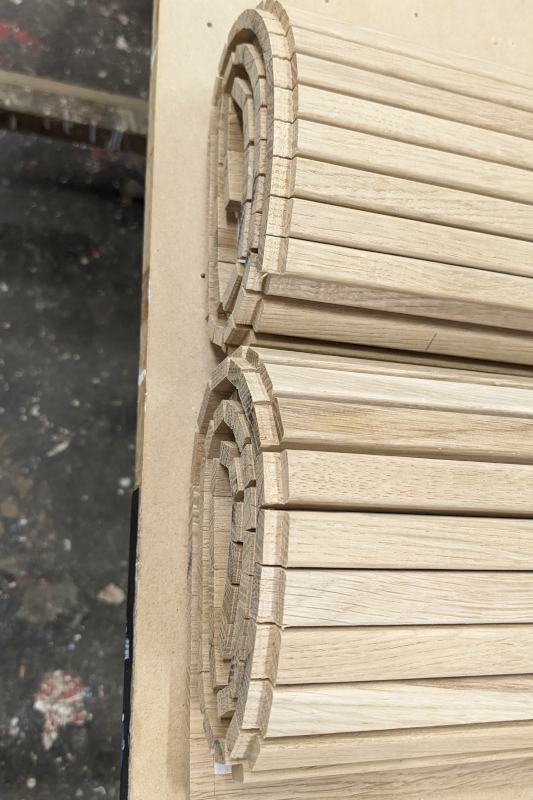
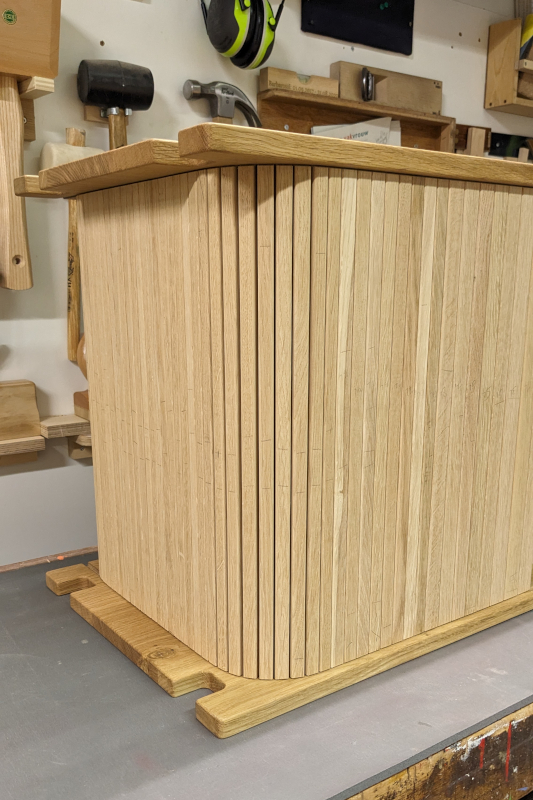
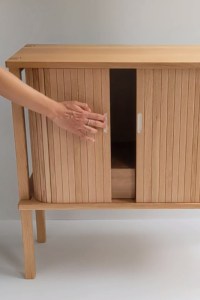
Here’s a video I shared on my Instagram page which shows the Tambour doors flowing beautifully, so mesmerising!

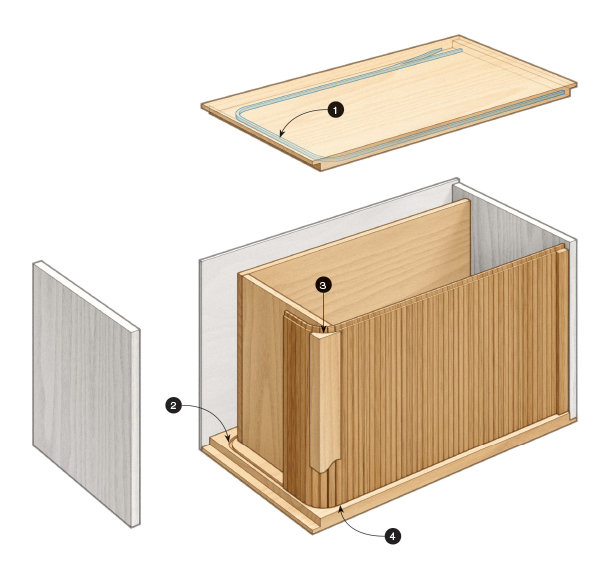
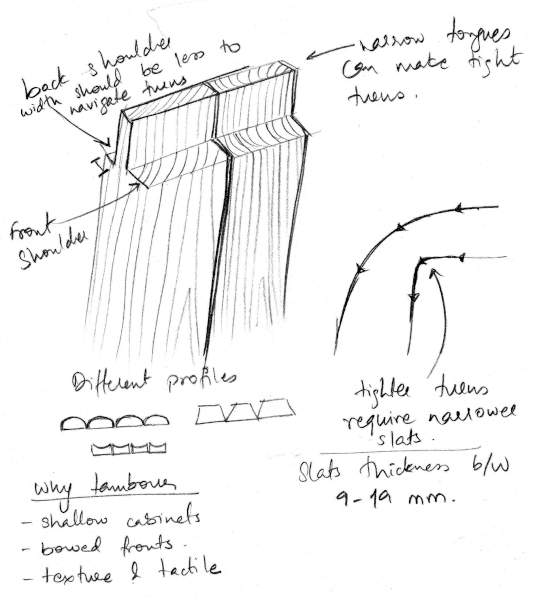
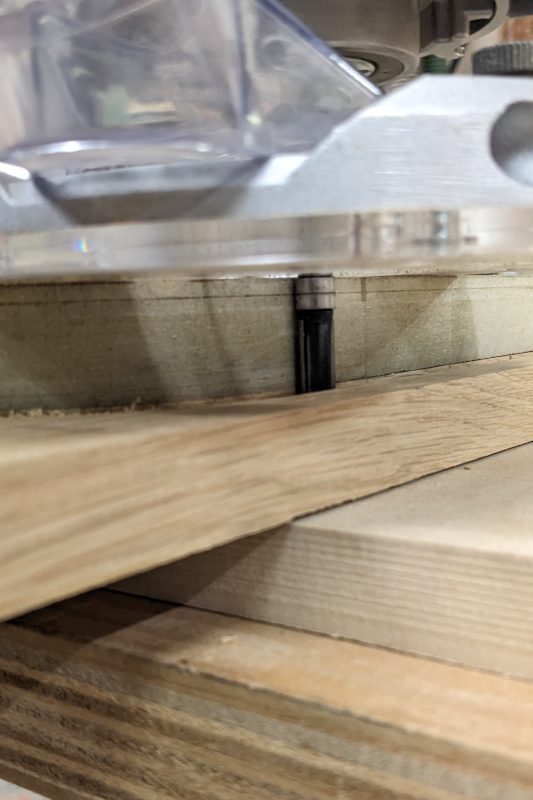
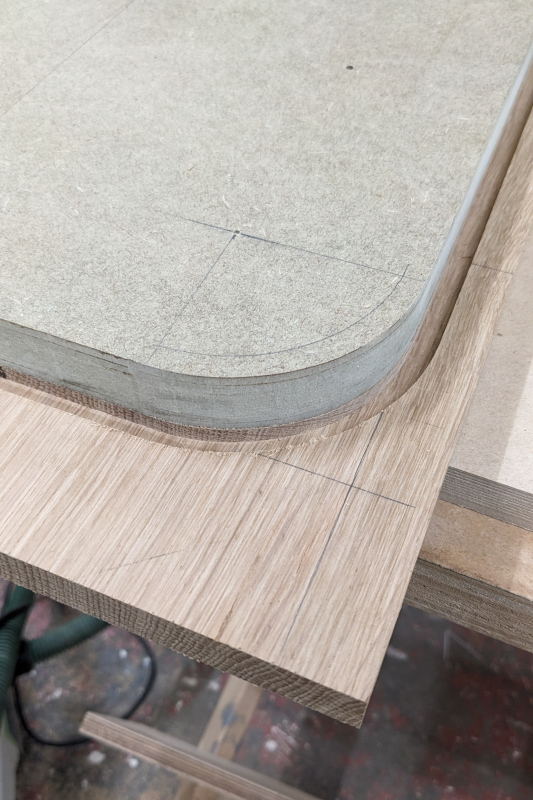
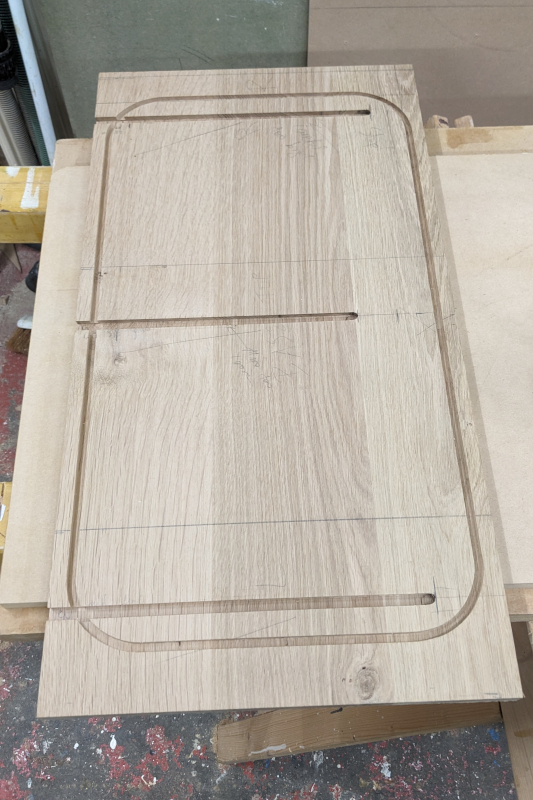
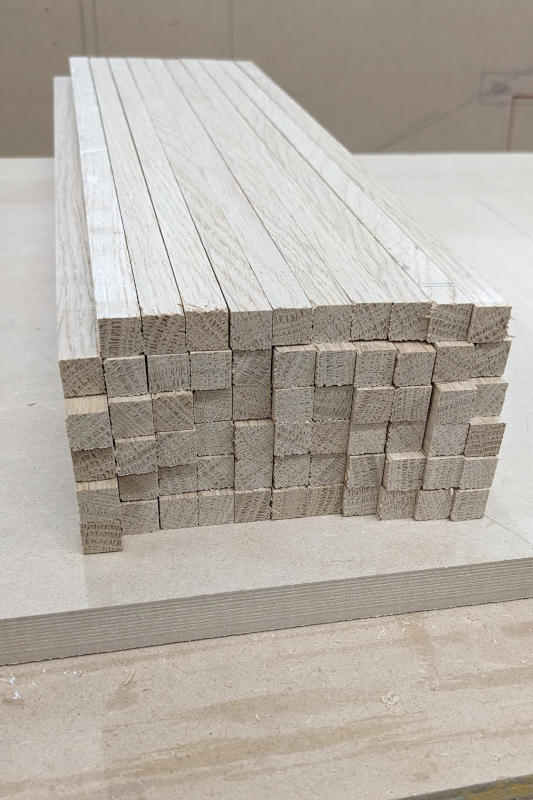
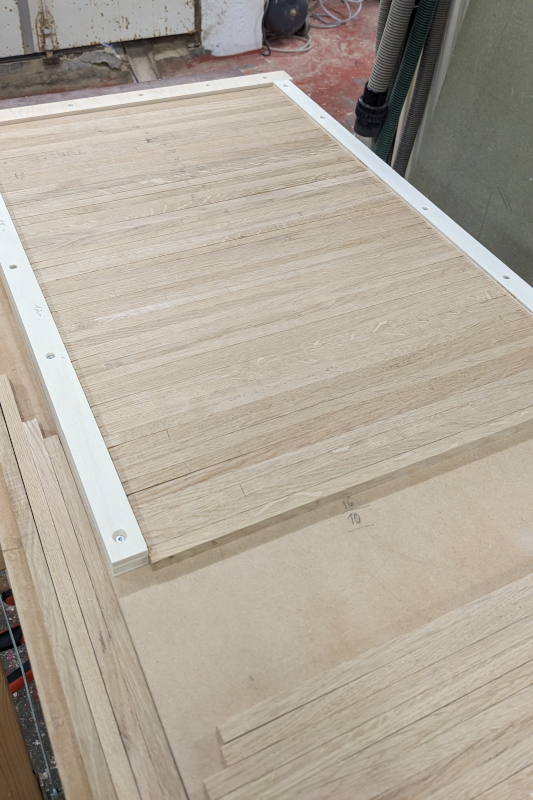
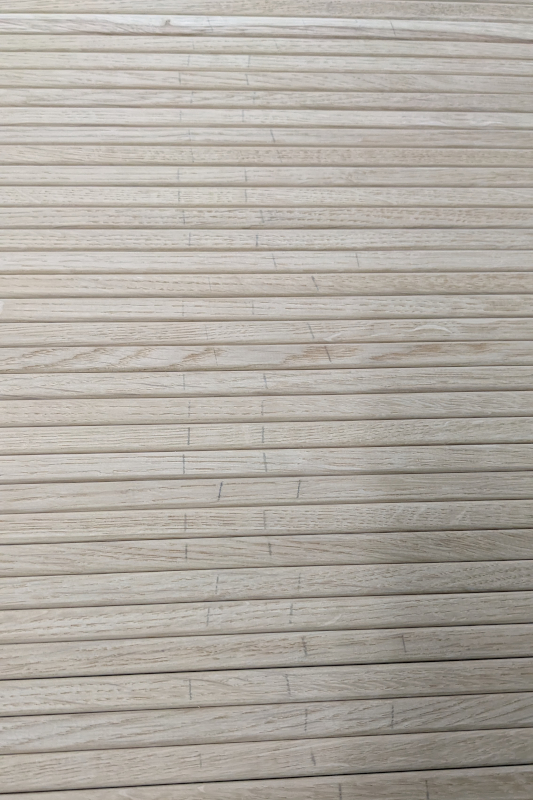
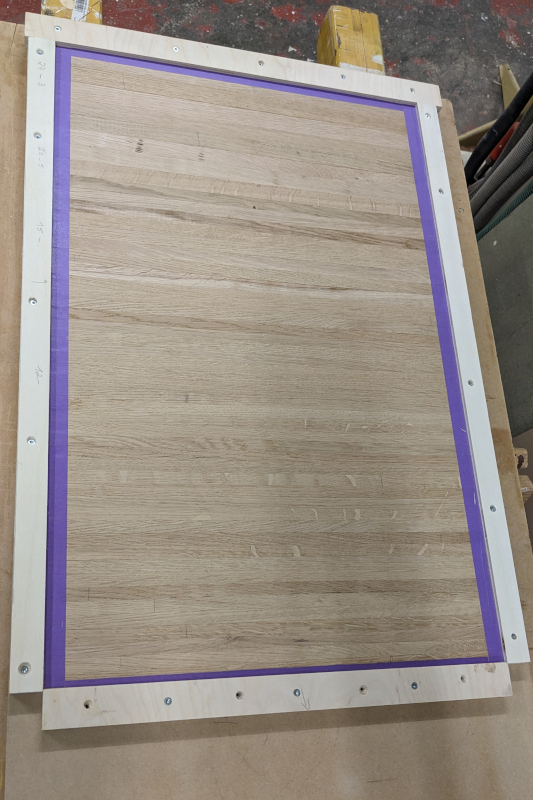
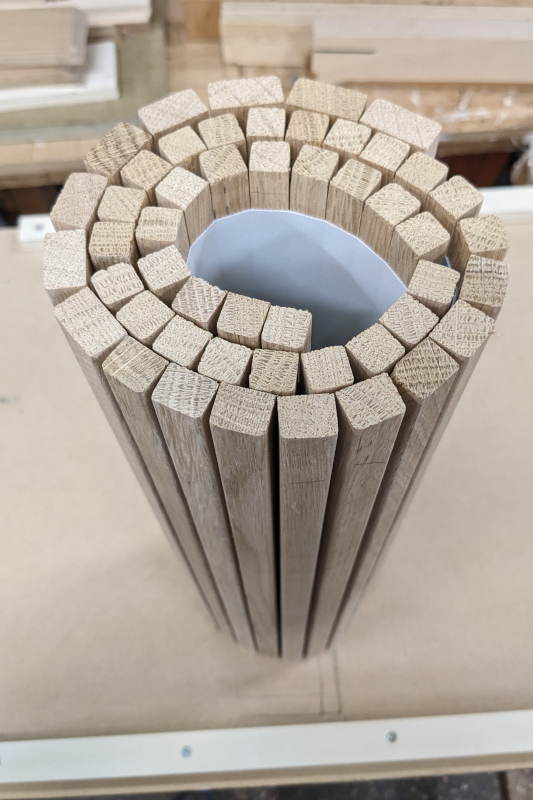
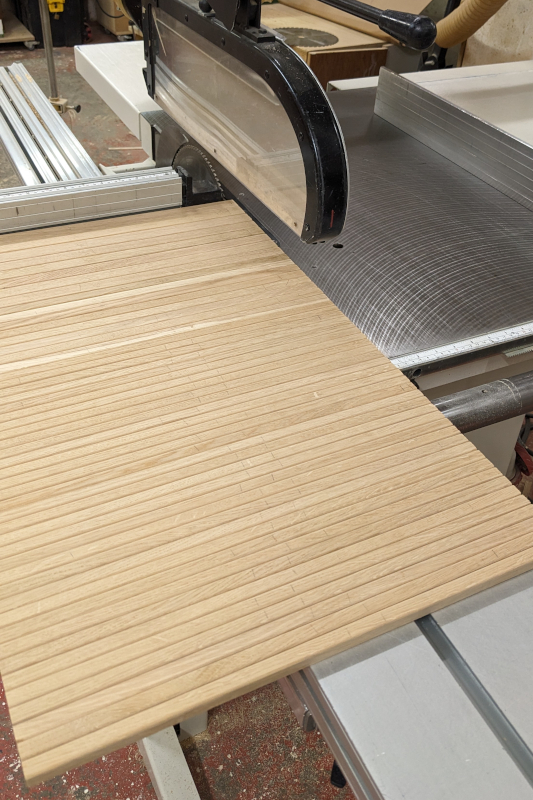
How to make a Tambour Door

Image credits woodcraft supply
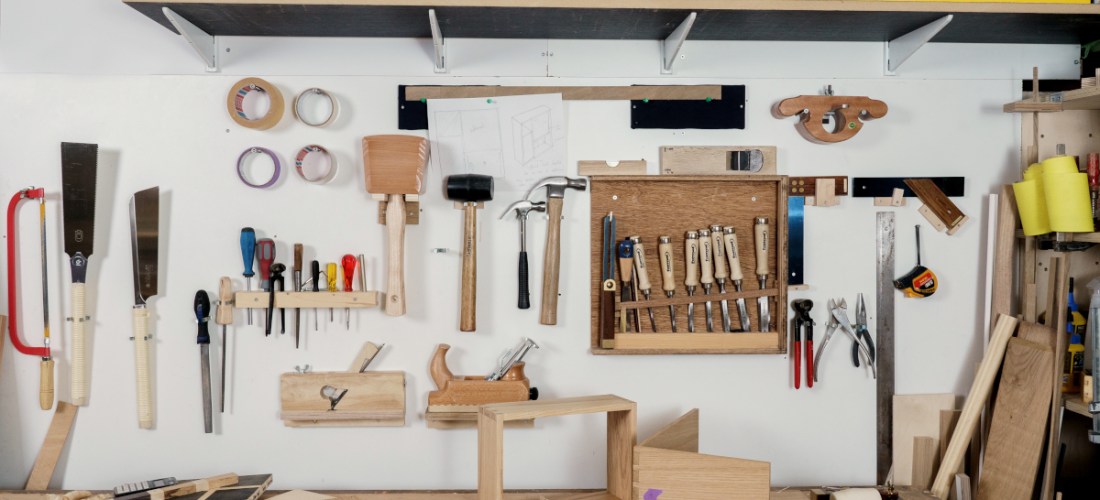
Handtools for woodworking

What is Fast Furniture?

And why I build slow furniture…

Fast furniture, as the name suggests, is mass produced furniture that is made quickly with cheap materials that do not last long.

Just like with trends in the fashion world, big interior firms are also releasing new collections with every season, inspiring consumers to change the look of their home more often. And ofcourse, these new products have to be delivered quick and must seem like a casual purchase. This leads to an increasing amount of fast furniture – cheap, poorly made pieces only meant to last a few years until the customer decides to give his interior a makeover.
Infographic credits – The substitute NL


Why I build slow furniture

As a furniture maker and designer I believe in the power of bespoke design. Each person lives differently and has their own unique taste and ideas about beauty. There is no one-size-fits all solution. I enjoy working with customers to design and find the perfect furniture solution to meet their needs. My education in furniture design, ergonomics and carpentry ensure I have the know-how to advise and help my customers make an informed decision. I believe that even though good quality costs more, it is worth the investment because it is sure to last longer and will create fewer problems in usage. According to me, quality materials, strong joinery and the right know-how build great furniture that stand the test of time.

I believe contemporary designs never go out of style and my furniture can be handed down from generation to generation. I build furniture that will last a lifetime and criticize throw-away lifestyles that large brands promote. I strive to use certified wood from sustainable sources and work with sustainably manufactured lumber products.

Bespoke furniture is a sustainable solution to furniture production since there is minimum to no material wastage. The furniture is exactly what you want, so there is no compromise on the design and you are not tempted to throw it away to replace it with something better.

A lot of my larger pieces can be dismantled for transport, so customers can move with their beloved furniture and there is no need to demolish. I try to minimise waste during my production phase, and optimise material usage with the help of good planning.

And yes, slow furniture takes time to design and build well. As with anything good in this world, it’s not cheap. But definitely worth it.

Custom Furniture for Clients

As part of my job as a furniturer maker and designer, I undertake custom projects for clients. Together with the client I discuss functionality, look, shape and size, and then design the best solution for them. Based on budget and aesthetics I suggest various materials and send them a price offer with all the details. I then build the furniture in my workshop and install it at the customers house.

With my experience and knowledge about design and woodworking, I deliver quality furniture that is designed and built completely according to the customers’ wishes. With an emphasis on sustainability, I am to deliver furniture that is built to last a lifetime.

Below are a few projects that I have undertaken over the last couple of years. Feel free to get in touch for your own projects! See more projects on my portfolio.

Don’t know where to begin? Here are some guidelines for what you should know before you order custom furniture.

Corner cabinet above Desk

Amsterdam, 2023

Bookshelf

Amsterdam, 2023

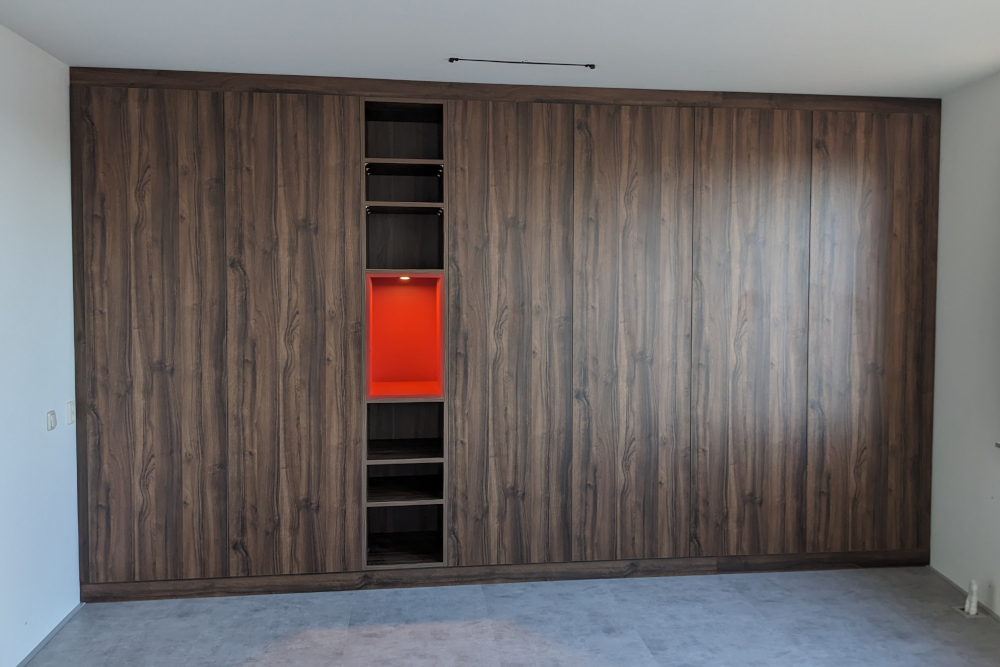
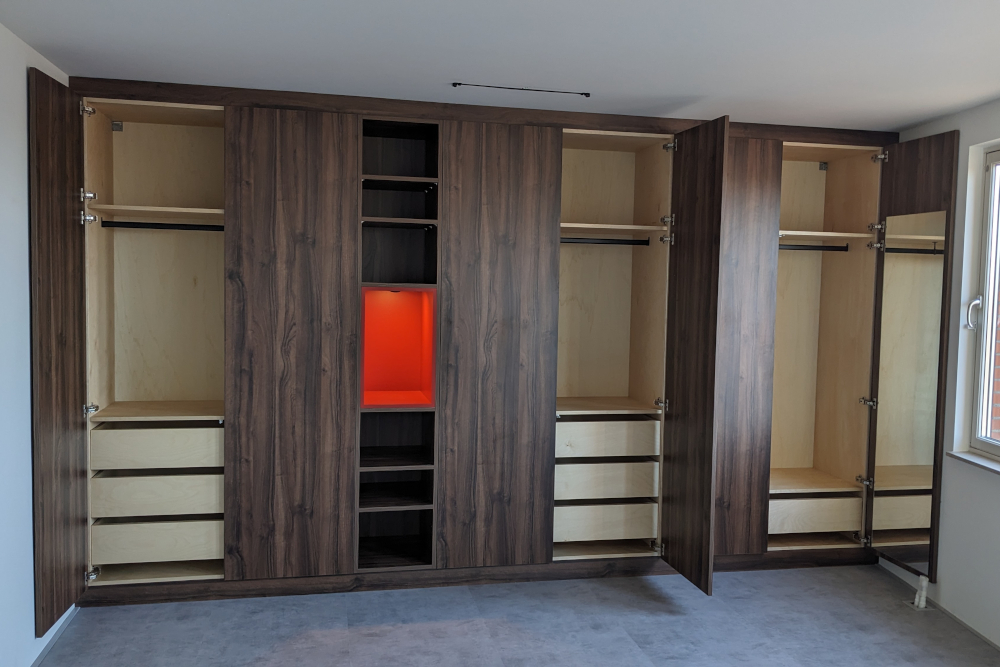
Inbuilt Cupboards

Amsterdam, 2023

Hanging Cabinets

Amsterdam, 2022

Kid’s Desk

Amsterdam, 2022

Kitchen shelf

Amsterdam, 2022

Cabinet doors and shelves

Amsterdam, 2021

Scandinavian Interior

Kitchen, Kitchen shelf and Staircase railing
Amsterdam, 2021

Summer School on Japanese Carpentry – A Bench around a Tree

In June 2022, I received a scholarship to attend a Summer School on Japanese Carpentry organised by Domaine de Boisbuchet and Michelangelo Foundation. It was a 10 day workshop that took place on location at the Domaine and I attended it along with 11 other students from all over Europe.

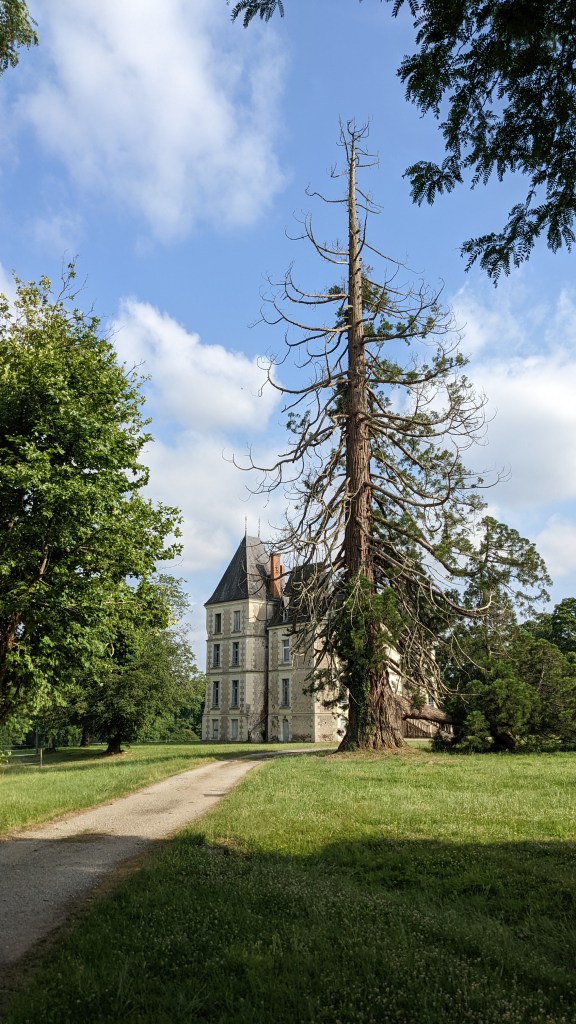
Domaine de Boisbuchet is a utopia close to Bordeaux in France where Design meets Art. It is an international centre for workshops, research, and education on sustainably innovative design and architecture. Created in 1986, it is located in the southwest of France on 150 hectares of protected nature and ecological agriculture.

The Michelangelo Foundation is an international non-profit organization based in Geneva, Switzerland, that celebrates and preserves master craftsmanship and strengthens its connection to the world of design.

I am sincerely honoured to have been given this opportunity, I learnt so much and met so many interesting people.

Read Part 1 here


Domaine de Boisbuchet
Japanese Designer Wataru Kumano

Part 2 – A Bench around a Tree

The second part of the course was conducted by Japanese designer Wataru Kumano. Having worked with Jasper Morrison in the past, he set up his own design office ‘kumano’ in 2011, and now works with interiors, furniture, and product design.

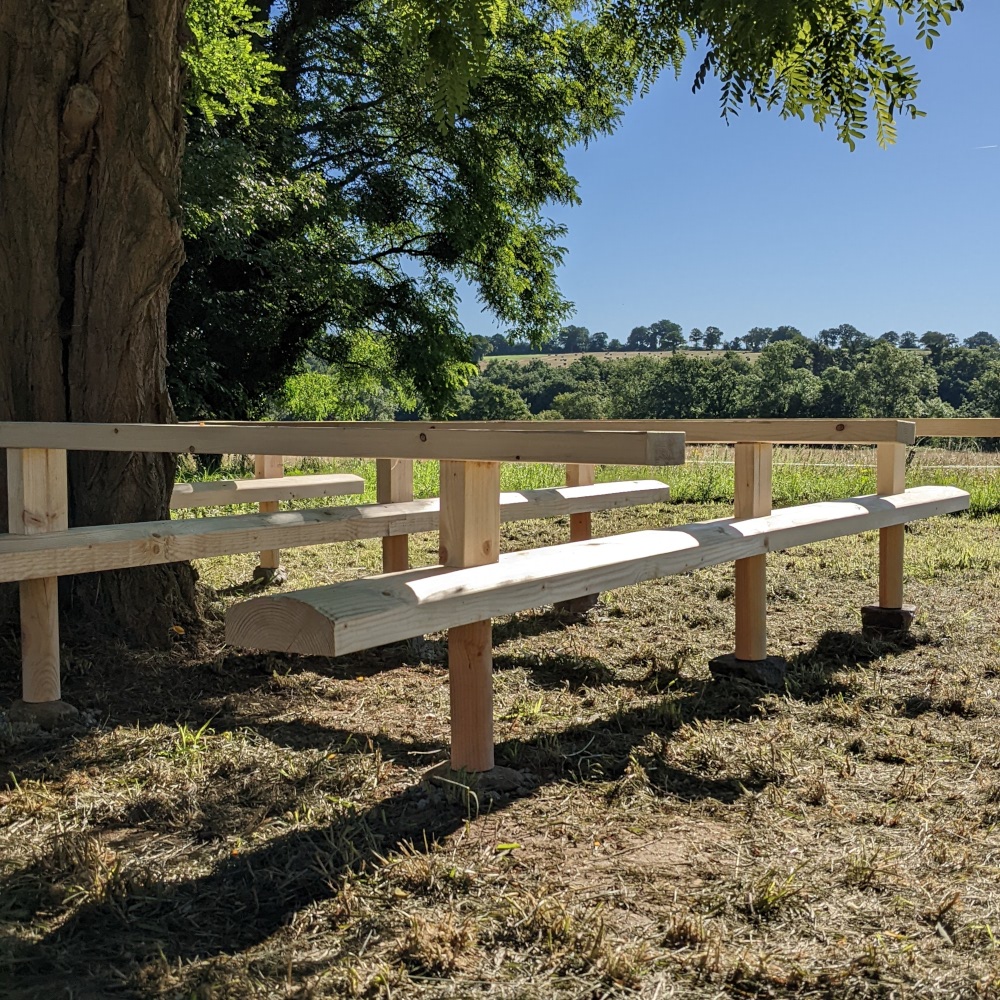
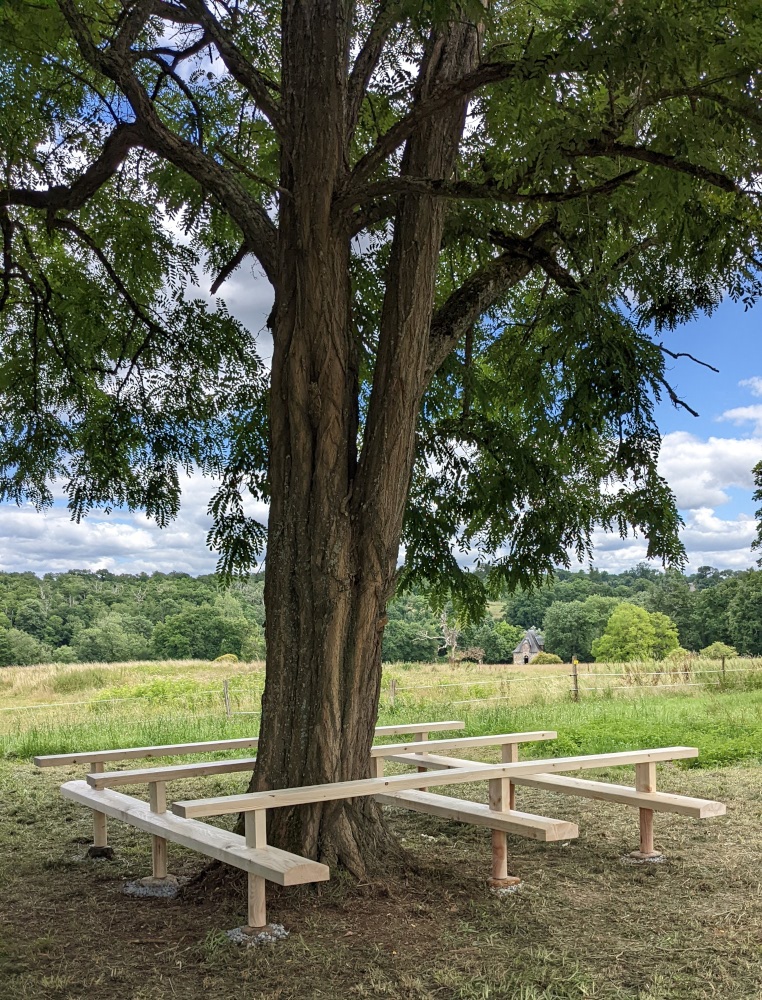
The aim was to apply the joinery techniques we learnt in the first couple of days, to build an outdoor bench that Wataru had previously designed. The bench had 6 joints, which meant each student would make one half of a joint, making the bench one large group project where all the pieces would come together to form one object.
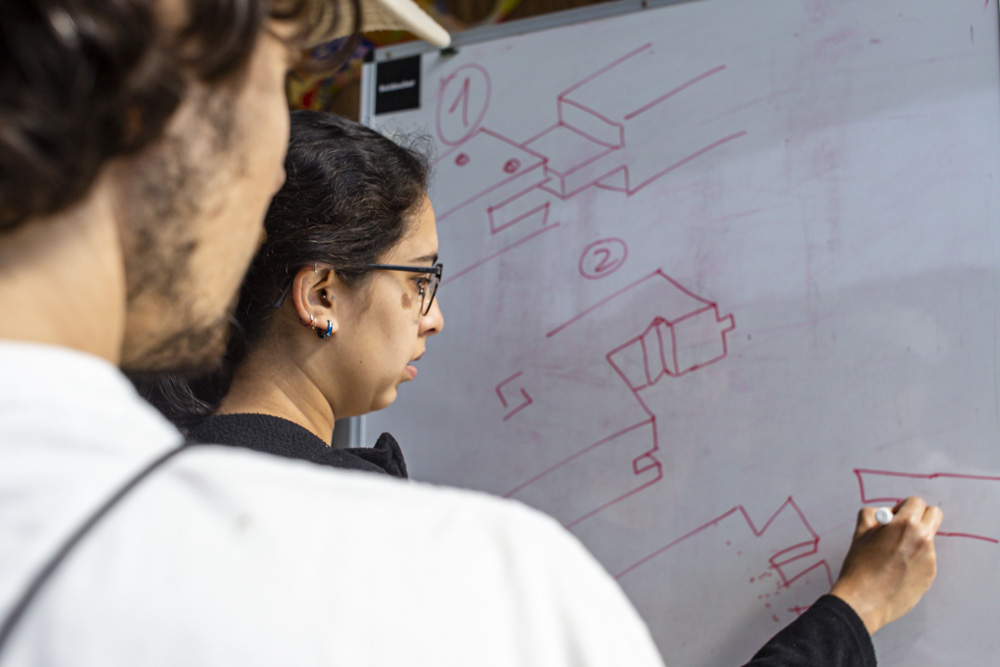
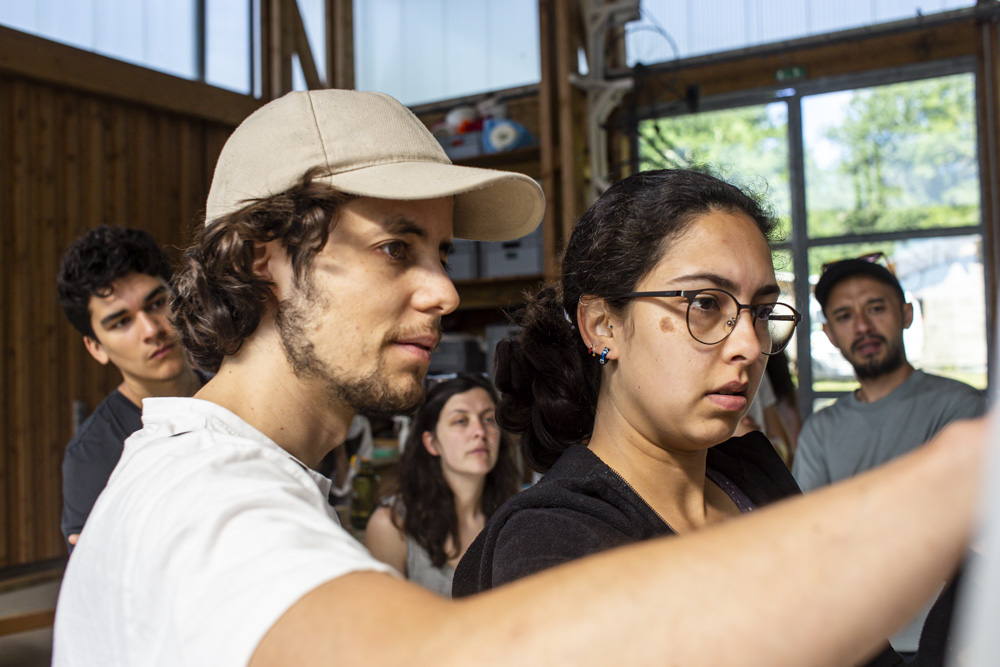
We started by brainstorming which 6 joints those would be, and assigning them to groups of two students. Each student picked a joint they were comfortable with or found interesting to work on.


Choosing a site and Picking Rocks

Once we had decided on the individual joints, and who would be making them, we scouted the grounds of Boisbuchet for an ideal site where the bench would go. Wataru had envisioned the bench to be installed around a tree, and we wanted it to have a connection to the daily activities of the Domaine, while still being slightly set aside to provide the user with some privacy and tranquility.
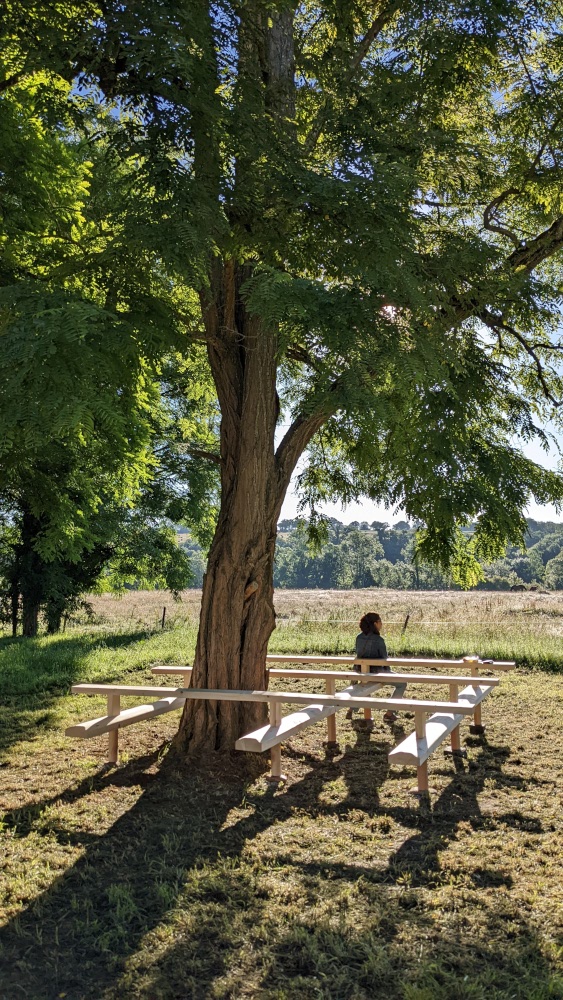
The site we chose was a spot next to the living quarters of the Domaine, opposite the restaurant. We chose a large Robinie tree that was part of a clump of trees. It stood at the edge of a field where horses often grazed. You could watch the sun rise behind the rolling hills beyond the field, with the Japanese House to the left and the Old Mill to the right. As the sun travelled through the sky, the shade of the trees would protect the users, only letting the evening sun warm the bench again. We all loved the site!

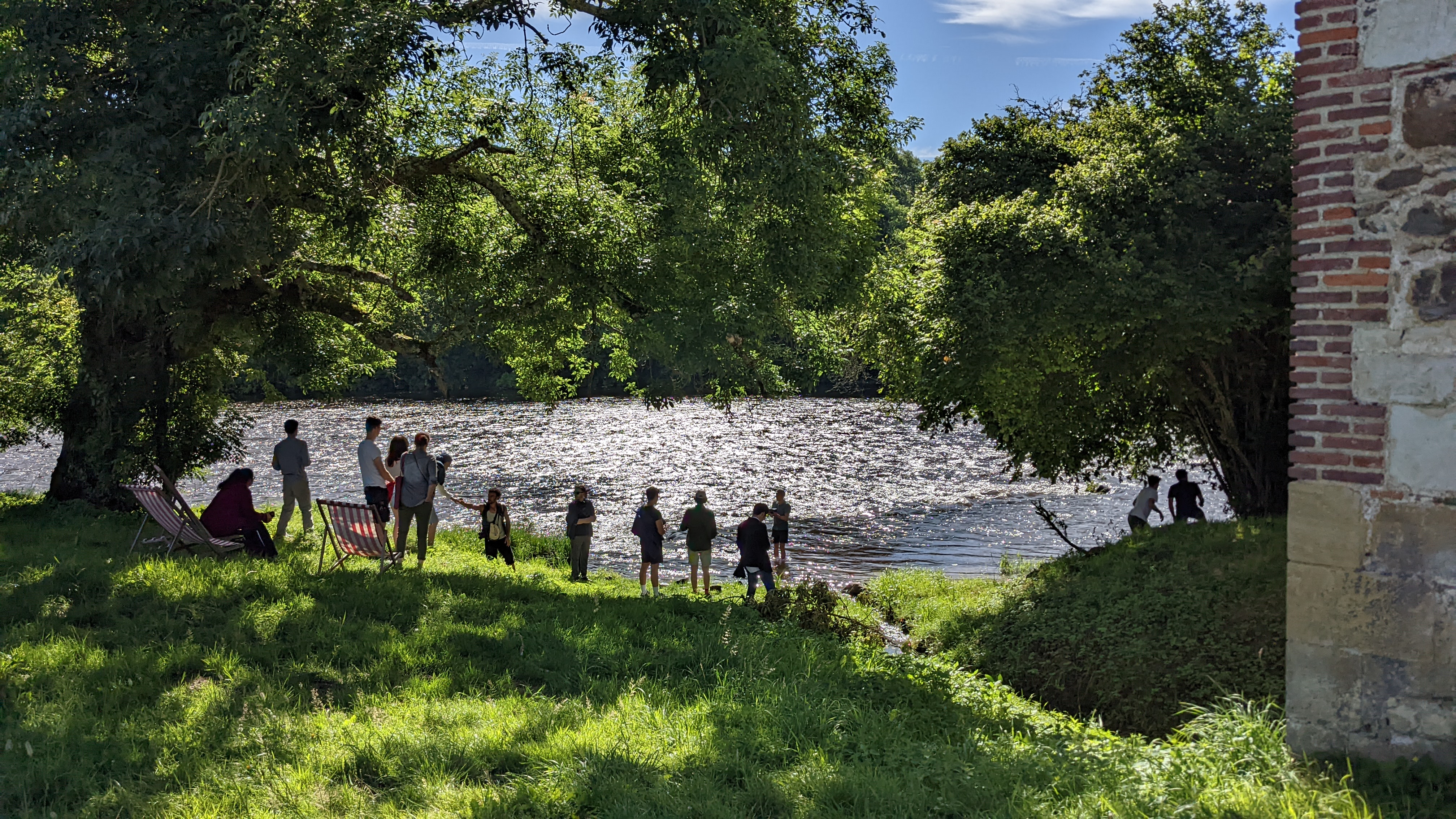
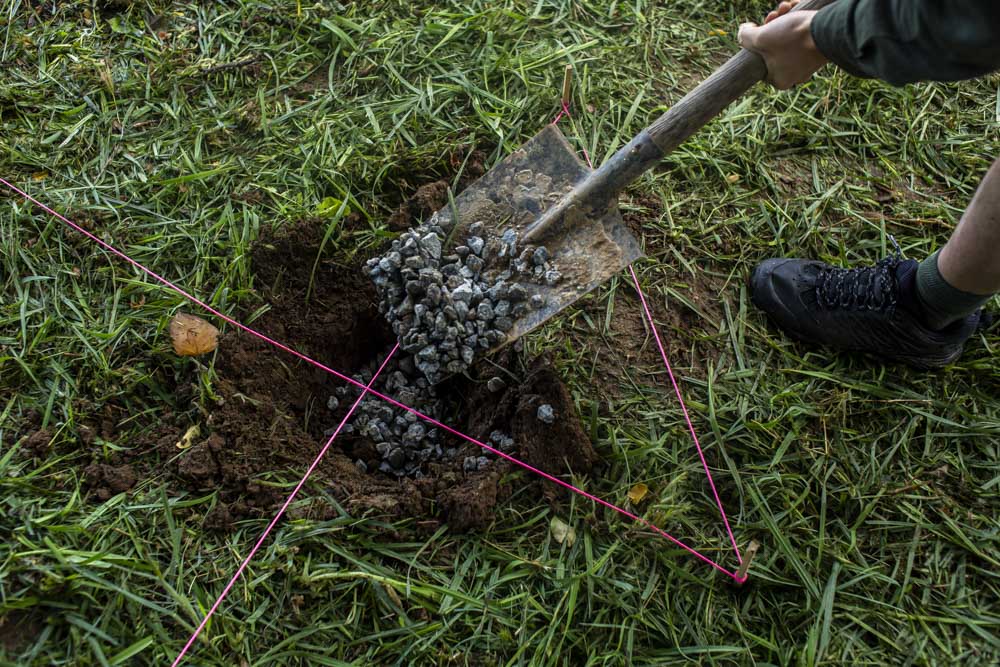
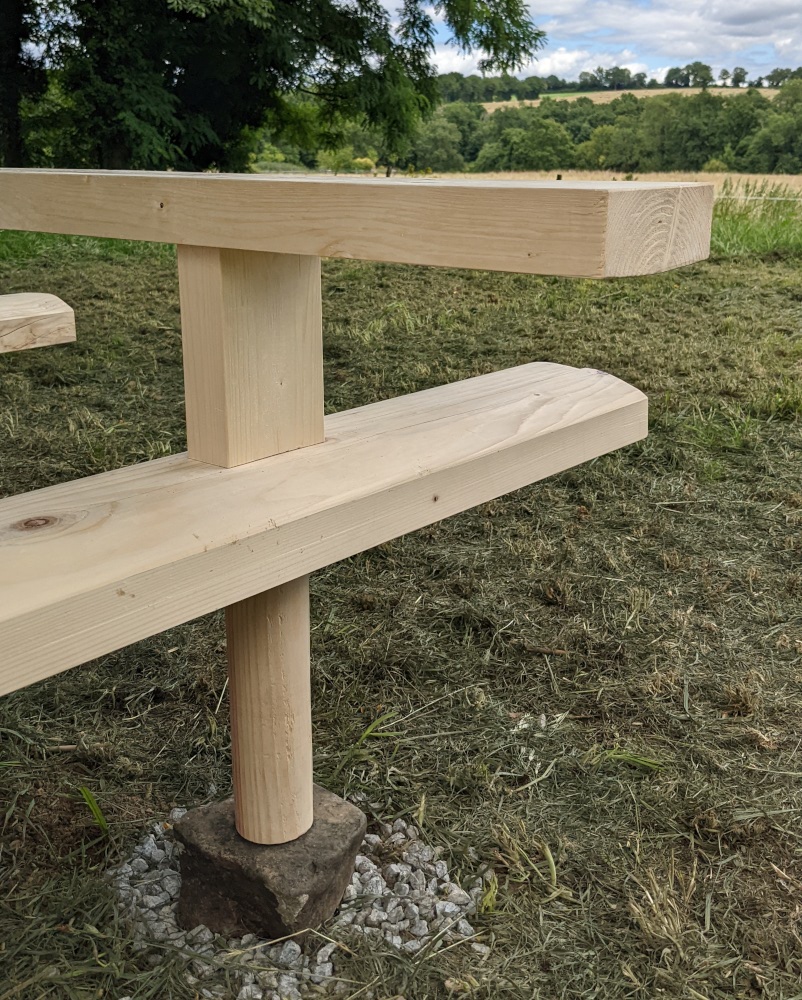
As part of the foundation of the bench, we needed 9 flat rocks to sit underneath the posts of the bench. This is how old japanese shrines are built, and in our case prevented the legs of the bench from standing in water. We went down to the stream to pick some flat rocks from the river bed and carried them back to the site. Each post would stand on a flat rock that would sit in a shallow pit filled with pebbles.

Making the joinery

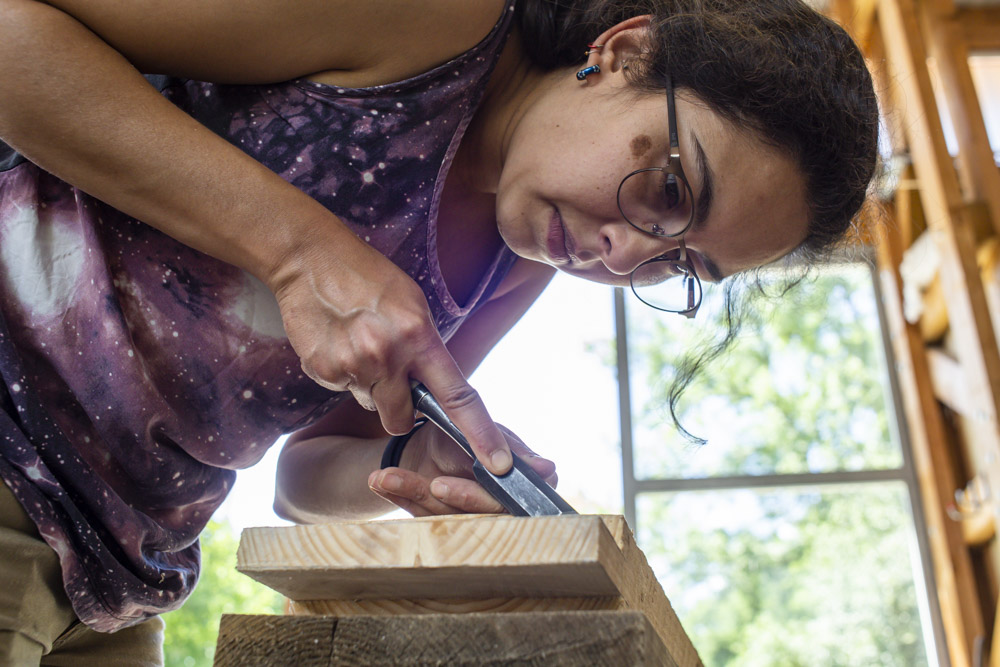
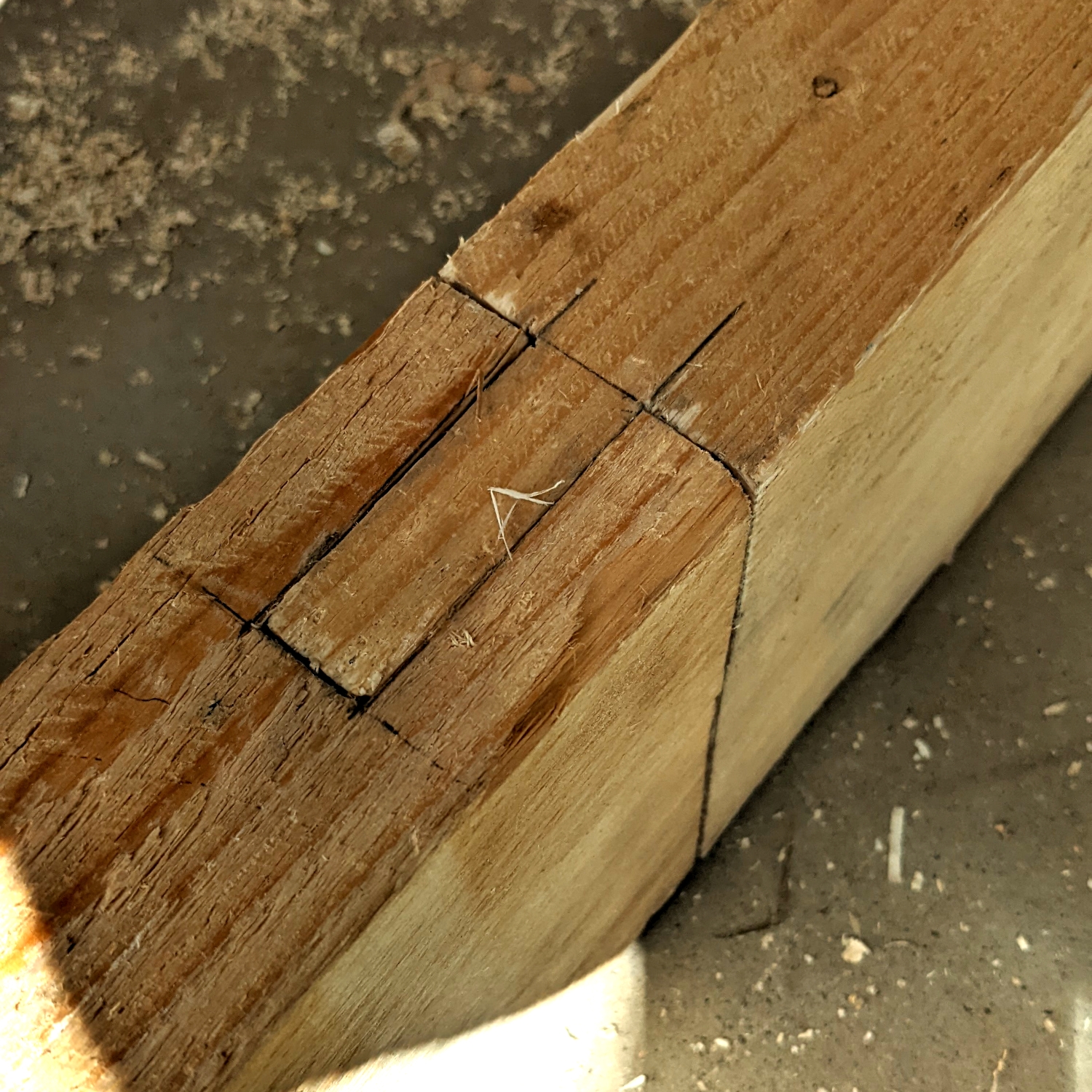
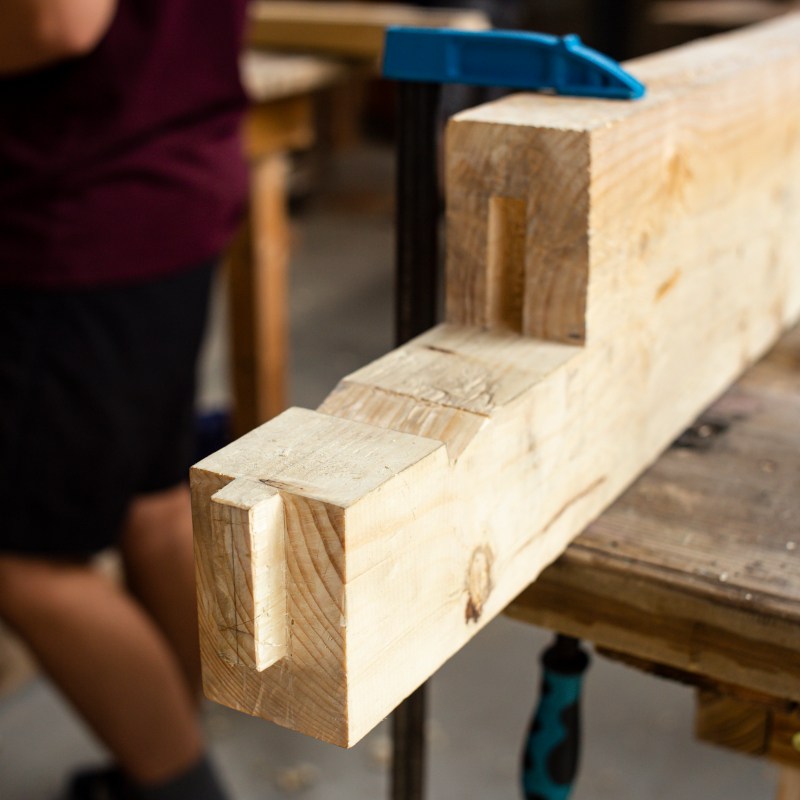
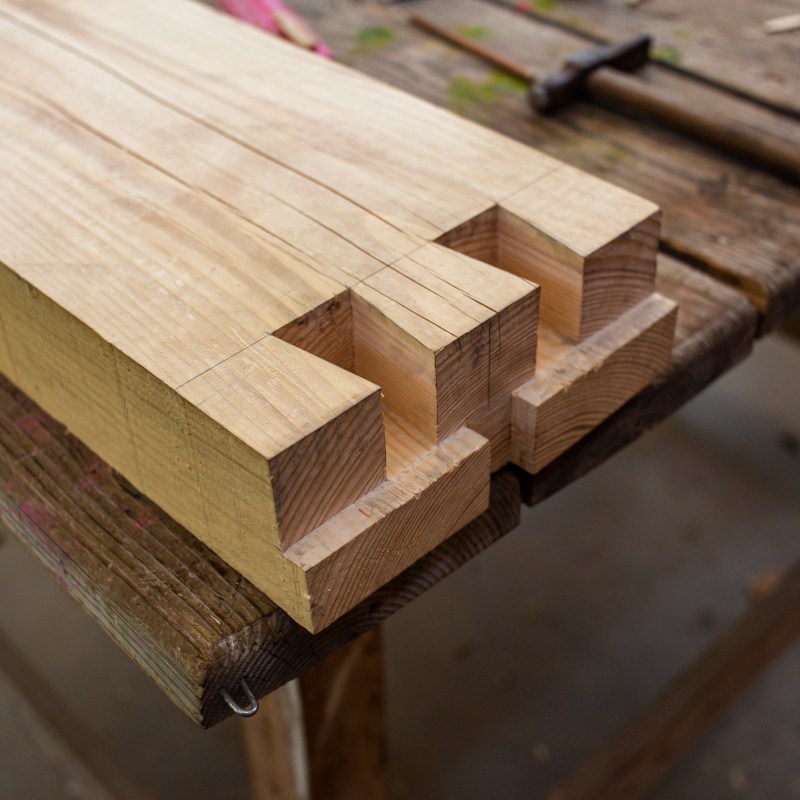
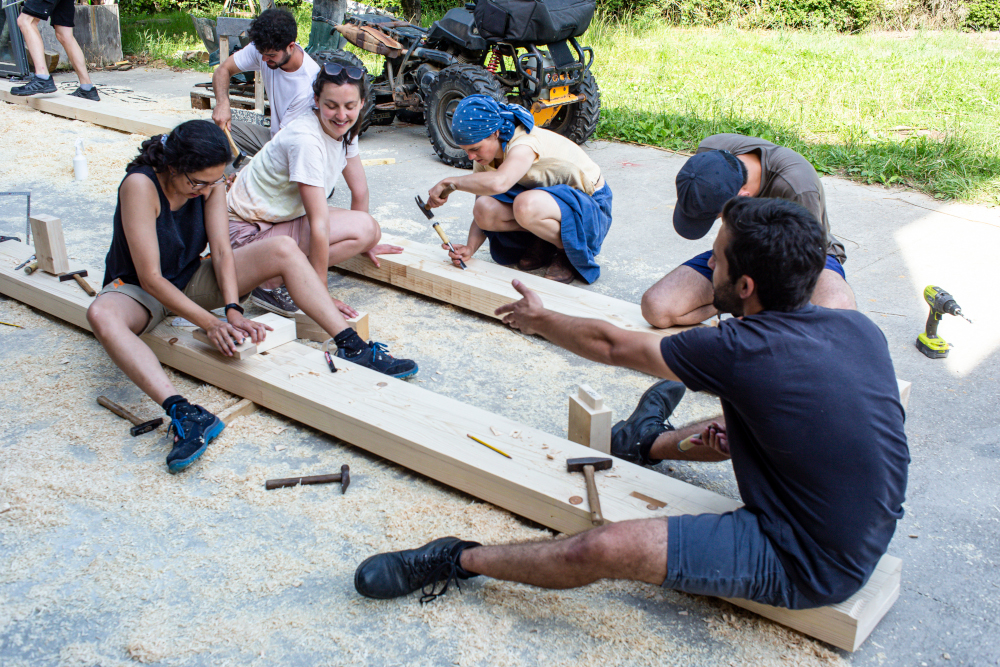
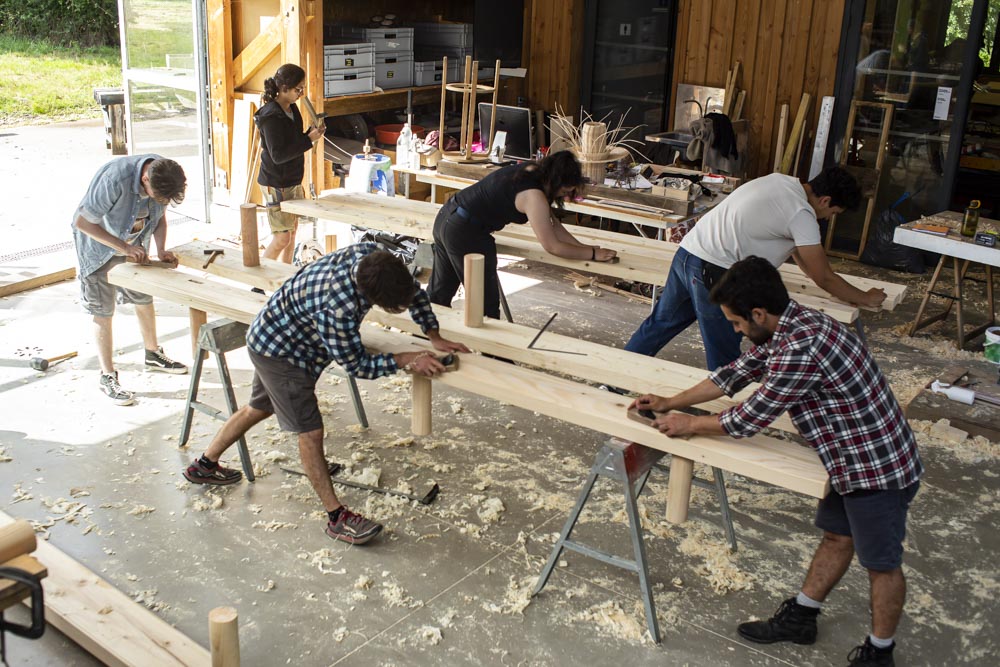
We returned to the workshop and each team of two laid out and started work on the chosen joint. Three teams were joining two beams each to make three tables, and three would become the benches. Marion and I chose to make a simple Bridle joint, which would be pegged with two dowels. I chose to make the male part, while she made the female. We used all the techniques we had learnt in the first half of the course to saw and chisel the perfect joint.

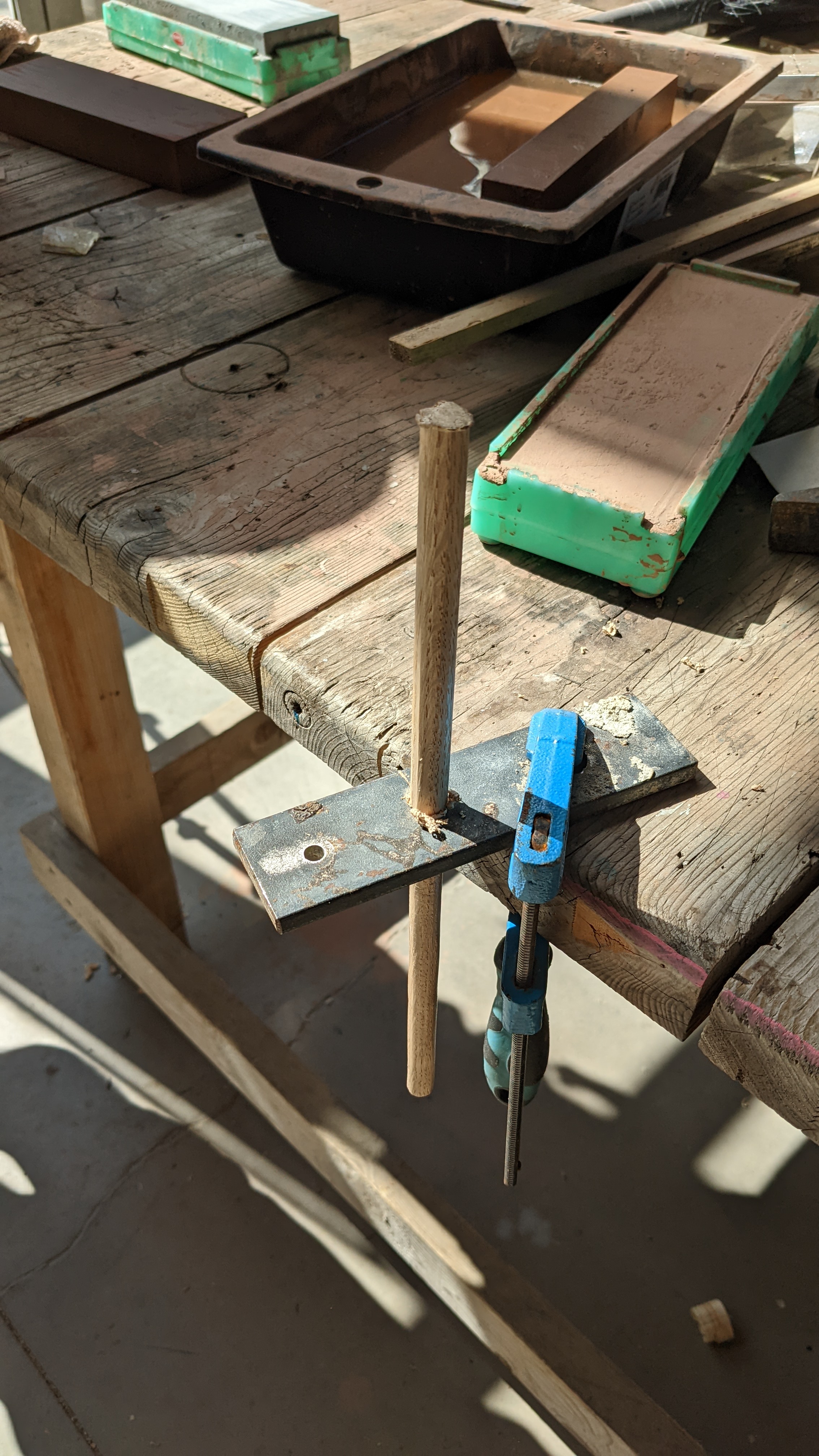
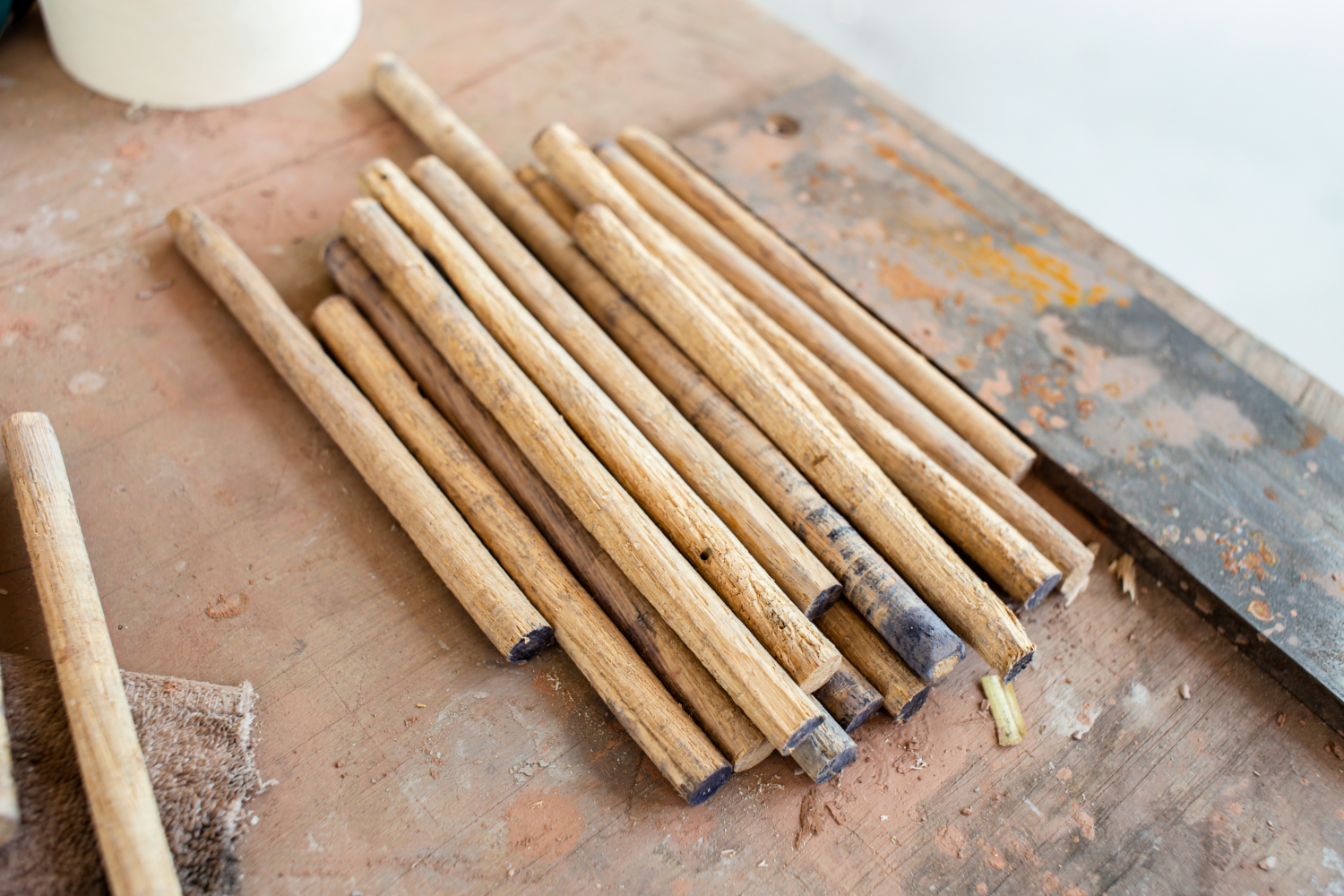
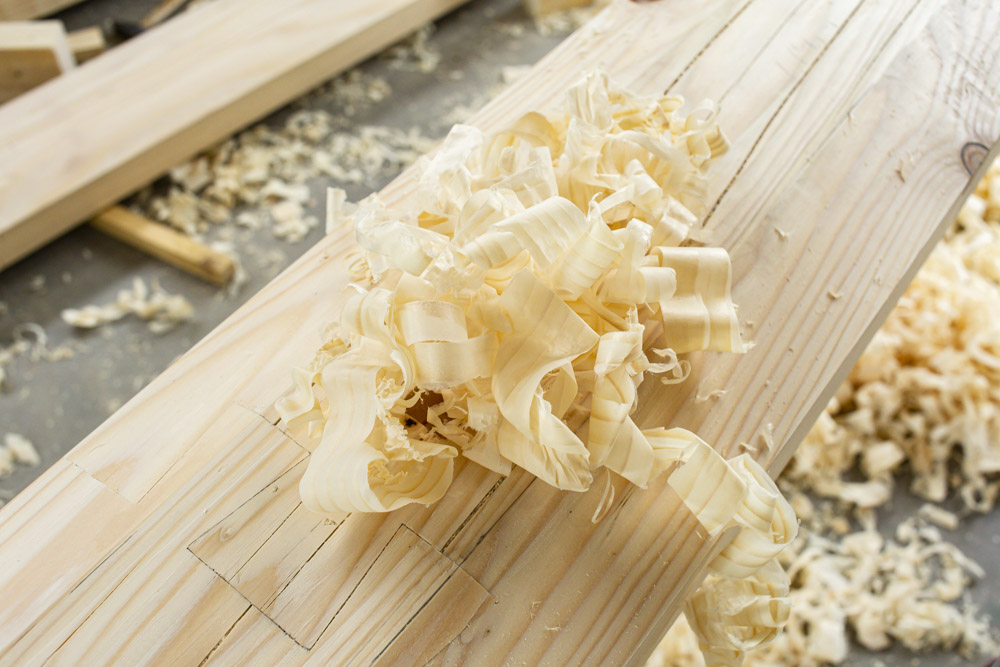
We made Oak dowels by hand in order to lock the joint. We first cut smaller sections of Oak and then shaped them into almost round sections with the kanna. To get a perfect cylinder, these pieces were then hammered through a hole in a metal plate which shaved off the last uneven bits to give us a round 8mm dowel. We then assembled our joint and locked it with the dowels. Using our kanna we smoothed the joint and the dowels until everything was flush.

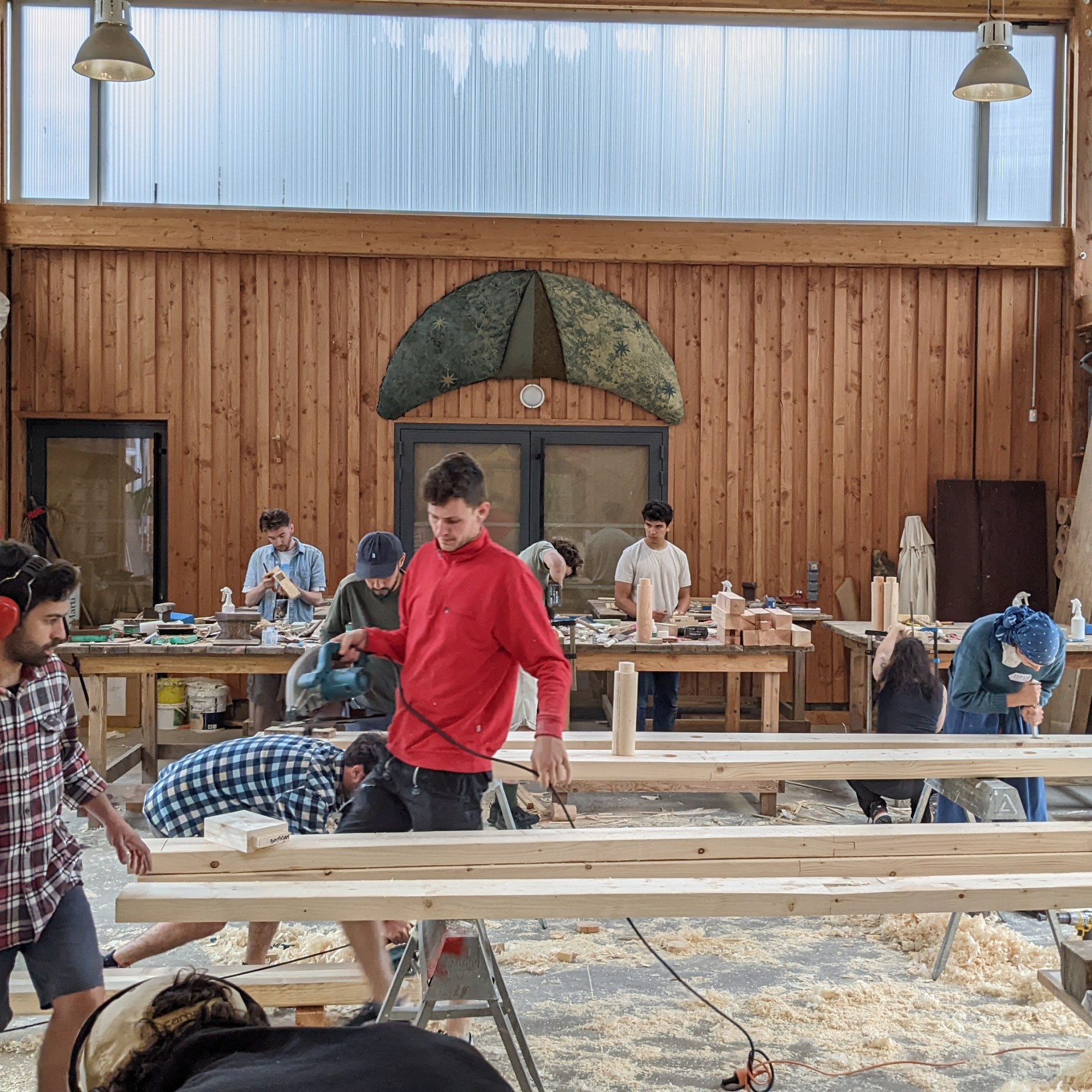
The workshop was a busy space, with all teams rushing to complete and assemble their joint. Some joints were more complicated than others, and took a little longer to make. However they truly represent the intricacy and technique of traditional Japanese joinery.

Assembling the bench

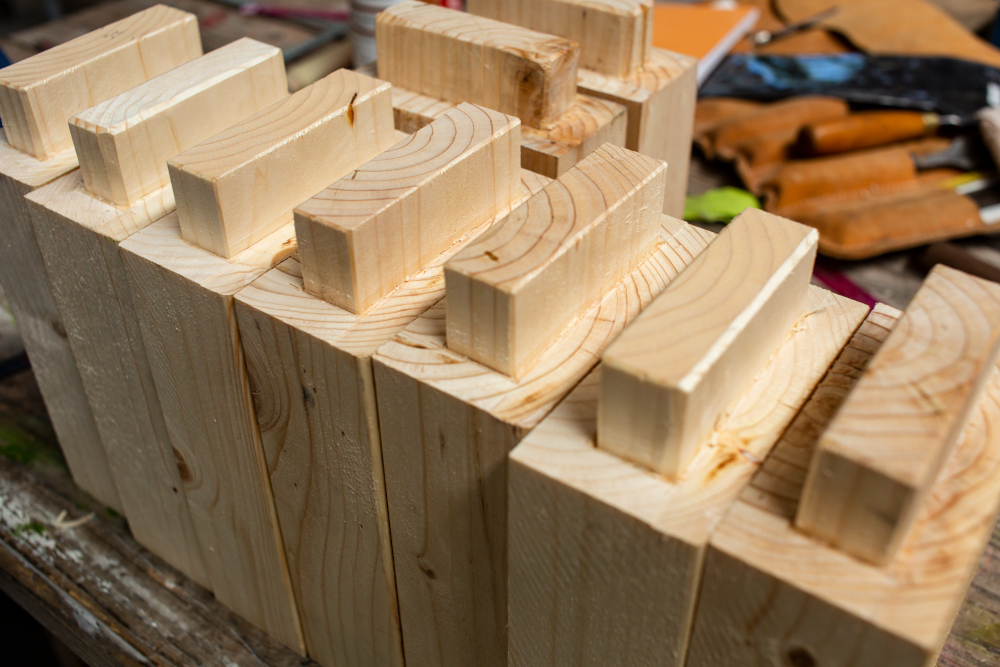
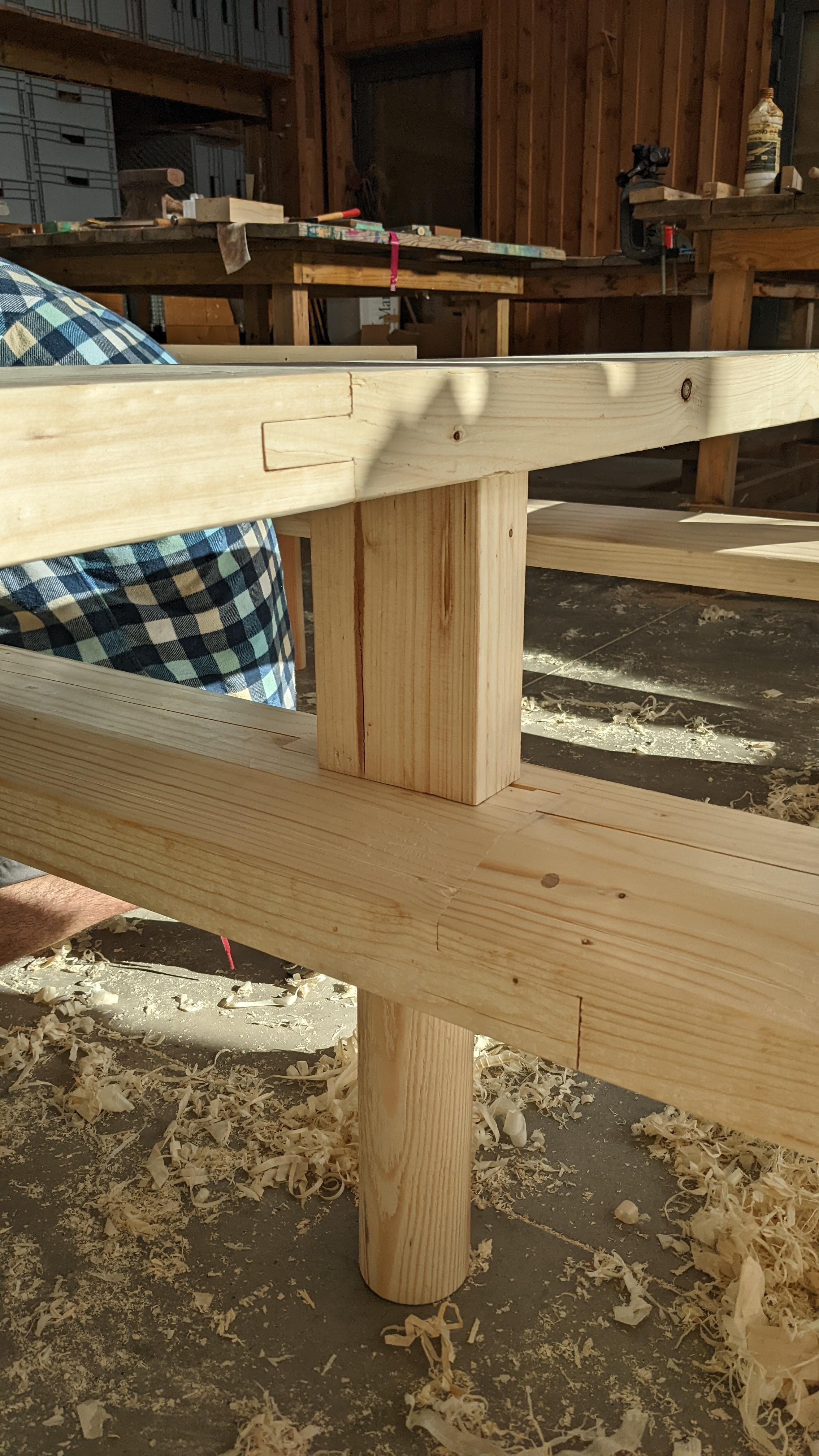
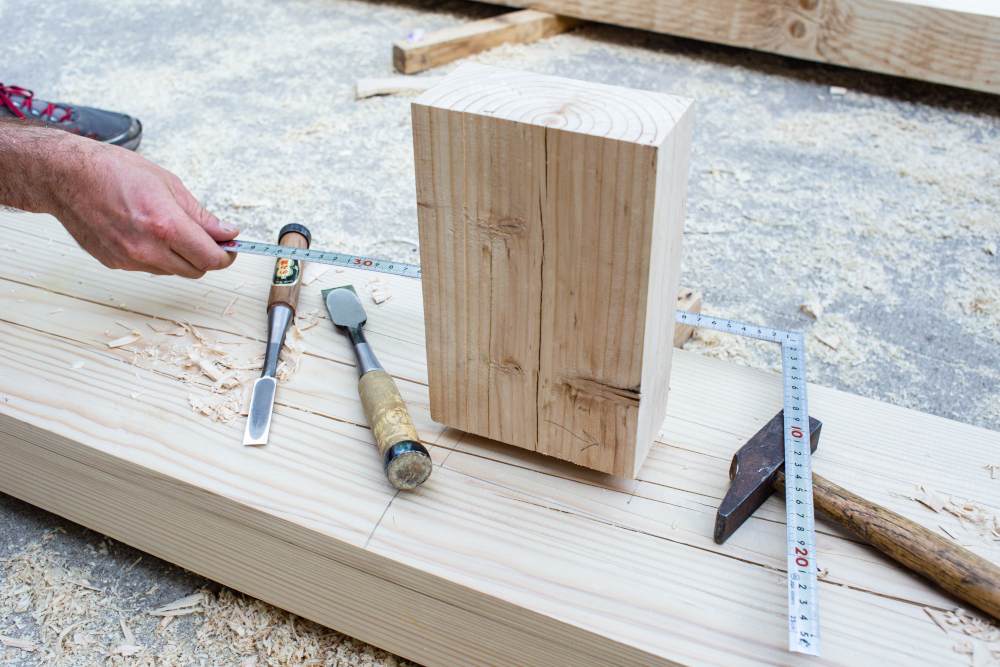
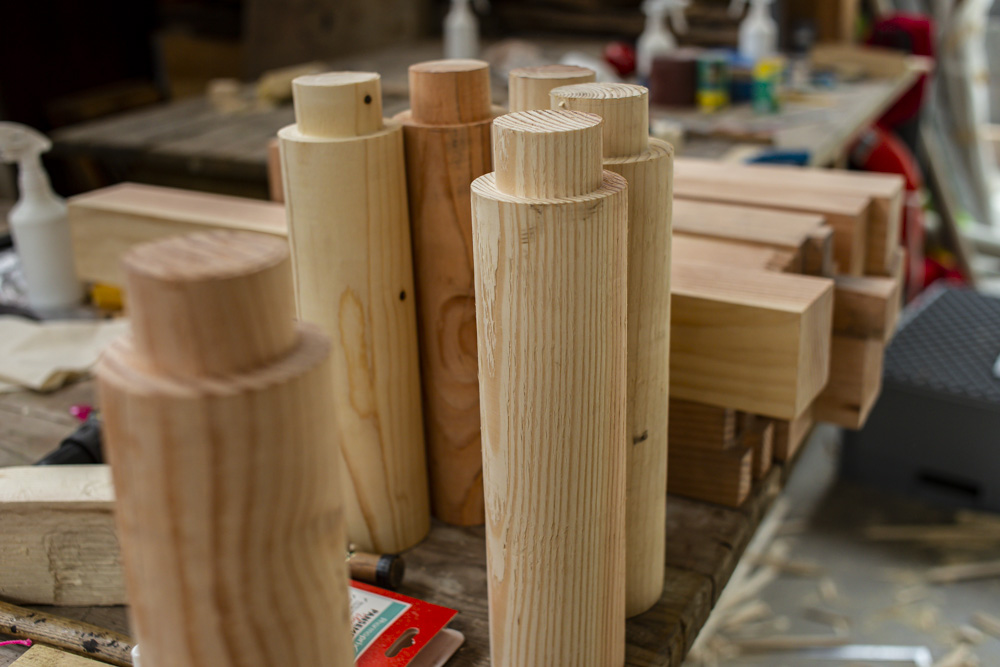
While some teams were still busy finishing their joinery, some of us started preparing the elements that would connect the tables to the benches. Circular posts with a circular tenon would support the benches like legs. Rectangular posts with a tenon would sit between bench and table acting as spacers and connecting elements.
We laid out the mortises on all 3 benches and 3 tables together so they would be aligned. The mortise for the circular posts was drilled with a large forstner bit and then the material in between was chiseled out by hand. For the rectangular posts, the mortises were cut entirely by hand.

A last couple of finishing touches like a drip nose to help rainwater to drip off better were added. We also finished the surfaces of table and bench with the kanna to ensure a nice smooth surface that was pleasant to touch and splinter free.

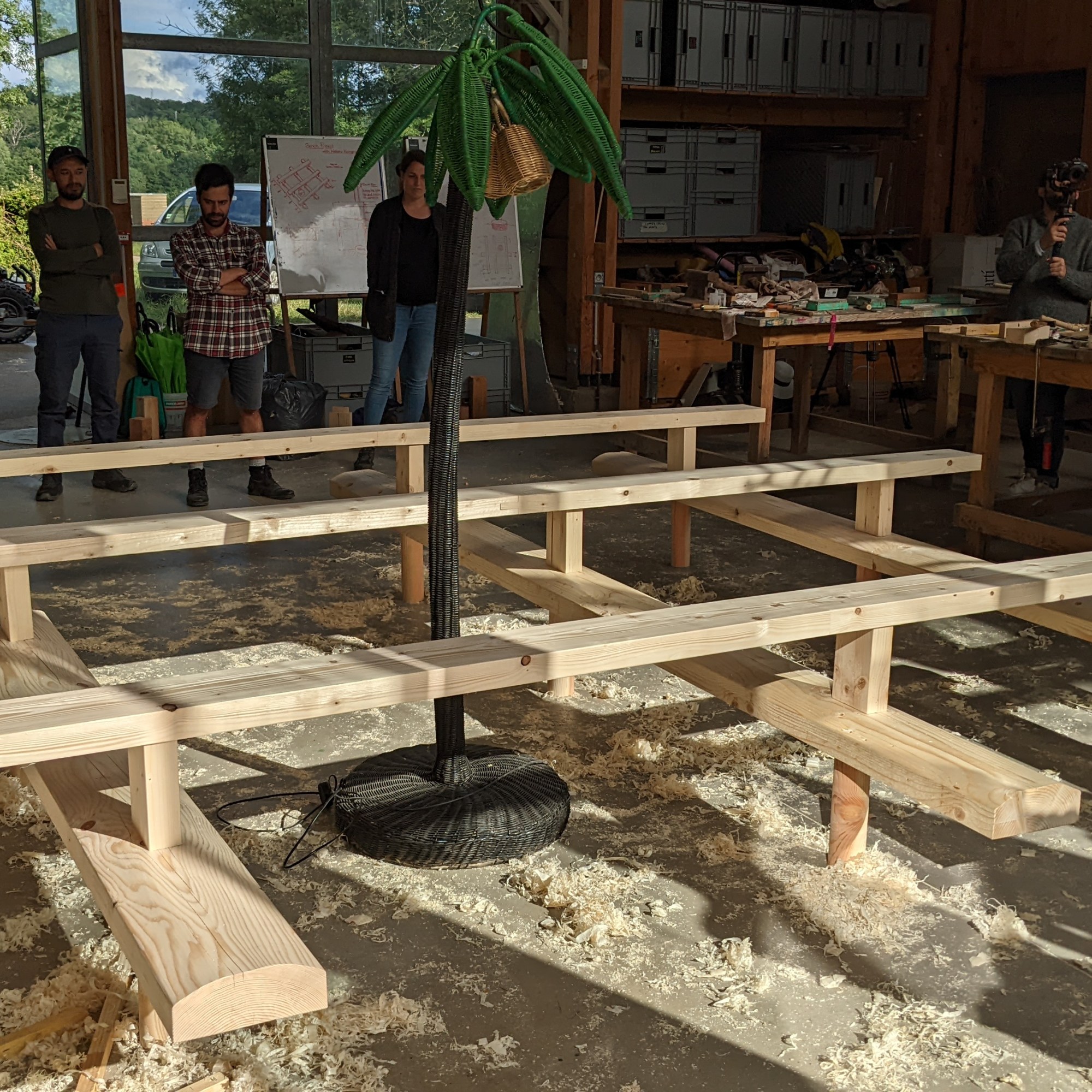
Before carrying the bench out to the site around the tree, we did a dry assembly in the workshop. We decided where we wanted the tree to be, and checked if everything fit together as planned. It was lovely to see the bench come together, and we marveled at how large it looked. The best part was that it was delightful to sit on and our entire group could fit on it at once!

Installing the bench

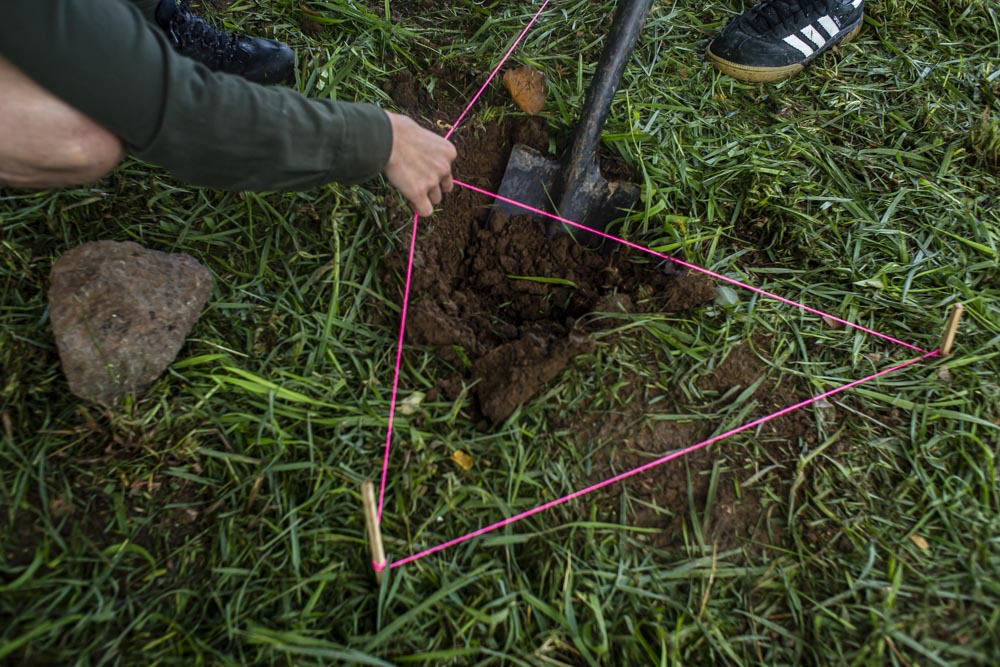
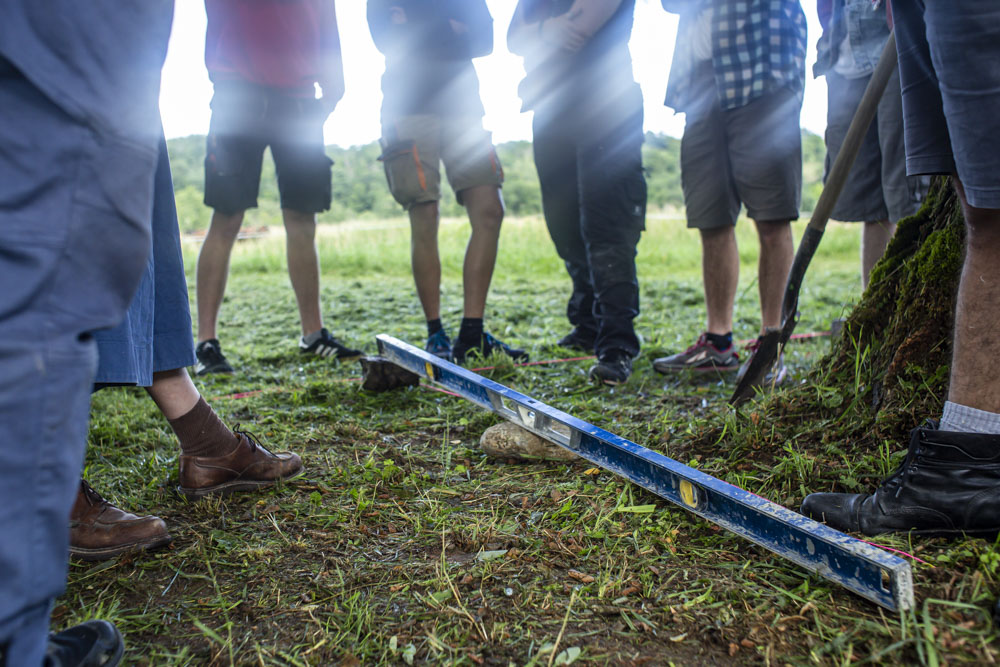
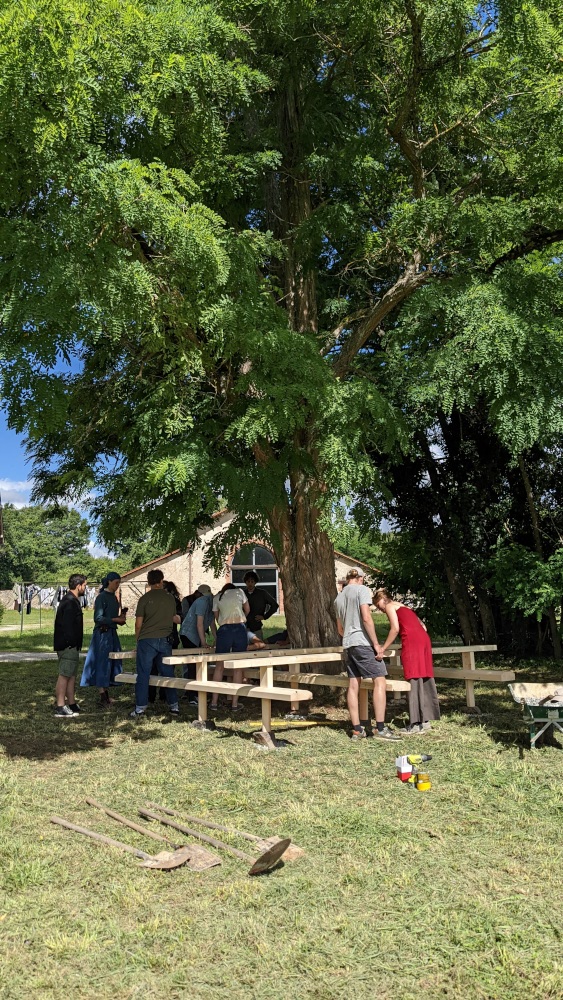
The site was prepared before the bench was installed. We cut the grass around the tree, and mapped out where the legs would sit exactly. We dug shallow holes and filled them with gravel to stabilize the rocks that would carry the bench. The stones were leveled so that the bench would be straight once installed.

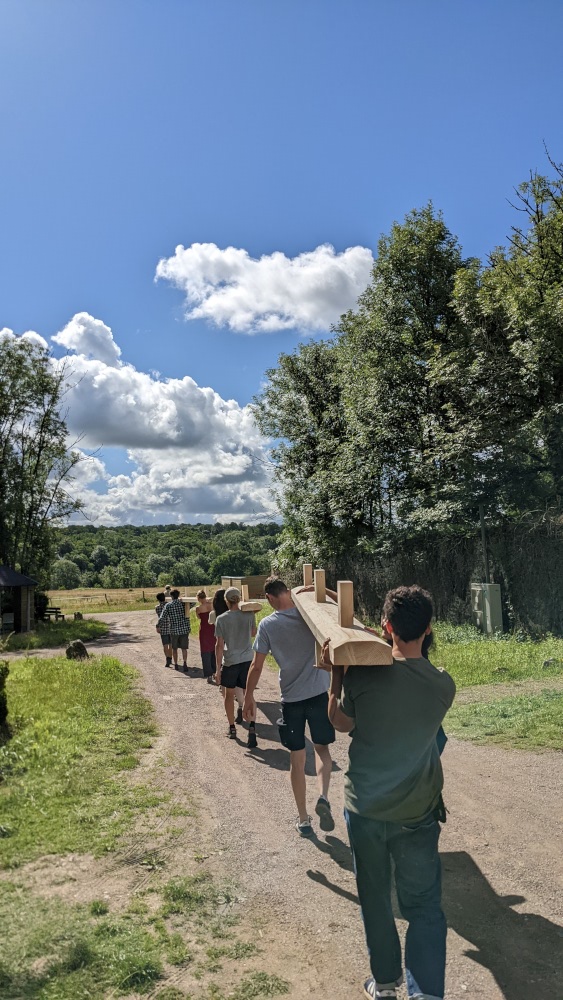
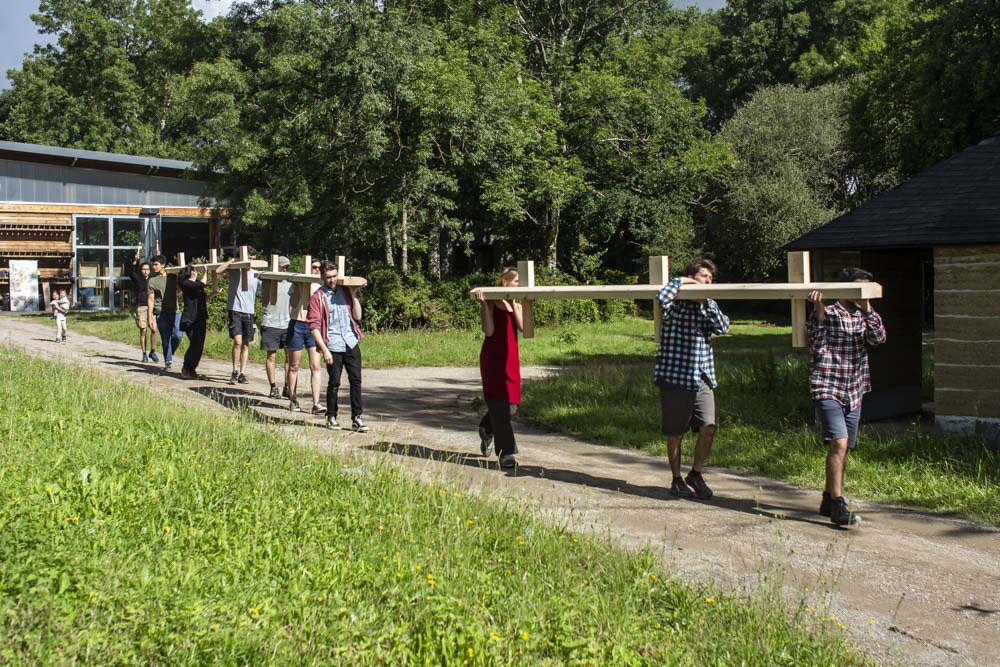
The next morning we ceremoniously carried the individual parts of the bench out. Each member of the group helped carry it out and it was like we were proudly presenting our work to the world.
Once at the site, we placed the benches on the stones, positioned the tables across the benches and connected them using the handmade Oak dowels. This process went surprisingly quickly, and the bench was very sturdy once everything was connected.

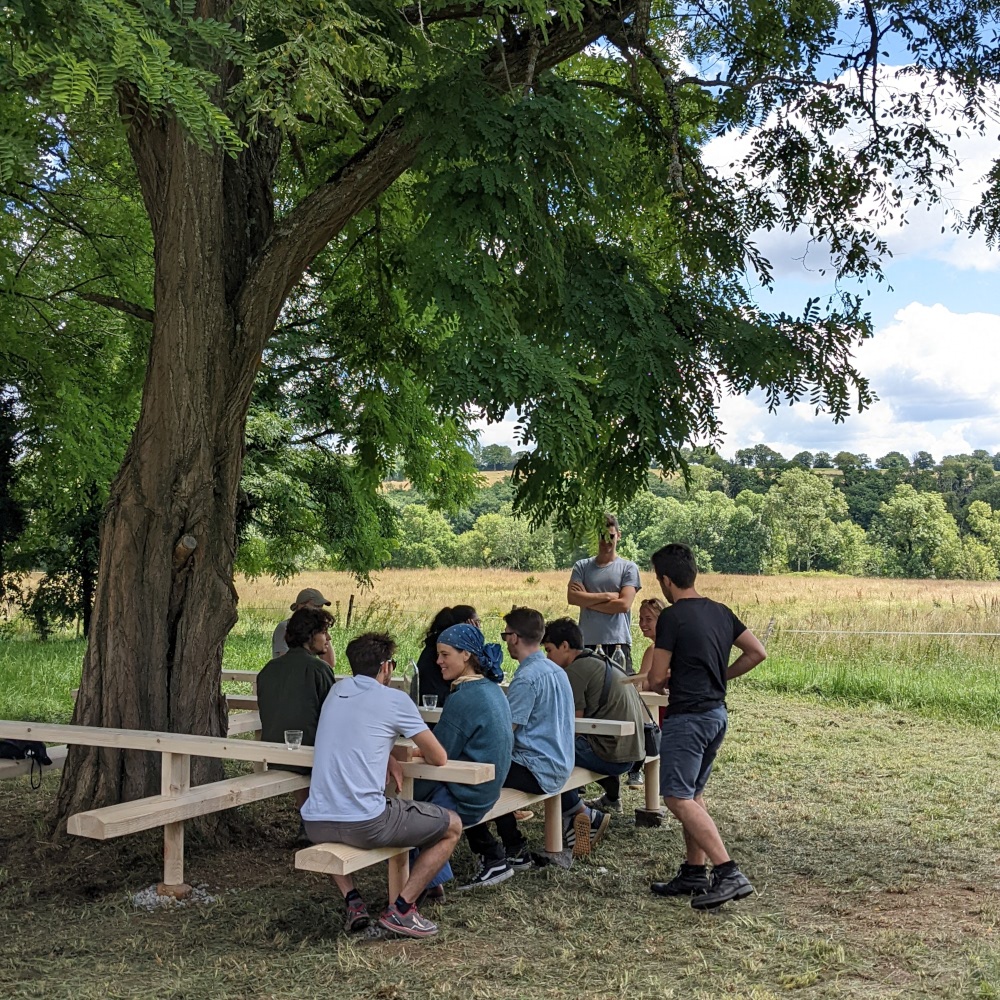
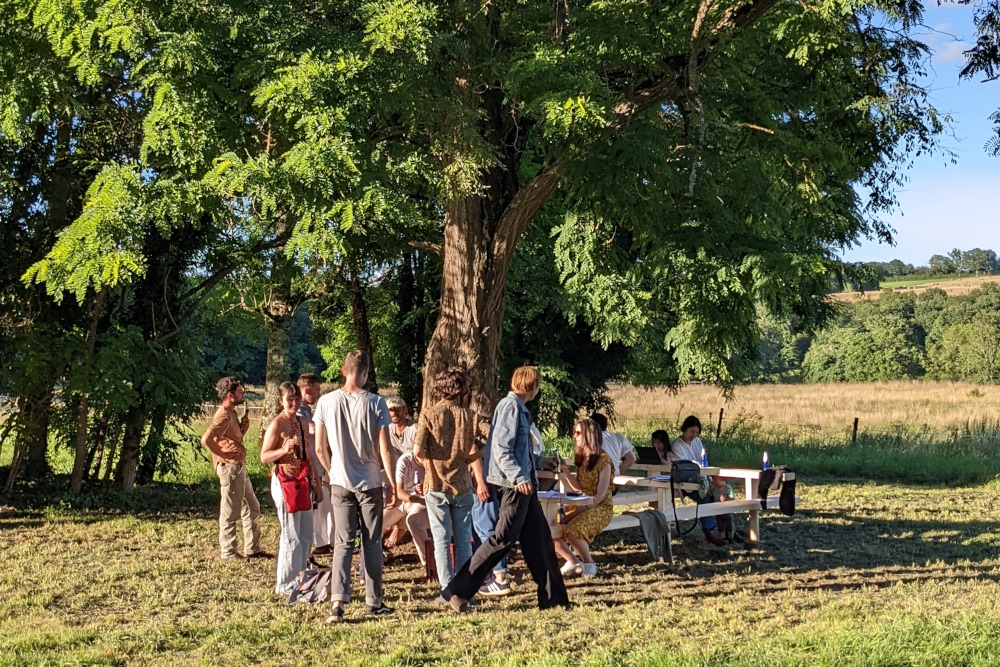
We spent the last couple of hours at the Domaine enjoying the bench we had built in the last 4 days. We invited other residents of the Domaine to sit and use the bench as well, drinking juice and coffee and experiencing sitting under the large Robinie tree.

What I loved the most about the design of the bench was the fact that it was so versatile in its usage. I observed how different people used it in different ways depending on the situation; some straddling the bench, others sitting sideways, some using the tables to sit on, others using the tree as a backrest. The bench even allowed for a comfortable nap, or just watching the countryside with your feet up, listening to the birds and the gurgling of the river downhill.

On the last morning I sat in the warm light of the sunrise with my cup of coffee, just trying to take in every detail of the landscape around the bench. It was a wonderful view, and it gave me a lovely sense of tranquility. Indeed a beautiful end to an enriching and unique experience.

Occasionally I see a video or picture on Instagram of the bench in use by other workshop attendees at the Domaine. It fills my heart with joy to know that we could contribute to life on the Domaine in such a beautiful way. It’s always nice to see people using things you have made, and this remains the best part of my job as a furniture maker!

Picture credits – Vanessa Hörig, Pietro Migliorati and Simon Searle

Furniture Joinery Systems

This post talks about a couple of joinery systems I use while building furniture of different types. These can be permanent glued joints or knock-down joints that can be reopened for easy transportation and moving.
Each system has it’s own pros and cons and areas of application apart from being differently priced. Careful selection of the correct joinery system ensures strong furniture that is built to last. I have mentioned some use cases and examples of how I have used them in my work.

Lamello

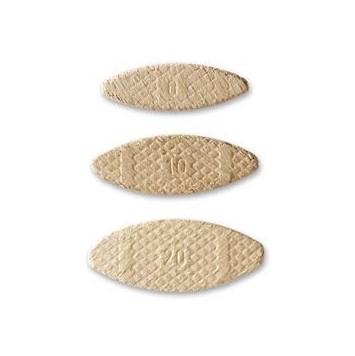
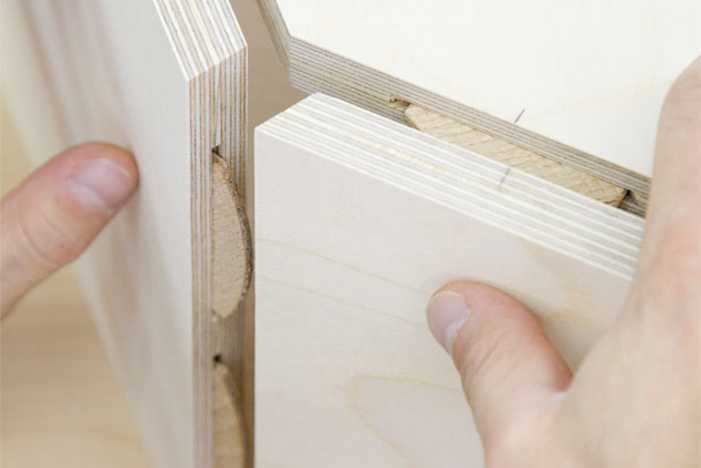
Lamello biscuits made of ca. 4mm thick Beech wood are elliptical in shape and come in different sizes. They can be used at intervals to connect 2 pieces of wood, using a lamello router to make the appropriate cuts in the material. They can be applied to join solid wood and wood based boards in simple butt joints or mitred joints. They add strength with additional glue area and help to align the workpieces forming an invisible, strong joint.

I have used Lamello biscuits in various projects like the Garden rack, the Tea Cabinet Blue as well as some parts of the Sideboard.

More information on Lamello.com

Domino

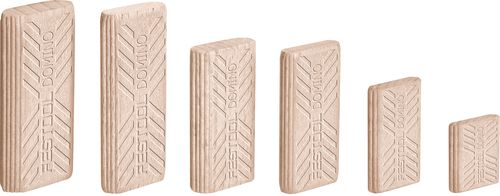
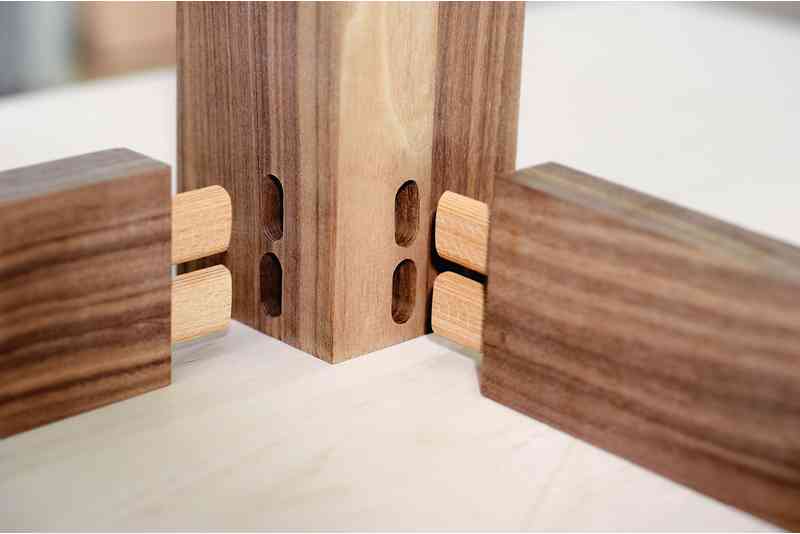
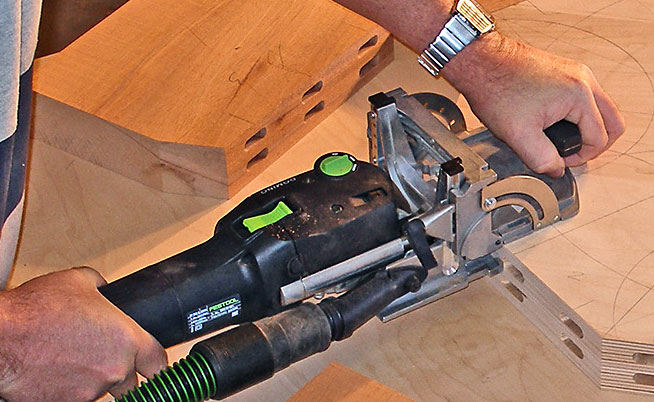
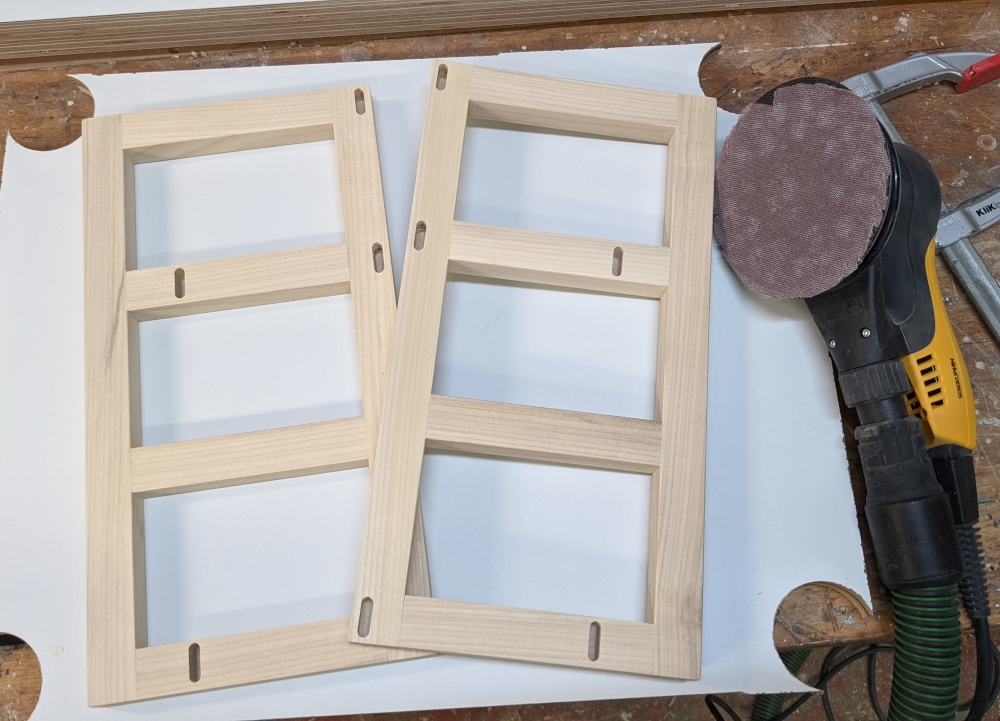
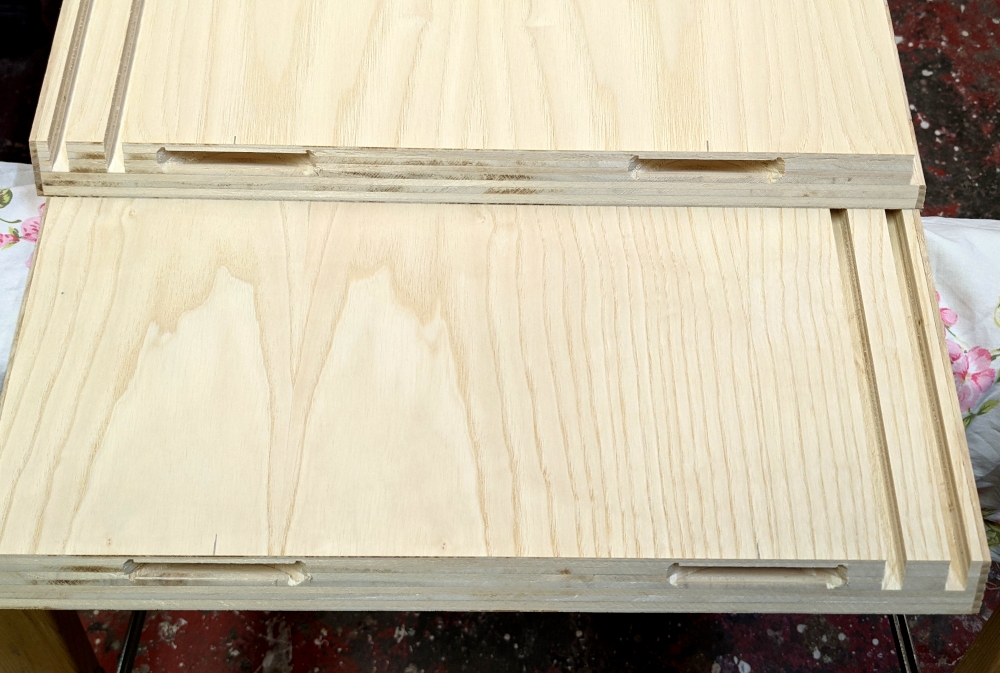
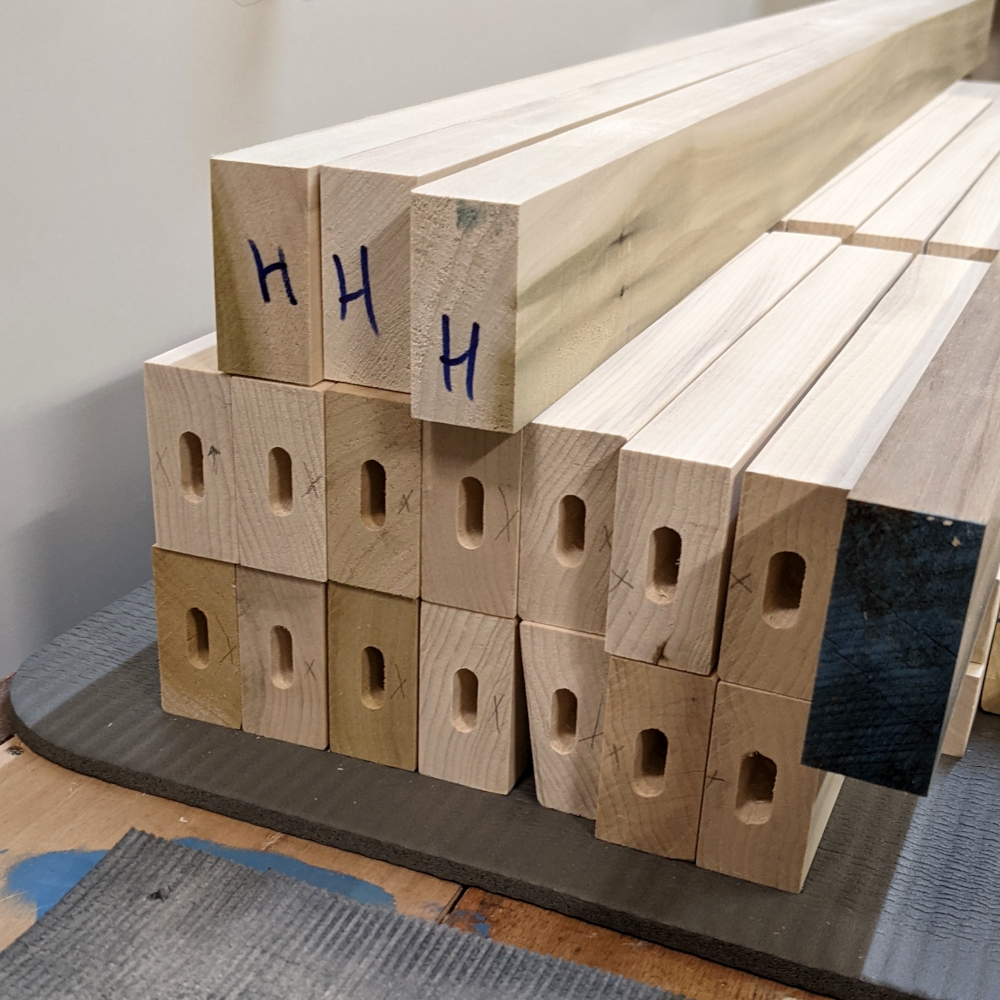
Domino dowels are a hybrid of round dowels and traditional wooden tenons. They are flattened pieces of beech wood in different thicknesses and lengths, to be used depending on the dimensions of the workpiece. They are used to join panels, but also for frames and wooden structures as a replacement for a tenon-and-mortise joint. It creates strong, invisible joints with the help of glue. The pockets for the domino dowels are made with a special Domino router machine.

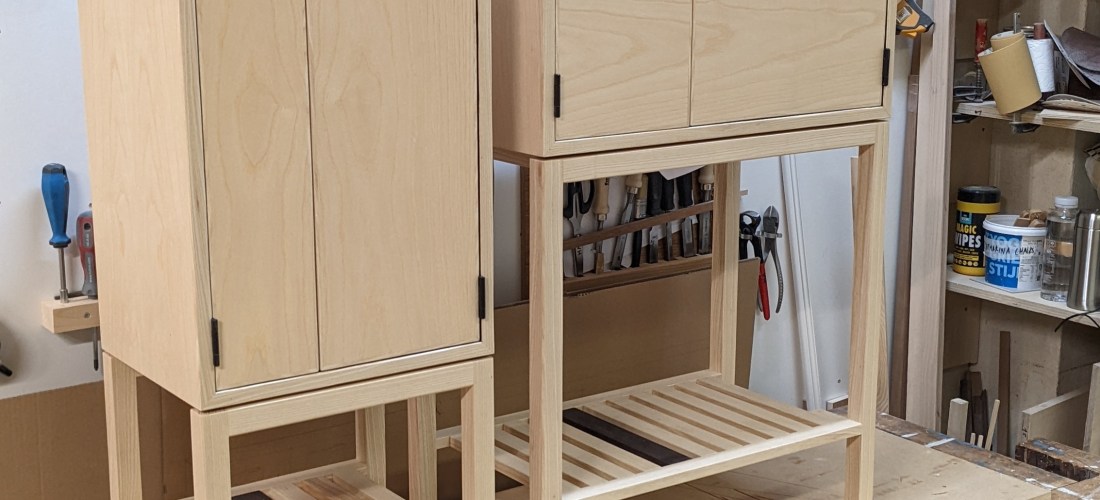
I have used Domino dowels extensively in the base structure of the Ashwood Cabinets, as well as other projects like a staircase railing and balcony railing made out of solid wood.

More information on Festool.com

Clamex

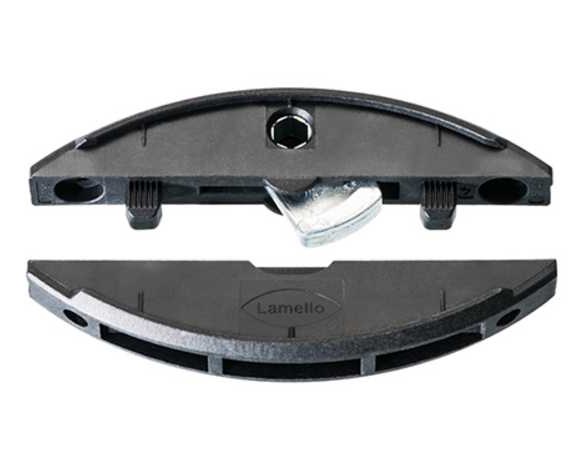
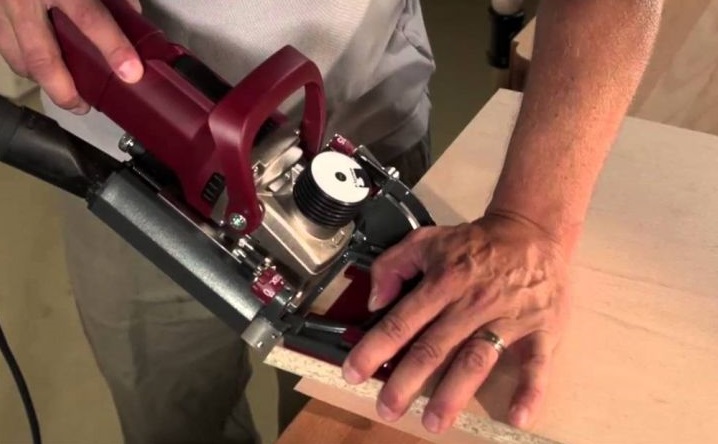
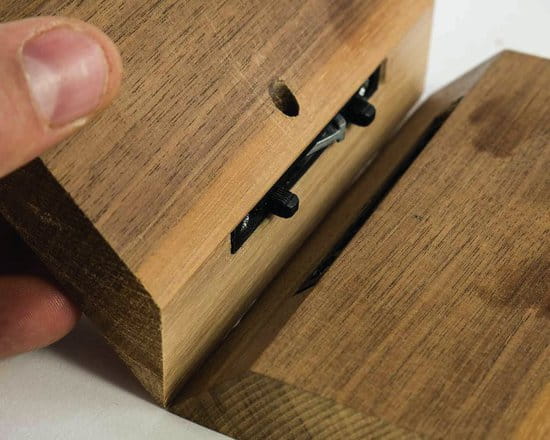
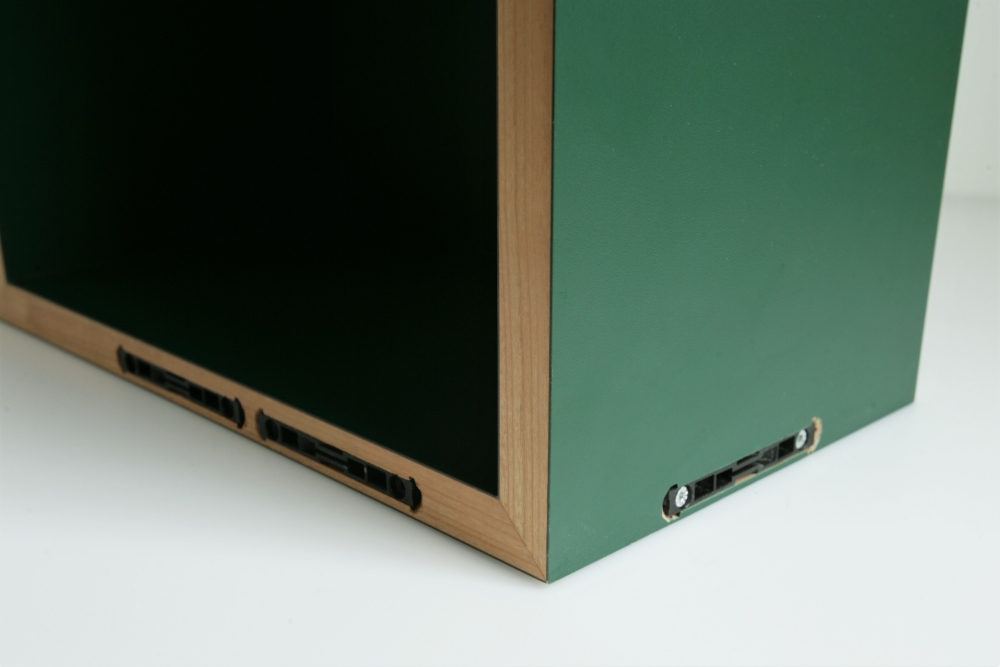
Clamex connectors are similarly shaped to wooden Lamellos, but are made of plastic with a small lever on the male part to lock the two. The two components can be closed and opened multiple times, making the clamex a great connector for knock-down furniture. The lever is accessed through an almost invisible 6mm hole. Clamex connectors can be used on wooden boards for butt joints as well as mitre joints and are extremely useful while gluing mitre joints due to their immense strength. The groove for the Clamex connectors is made using a special Clamex router by hand or on a CNC machine.

I often use Clamex connectors when assembling large mitred cabinets like the Sideboard, or for ease of dismantling like in the CD Shelf. Clamex connectors can also be used to join 2 parts of a furniture like I did in the Tea Cabinet.

More information on Lamello.com

Joinery systems developed by industry leaders help cabinet makers speed up processes making furniture more affordable and accessible to everyone. Traditional joinery techniques take longer to produce and sometimes do not have applications like being knock down. There are many other methods and hardware that have been developed, the ones above are the systems I have experience with and trust. They make for strong, reliable joints that create furniture that will last a lifetime and can be passed down from generation to generation.

The images below show examples of how I have used this joinery.

The Process of Cabinet Making

This page is best viewed on a computer browser.

Sketches & Iteration

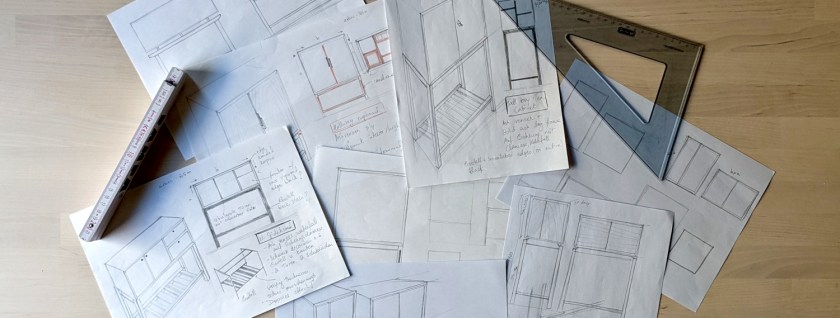
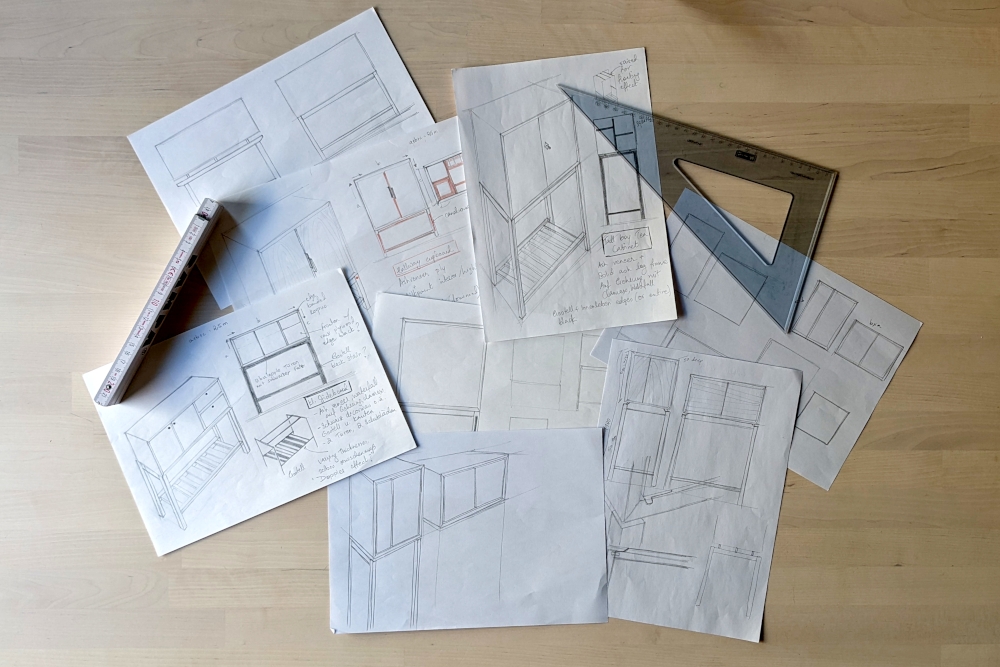
Most of my ideas and concepts usually begin with a simple sketch. If I am excited by it, I explore variations in proportions, size and composition. I include details and find the best way to join two or more materials. I flesh out the joinery and the sizes of cross sections of various elements like legs or aprons.

I can play with adding colour, or using multiple types of wood in one piece. I sketch out ideas for hardware that I would like to use or the placement of handles and hinges. I also analyse all the use cases and see if the piece is functional.

Hand drawn sketches help me visualise my designs
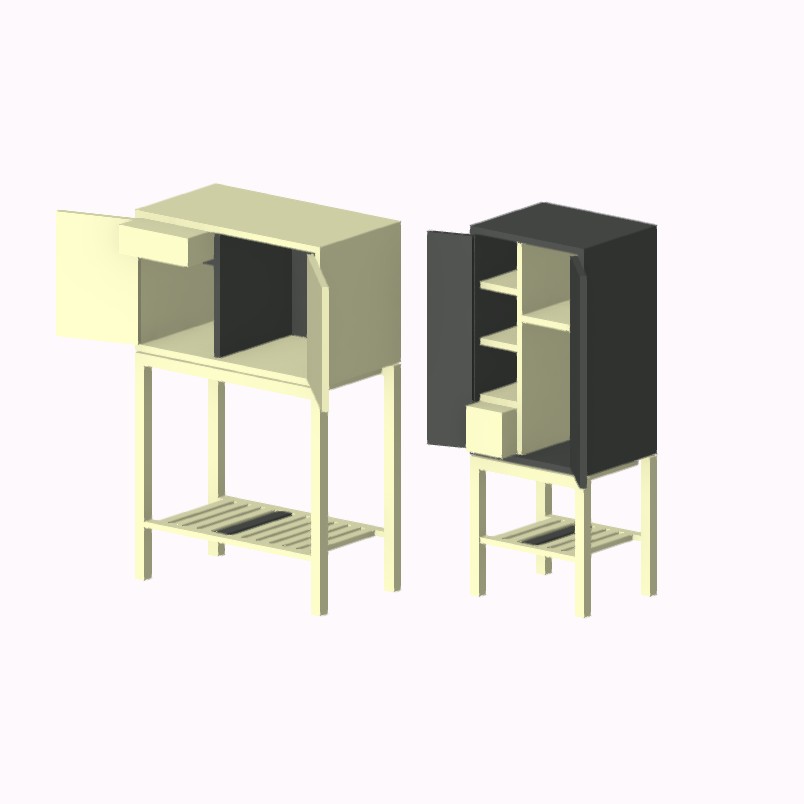
I use computer software to make 3D models of my designs

CAD Drawing & 3D Model

Once I am happy with how the piece is going to look and what details to add, I make a CAD drawing using a computer software. This helps me iron out the proportions, the functioning of moving parts, flesh out details and play with colours and finishes.

In addition I have a working drawing to reference while building the piece and can calculate material needs and costs. When working with a client, the 3D model and drawing make it easier to explain the project, and for the client to imagine the piece.

Hand-Picked Material

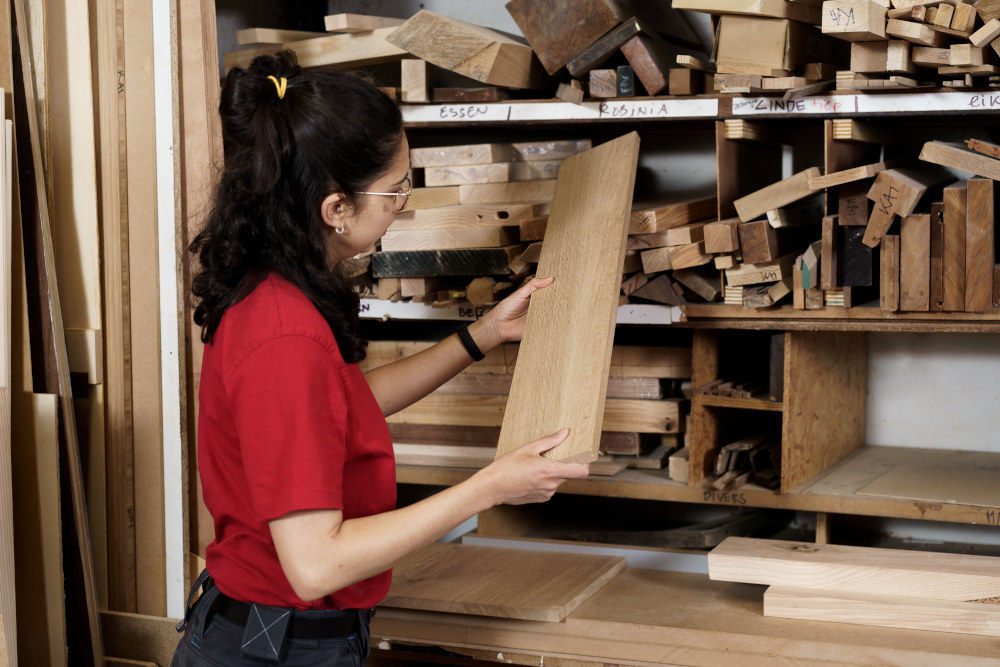
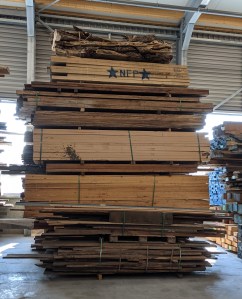
Wood is a natural material and has beautiful nuances and differences to its appearance. No two pieces of wood are the same, and the art of wood selection lies in choosing the perfect raw material to fit your furniture.

The best way is to actually go to the lumber yard and look at what is available. As far as possible, I try to choose material that comes from sustainable and responsible sources.

I hand picked the material from my local lumber yard, Amsterdamsche Fijnhout
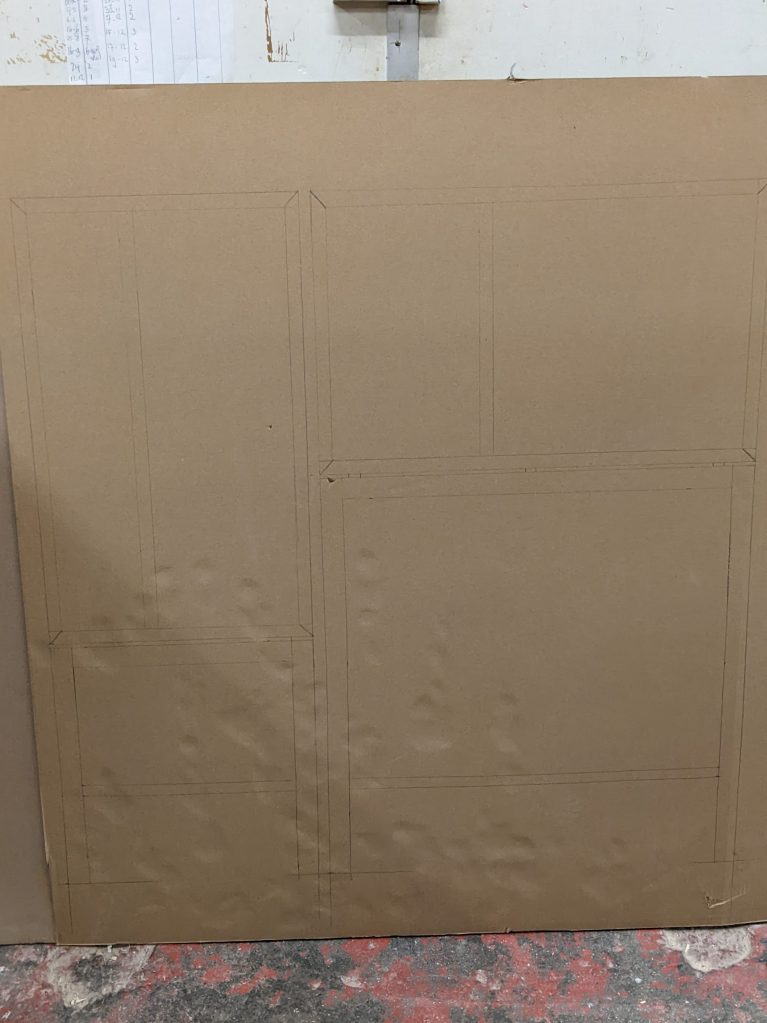
I drew a full scale drawing on a sheet of cardboard to get a better idea of scale and proportions

Full Scale Drawing

A full scale drawing always helps to understand proportions and allows tweaking while seeing real life thicknesses of materials and referencing textures.

Here I drew both cabinets side by side on a piece of cardboard. This helped me feel confident about the proportions I had chosen on the drawing software. I could compare how the two cabinets related to each other and whether they work as a set.

Breaking Down Larger Panels & Logs

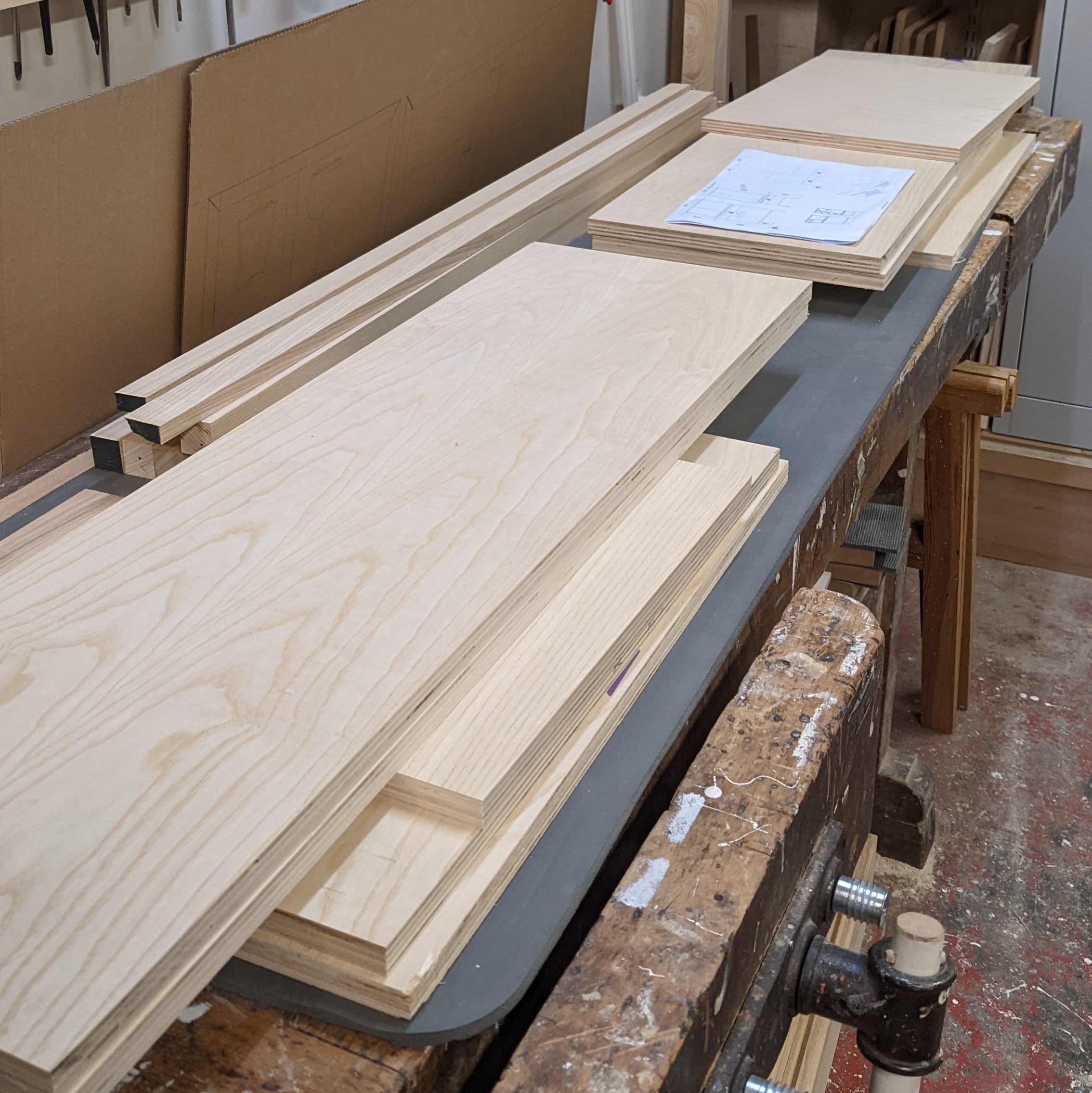
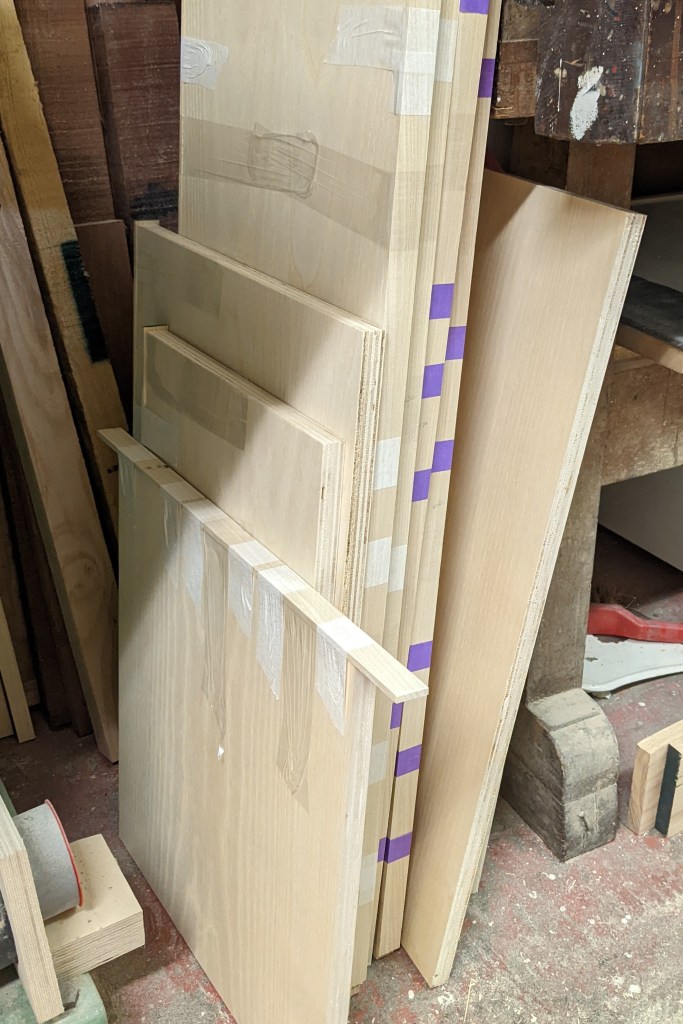
Once the raw material that I had selected at the lumber yard was delivered, I had to break down the large sheets and solid wood planks into usable sizes. This is when the cutlist I had prepared in the design phase comes in handy.

At this phase it is crucial to pay attention to the wood grain for both veneered panel as well as solid wood. I cut my panels for the doors and carcass with extreme attention to how the final grain layout would look later. In case of waterfall edges, the cut pieces must be marked to avoid confusion. For the solid wood I used on the legs, I made sure I had the right orientation of rift vs quatersawn so that I had a more delicate grain showing on the outside. Structurally, the grain also plays a huge role while laying out joinery.

I also made solidwood 5mm edge banding that I would use to seal the edges of the plywood.

Large boards and logs need to be cut down into component parts
I add solid wood edgebanding to the edges of the plywood to protect and seal the edges

Edgebanding

After the veneered boards were cut to final size, the 5mm thick solid ash edge banding is applied to protect and seal the plywood edges. This is done with wood glue and tape, working fast and pulling the tape extremely tight to avoid unsightly gaps between board and edgeband. The aim is to have a seamless, even board as an end product.

The glue is left to dry for atleast 24 hours before the edgebanding can be trimmed to the thickness of the board. There are multiple ways and methods of doing this, I use a table router with a flush trim bit, and do the last 0,5mm by hand with a card scraper. This gives me more control and I have a perfect finish.

Cutting Mitres & Testing Waterfall Woodgrain

After trimming the edgebanding, it’s time to cut the 45 degree mitred corners of both the cabinets. I had to take care to cut precisely and carefullly to achieve a nice clean edge after gluing up.

Mitred edges are perfect to show off grain, and I made sure to have a continuous ‘Waterfall’ grain around around every corner.

I also marked out and routed the joinery for the central divider at this point, since the machine would not be able to fit into the interior of the cabinet once it was glued together.

Mitred corners on cabinets showing a continuous waterfall woodgrain

Hinges

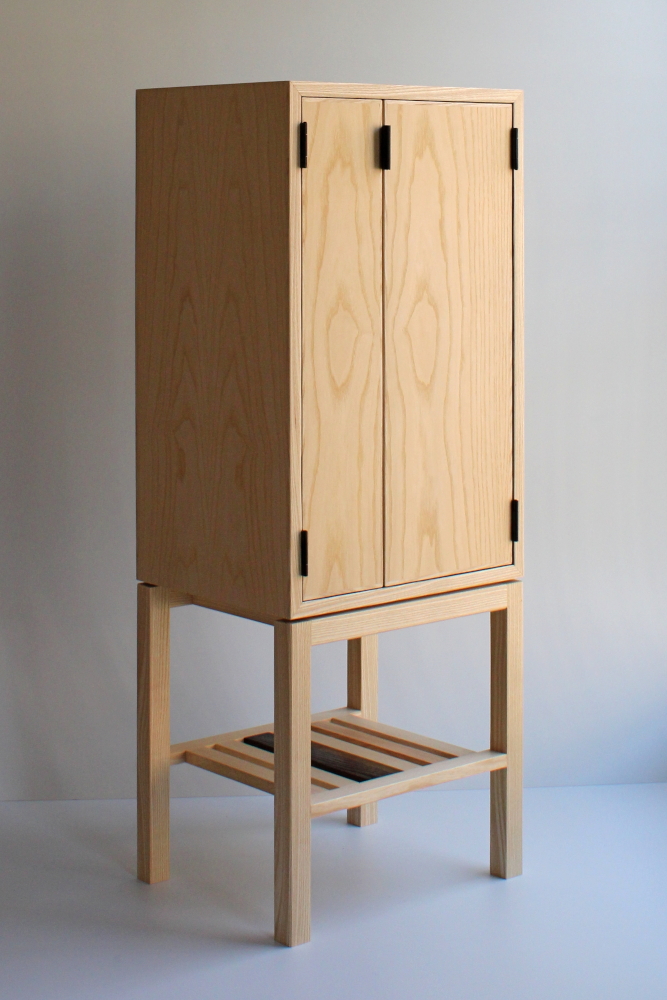
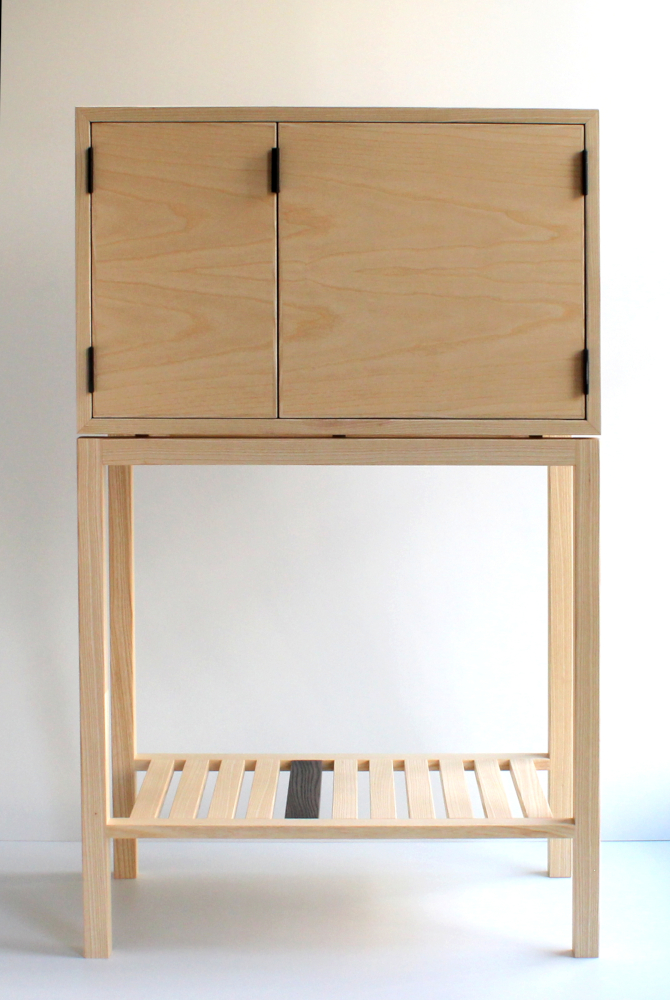
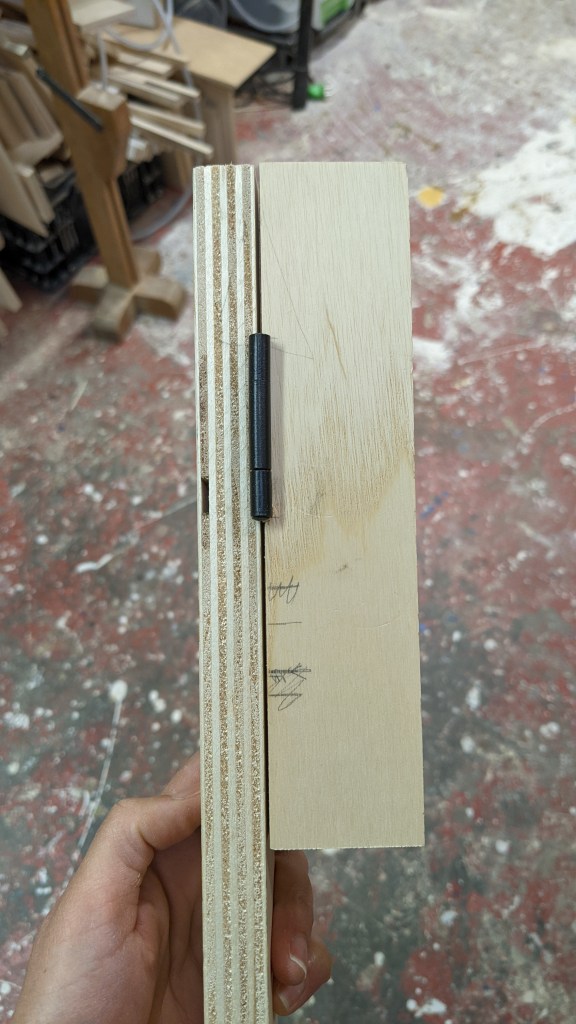
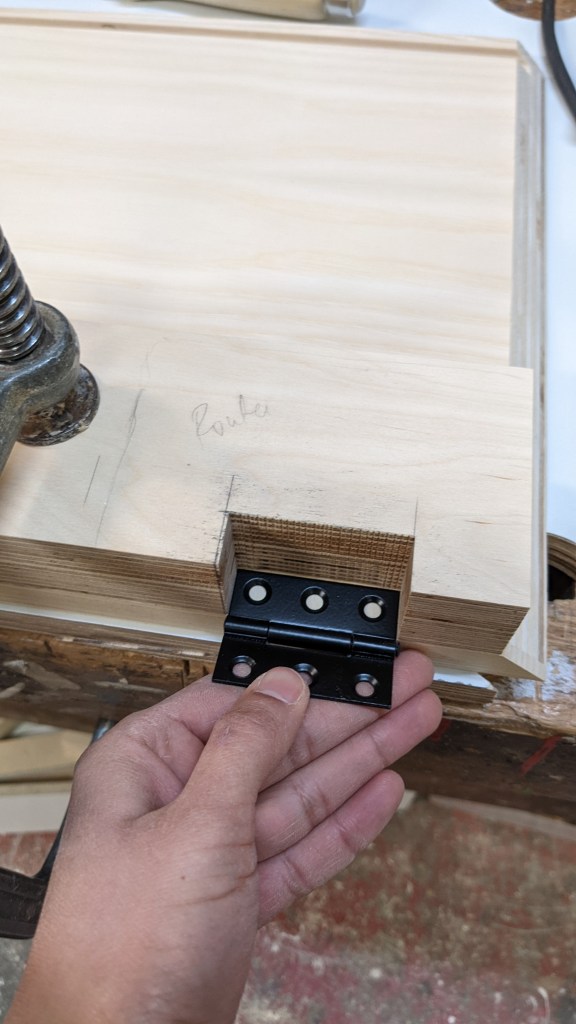
I wanted to use simple black butt hinges for the cabinets since they were easy to install and had a very simple look. I liked how the black bar broke the pale yellow of the Ash. I first did a test fit on some spare offcuts to see how they worked and how deep I had to cut into the sides to fit them perfectly.

In order to rout the pockets that would house the hinges, I made myself a plywood jig that I could clamp onto the side and use a router with a copy ring set to the correct depth to rout the pocket.

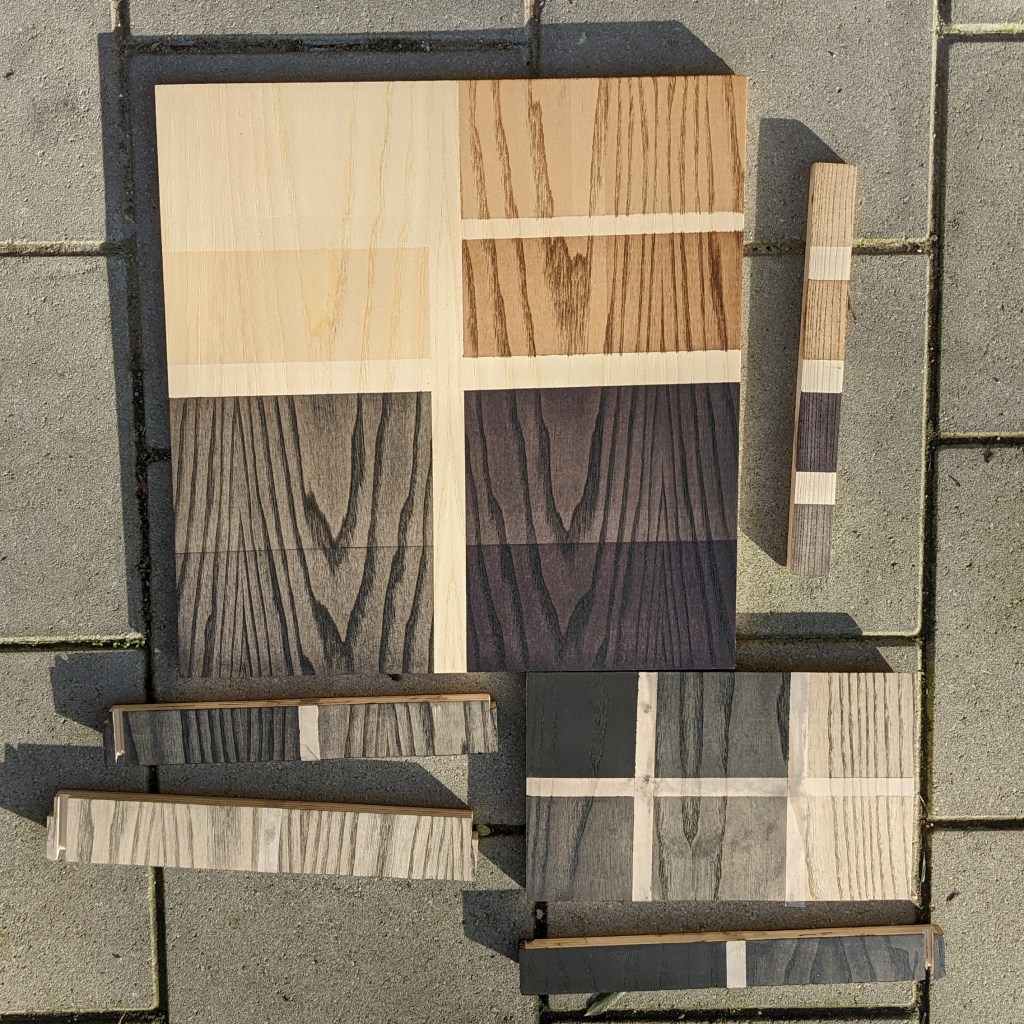
Testing Different Stains

I wanted to experiment with contrasting the pale yellow of the Ash on the outside with a strong black stain on the inside. In order to find the perfect product, I tried out many different samples until I was happy with the result.

In the process of bespoke furniture, I test different stains to achieve the desired result
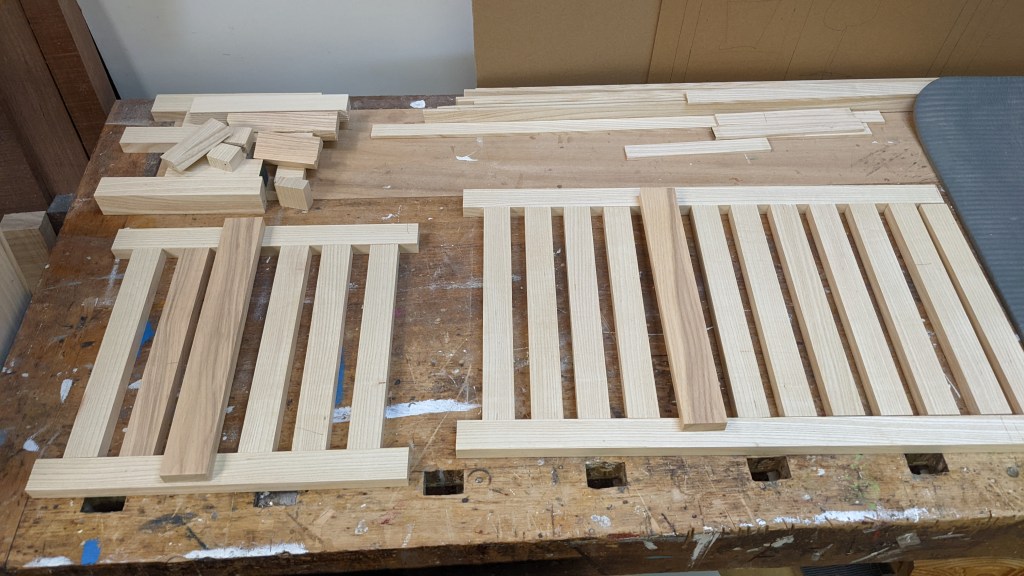
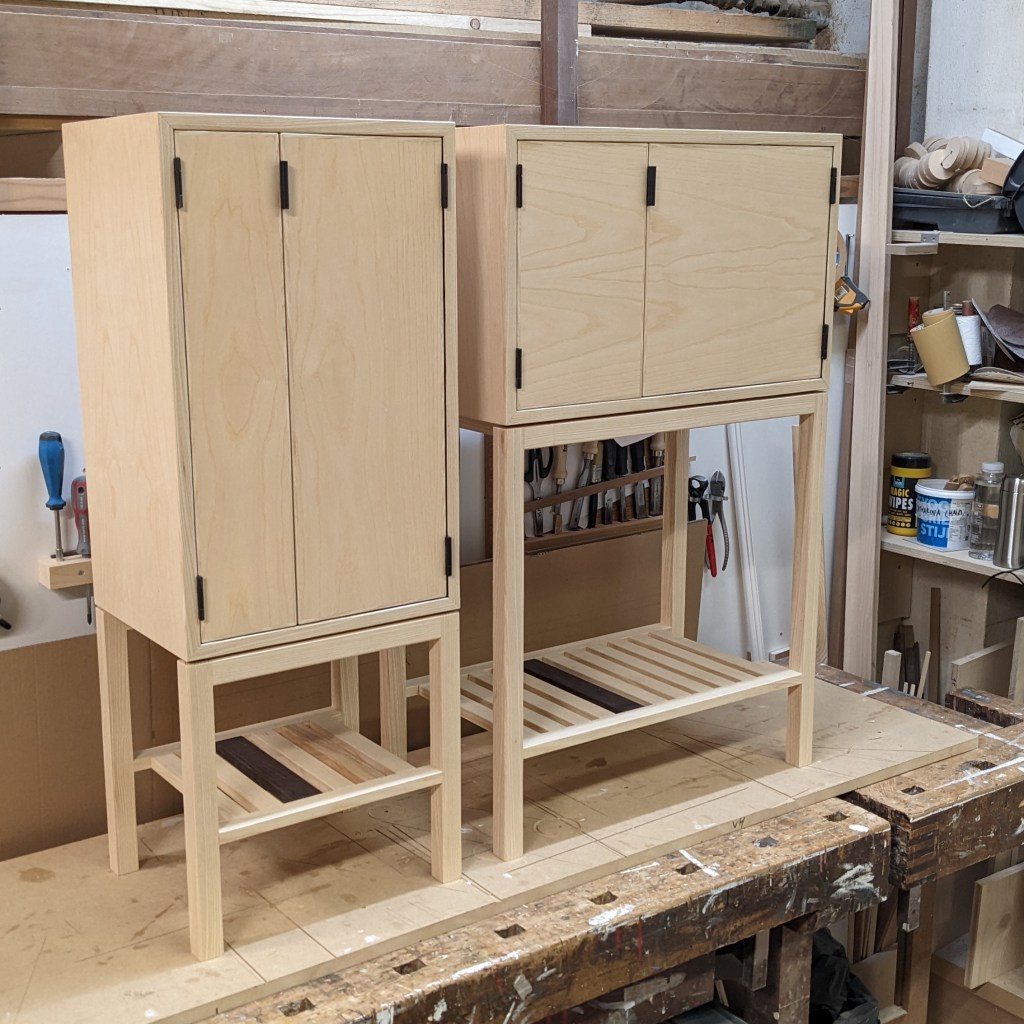
I made two slatted solid wood trays to sit between the legs of the cabinets

Solid Wood Base

The cabinets stand on a base made from square sections of solid Ash wood. They also have a small slatted tray at the bottom to keep various items like magazines or books, or simply just cushions.

I cut the pieces to length and marked the places where I would cut the joinery. I cut all the joinery making sure to check for correct grain orientation. For the tray I prefinished the slats before gluing it up. As for the legs, I first glued up the entire frame and then applied the oil. This has mainly to do with accessibility of smaller parts and making sure the joinery and finishing are neat and clean.

As part of the design principle of contrast and asymmetry one of the slats is wider, and would also be stained black to emphasize this irregularity.

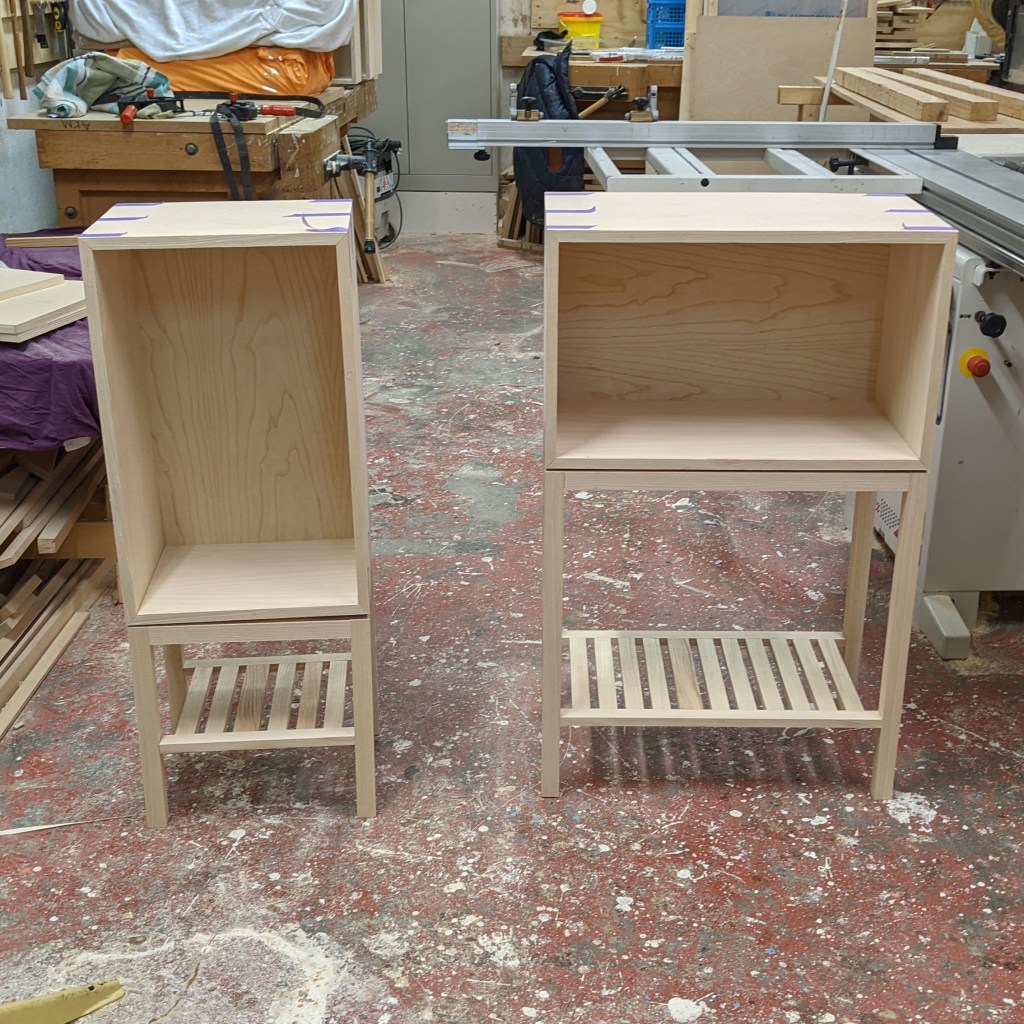
Dry Fitting

At this stage I temporarily put the entire piece together (called a dry fit, due to lack of glue used) to make sure everything fit, and also to get a better picture of what the final cabinet would look like.

There is always a possibility to change a detail at this stage, or correct a mistake. Trying to do so after finishing is extremely difficulty, not to mention the lost time of having finished something that doesn’t fit together, or that you are not happy with.

I also wanted to test fit the cabinet to make sure that I liked the idea of having a black interior and light exterior. After this I could dismantle everything and move on to the first round of finishing.

The cabinets are dry fit together to make sure everything is right, and to get a first impression
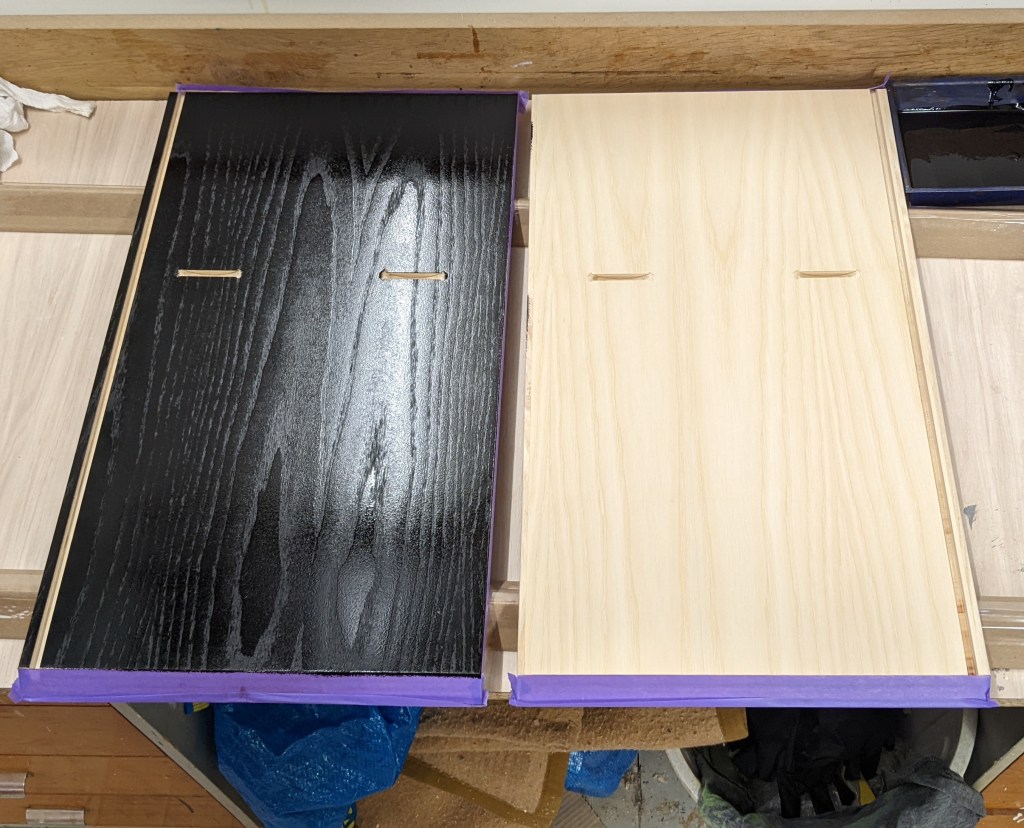
The insides of the cabinets are stained and oiled before gluing them

Staining & Finishing the Insides

I could then finally sand and prepare all the necessary material for the first round of staining and finishing. This included the inside of the cabinets and the slatted tray at the bottom of the leg frame. The rest would be sanded and finished in a later stage.

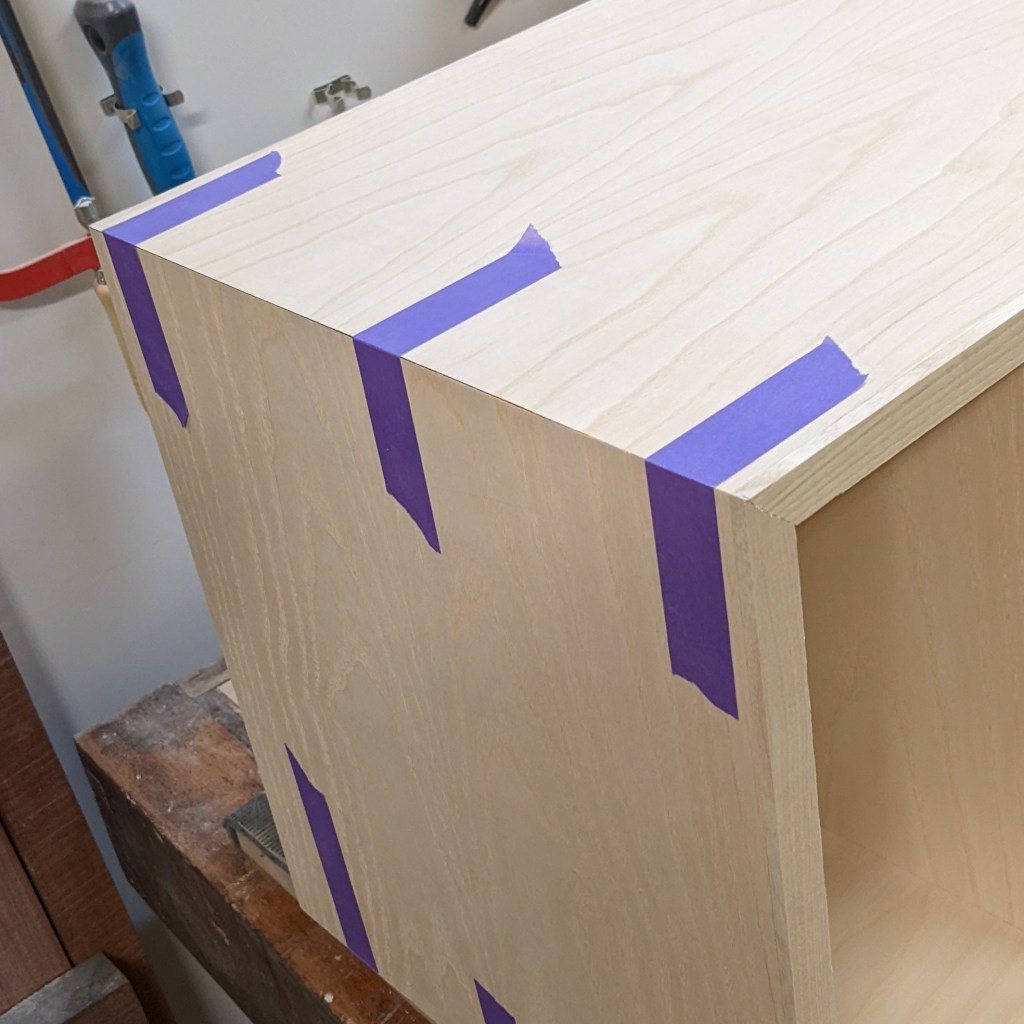
In order to avoid getting black stain on the outside of the cabinet, I had to protect it by sticking paper on it with tape. This is again a time consuming process, but definitely extremely important to be able to finish the insides in a timely manner. Edges that will later receive glue have to be covered with tape as well, as seen here the mitre edges.

The surfaces were stained twice and oiled once, or oiled twice if they were to stay the natural Ash colour.

Gluing Up

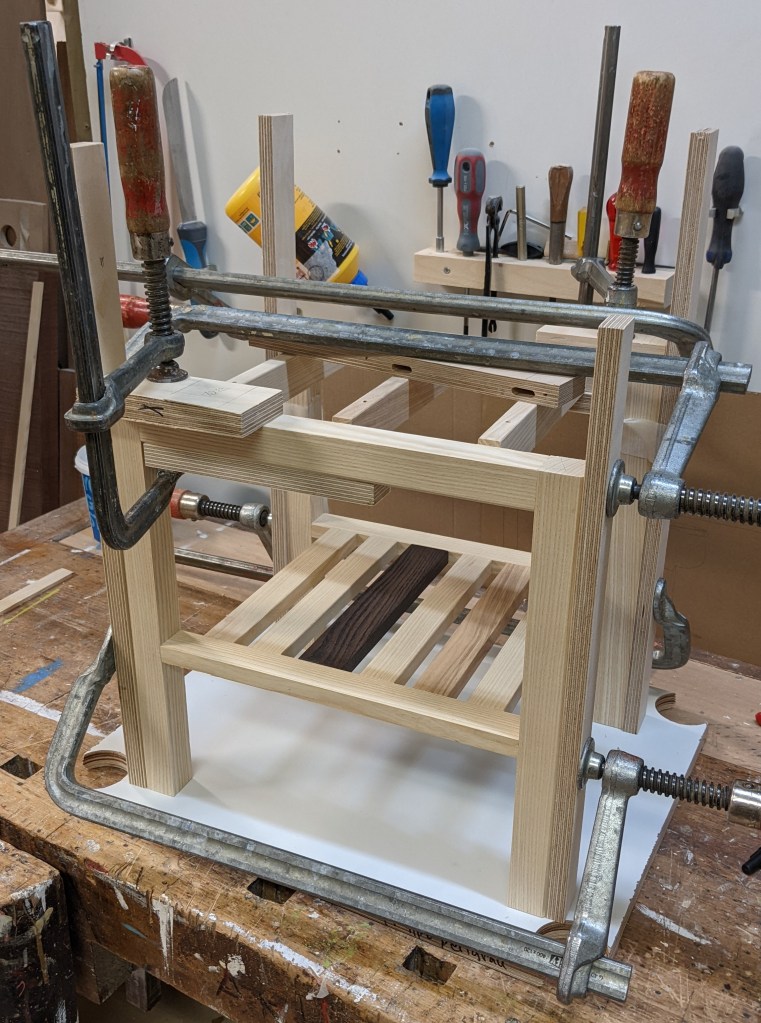
Once the oil has dried and hardened on the various components, they can be glued up in their final assemblies. In some cases, it takes place in multiple steps like with the base of the cabinet. Here I first glued up the tray at the bottom and the cross ties that support the cabinet. As a second step I connected these two parts by gluing the 4 legs to them.

Care has to be taken to glue up in the correct order and orientation and cauls are used to protect the furniture from pressure marks from the clamps. Cauls also evenly distribute the pressure from the clamps. Corners are checked to see if the structure is at 90 degrees, and any excess glue squeeze out is cleaned up.

Gluing up the base of one of the cabinets with clamps. Wooden cauls are used to protect the wood for the metal clamps
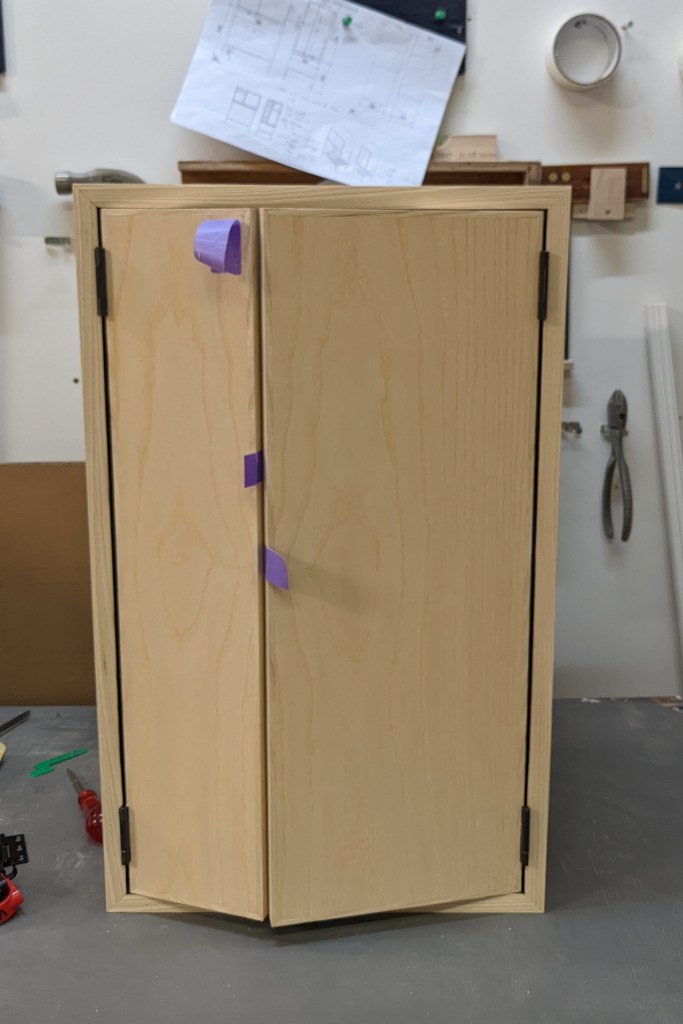
Fitting the doors, making sure that the reveals on all sides are equal and the doors swing smoothly

Fitting Doors & Shelves

Once the carcass of the cabinets was ready, the glue having dried for atleast 24 hours, I could start fitting the doors.

The hinge pockets on the doors had been routed along with the pockets on the sides of the cabinet. I could now fit hinges to both cabinet and door and then work on removing material on the doors until they fit perfectly.

Fitting the doors essentially entails making sure the doors have an even reveal (gap) on all sides, towards the carcass as well as towards each other. And ensuring that they open and closed well. In my case, this was a 3mm gap, which I checked with a 3mm spacer.

This is quite a time consuming task, and requires a lot of back and forth until the desired result is achieved.

Once the doors were running smoothly, I cut the shelves that go into the cabinet to size and fitted them as well.

Handcut Dovetail Drawers

The last feature of the Ash cabinets was one handcut dovetailed drawer for each cabinet. For this I measured the exact dimensions of the available space and prepared my 12mm solid Ash stock.

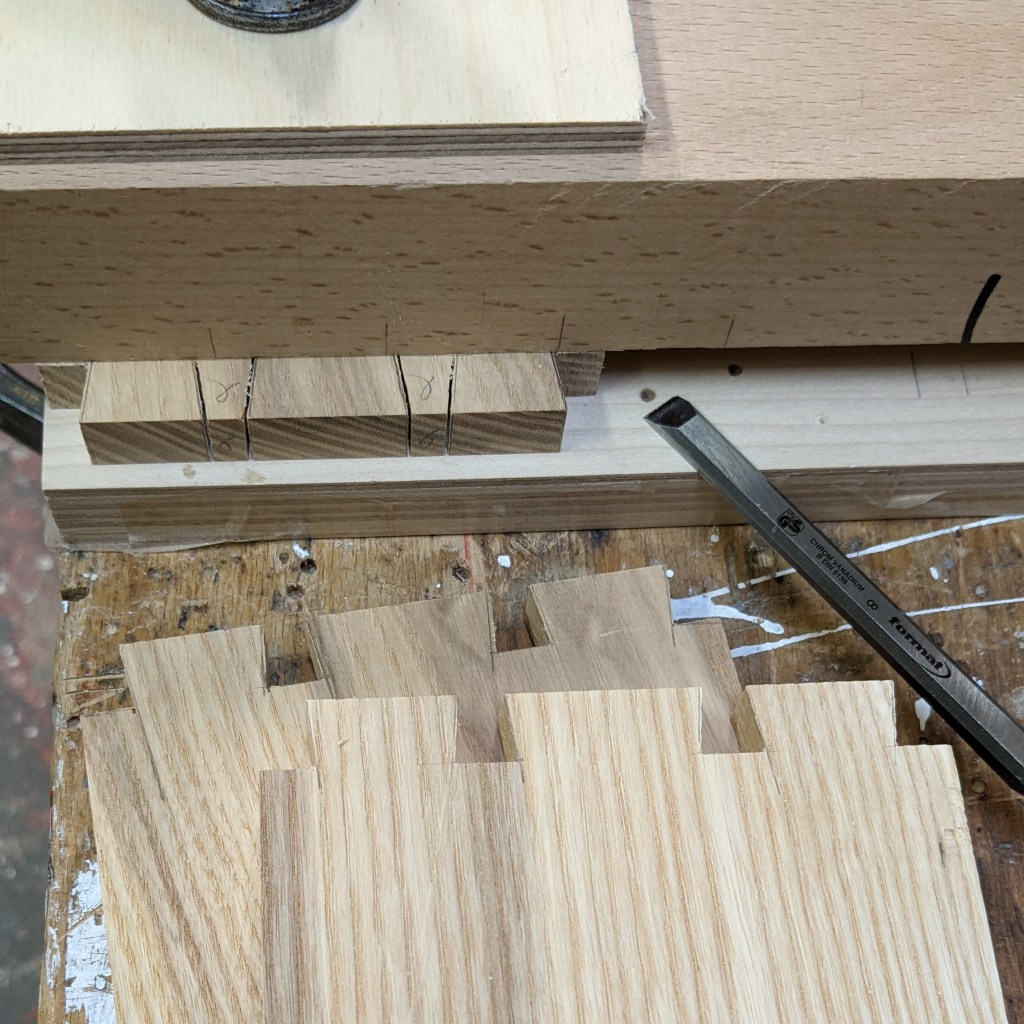
The dovetails are scribed onto the sides of the drawers, first sawn by hand, and then the material is removed with a sharp chisel. These dovetails are then referenced onto the corresponding front and back of the drawer and then cut out as well.

The entire box is then carefully fitted together, removing material wherever needed. Dovetails are a very strong method of making a corner joint, and no hardware is needed. A slot or rebate is made at the bottom to fit a base into the drawer.

Once the individual pieces are sanded and oiled, the drawers can be glued together with the help of clamps. Again, care must be taken that all corners are perfectly square.

I used handtools like chisels and saws to make drawers with dovetailed corners

Leather Handles

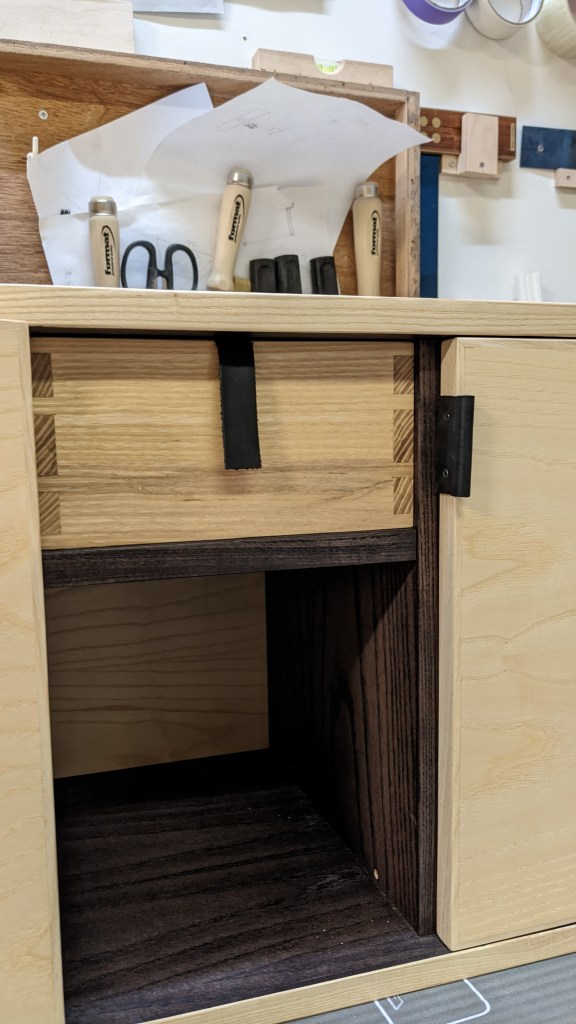
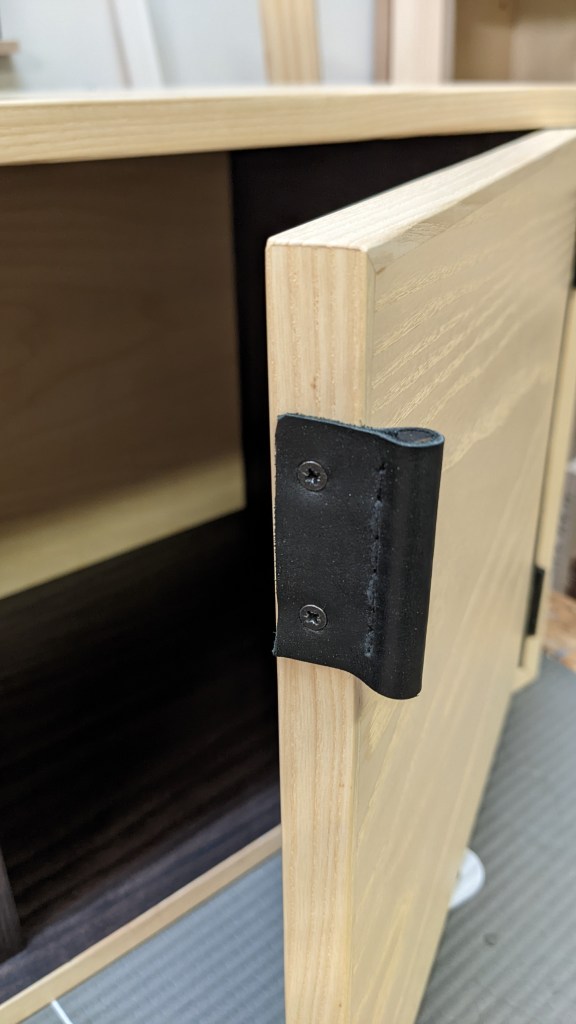
For this project, I wanted to make handles for the drawer and doors myself. I wanted to experiment using a new material and decided to use black leather.

To keep the minimalist harmony of the black hinges, I made the door handle in the same look and size by wrapping the leather around a 6mm wooden dowel. An extra length was then attached to the side of the door. I only made one handle per cabinet.

For the drawers I just made a simple long tug of leather that is attached to the interior of the drawer.

Final Finishing & Assembly

The last step was to disassemble all the doors, handles and shelves, and do one last round of sanding.

I then finished all surfaces with two coats of Osmo Hardwax Oil, making sure to really rub the oil into the surface to get a nice smooth finish.

I then reassembled the cabinets, doors and handles. And finally I could attach the cabinet to the base.

Final stage of assembly of cabinets, doors and handles
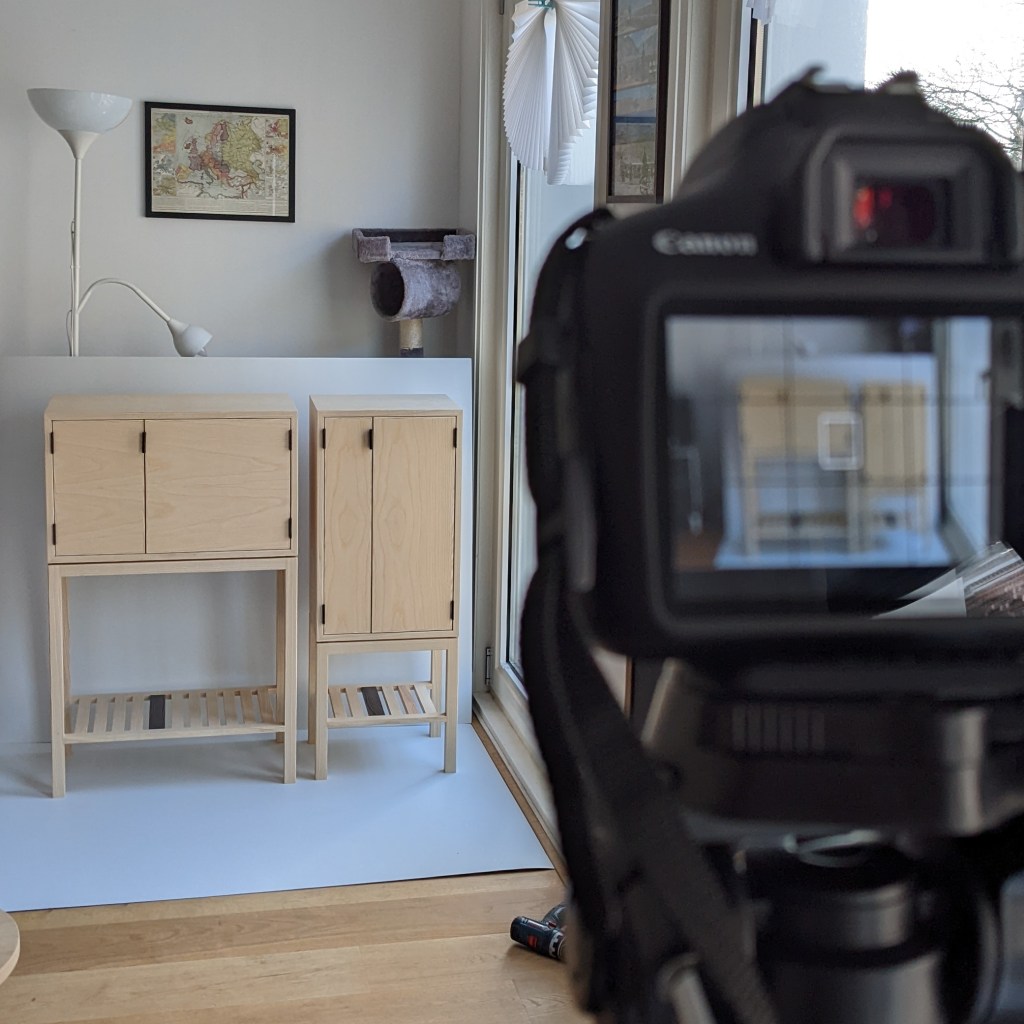
I use a camera and tripod to photograph my products in natural lighting

Product photoshoot

I enjoy staging and taking pictures of my products quite a lot. I use a simple set up of a white paper or HPL sheet as a back drop and natural lighting from a window.

I use accessories like books, bowls, cups, glasses or alcohol bottles to add life and colour into the images. These objects also help to illustrate the functionality and size of the piece.

In order to showcase the Ash cabinets, I took lots of pictures of the various details and features, but also of the two cabinets side by side.

You can see final images of the Ashwood Cabinets, view the Portfolio Page
The Ashwood Cabinets are available for sale, for more Info visit my Webshop

Thoughts? Questions? Comments? Get in Touch!